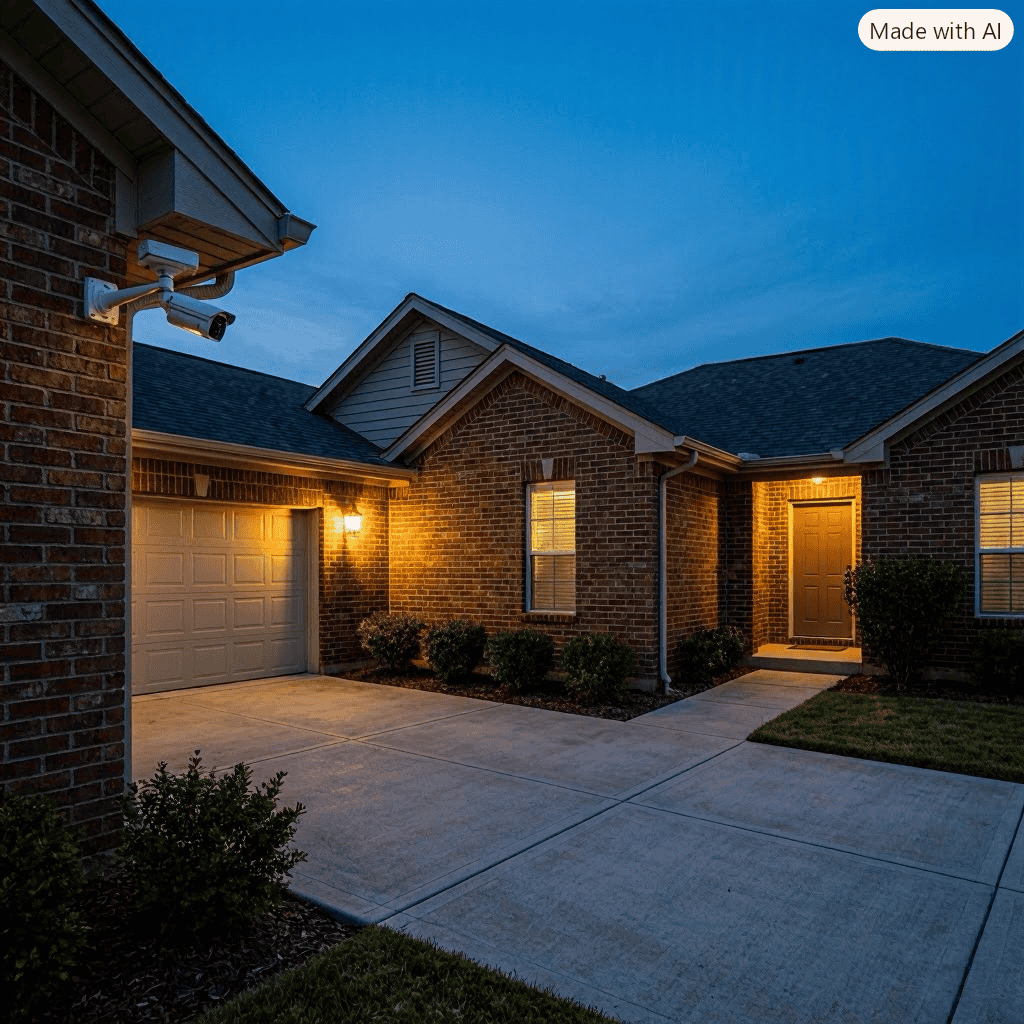
The best places to put a dummy camera are the exact same spots a real security camera would go — front door entry points, garage areas, driveways, and the corners of your home that give wide sightlines. The goal is to mimic a professional security installation so convincingly that anyone casing your property doesn’t stick around long enough to figure out it isn’t real. Place them wrong, and you’ve wasted your money. Place them right, and you’ve created a powerful layer of deterrence without spending a fortune.
Why Does Camera Placement Matter More Than The Camera Itself?
Here’s the thing — a dummy camera’s only job is to be seen. It doesn’t record. It doesn’t alert you. It just needs to make a would-be intruder stop, think twice, and move on. That means placement is everything. A fake camera hidden behind a bush or stuck in a corner where nobody would ever look is doing absolutely nothing for you. Worse, a poorly placed dummy camera can actually signal to a smart criminal that your security is amateur-hour, which might make them bolder, not cautious.
Every single placement decision you make should answer this question: Will a person approaching my property see this camera and believe it is real? If the answer is no, move it. If the answer is yes, you’re doing it right. Think like a criminal — where would someone approach from? What angle would they use to avoid being seen? Put the camera where it would catch them doing exactly that.
What Are The Best Locations To Mount A Dummy Camera Outside?
Outside your home is where dummy cameras earn their keep. These are the high-priority exterior positions you should consider first, in order of importance:
Front door and entry porch: This is ground zero. Most burglars make first contact at the front door — knocking to see if anyone is home before they try anything. A camera mounted above the door at 8–10 feet, angled downward at the entry, is exactly where a professional system would have one. It’s the first thing a visitor sees, and it’s the first thing that makes a bad actor reconsider.
Driveway entrance or garage: Anyone approaching your home from the street passes through your driveway or near your garage. A camera mounted on the garage fascia board or on a corner post near the driveway gives the impression of comprehensive coverage. This is especially effective because it mimics the coverage pattern of a monitored system.
Side gates and fence lines: Side yards are the sneaky entry points. Criminals know that front-door cameras exist, so they look for unmonitored access points. A dummy camera mounted at the side gate or along a fence line — ideally at an angle that suggests it’s watching that entire pathway — closes that gap in your perceived security.
Back of the house: Backyards and rear entries are popular with burglars precisely because they feel hidden from the street. A dummy camera on the back corner of your roof line, aimed at your back door or sliding glass door, is one of the most effective placements on your entire property. Don’t leave this spot uncovered.
Detached garage or shed: Tools, equipment, bikes, and stored valuables make outbuildings attractive targets. A camera mounted above the door of a detached structure signals that this building is being watched, too.
What Are The Best Indoor Locations For A Dummy Camera?
Indoor dummy cameras serve a different purpose — they’re less about deterring an initial break-in and more about making someone who’s already entered think they’re being recorded. That hesitation can cause them to flee before stealing anything or escalating the situation. Here’s where to put them inside:
Living room corners near the ceiling: Upper corners give the widest field of view, which is exactly where a real camera would be mounted. Anyone who enters your home and spots it will assume everything in that room is being captured.
Above the main staircase: Stairs are a natural choke point. A camera here covers the upstairs-downstairs transition and signals that movement throughout the home is being tracked.
Near the primary entry points inside: The inside of your front door, back door, or garage entry into the home are all strong positions. They reinforce the message that entry itself triggered recording.
Home office or room with valuables: If someone does get in, they’re heading to the primary bedroom, home office, or wherever they expect valuables to be. A camera in or near those spaces adds another psychological speed bump.
How High Should You Mount A Dummy Camera?
Mount your dummy camera between 8 and 10 feet off the ground for exterior placements, and 7 to 9 feet for interior ones. This is the standard range for real security cameras, and matching it is critical to the illusion. Too low, and it looks like an afterthought — or worse, it looks tamper-ready. Too high, and it looks impractical, which raises suspicion. At 8–10 feet, the camera appears purposeful, professional, and just out of easy reach. That height communicates intent.
The angle matters just as much as the height. Tilt the camera downward at roughly a 15–30 degree angle toward the area you want it to “watch.” A camera pointed straight forward with no downward angle looks wrong to anyone who’s seen a real installation. That small detail can be the difference between a convincing setup and one that gets dismissed immediately.
What Common Placement Mistakes Make A Dummy Camera Obvious?
I’m gonna tell you right now — these mistakes are more common than you’d think, and any one of them can blow your cover:
Mounting it too low: Anything under 6 feet is reachable and looks amateurish. Real cameras go up high so they can’t be easily vandalized or blocked.
Pointing it at nothing: If the camera angle covers a blank wall, an open sky, or an area with no foot traffic, nobody believes it’s real. Aim it at a pathway, door, or parking area.
Inconsistent blinking lights: Some dummy cameras come with LED blink patterns that are completely unrealistic. Real cameras don’t blink red lights constantly — that’s a dead giveaway. Choose a model with a subtle, realistic indicator or none at all.
No mounting hardware or weathering: A fake camera that looks brand new and is loosely attached doesn’t look installed. Use proper mounting hardware. Over time, a little weathering actually helps sell the illusion.
Using a single camera with no supporting deterrents: One dummy camera by itself can work, but pairing it with a visible security sign, motion-sensing lights, or a real alarm system sticker makes the whole picture far more convincing.
Placing it somewhere inconvenient to wire: Real cameras have power cables or at minimum, cable management. If your dummy camera is in a spot where no real camera would ever be wired up, it looks fake. Think about where a real installer would run wires from and mount accordingly.
Should You Mix Dummy Cameras With Real Ones?
Now look — I always say carry the real thing if you can, and the same logic applies here. If your budget allows even one or two real cameras, put them at your highest-priority spots — front door and back door — and fill in the rest with dummy cameras. This is actually a smart strategy used in commercial security all the time. The real cameras provide actual footage if something happens. The dummy cameras extend the visual footprint of your system so it looks like full coverage. Together, they create a deterrence effect that neither could pull off alone at the same cost.
If you go all dummy cameras, that’s still a legitimate choice, especially for renters or people on a tight budget. Just understand the limitation: if someone does break in, you’ll have no footage, no evidence, and no notification. The deterrence value is real — but it has a ceiling. Use dummy cameras as part of a layered approach, not as your only line of defense.
What Other Deterrents Work Well Alongside Dummy Cameras?
A dummy camera alone creates one layer of doubt. Stack it with these and you’ve built a wall of deterrence that most opportunistic criminals won’t bother testing:
Motion-activated lights: Sudden illumination is one of the most effective deterrents in existence. Pair a motion light with your dummy camera and you’ve created a system that reacts to approach — which feels very real.
Security system signage: A monitored alarm system sticker or yard sign in view of your dummy camera ties the visual together. The combination of camera plus signage says “this property is watched and monitored.”
Door and window alarms: These are inexpensive, easy to install, and create an audio deterrent the moment a point of entry is breached. They’re what happens after the camera fails to stop someone.
Personal alarms and pepper spray: When deterrence fails and someone gets inside — or confronts you outside your home — you need something that actually defends you. A dummy camera can’t do that. A personal alarm, a canister of pepper spray, or a stun gun in your hand can.
Yes — but primarily opportunistic ones. Studies and real-world reports consistently show that visible cameras, real or fake, cause many would-be burglars to move on and find an easier target. However, a seasoned criminal may look for telltale signs of a fake. The more realistic your setup, the more effective it is. Dummy cameras work best as part of a layered security approach, not as your sole deterrent.
Can you use dummy cameras in an apartment or rental?
Absolutely, and this is actually one of the best use cases for them. Dummy cameras typically require no hardwiring, use simple mounting hardware, and can be removed without damage. They’re ideal for renters who can’t install real security systems. Place them above your front door inside the unit or near windows, and make sure placement complies with your lease agreement and building rules.
How do you make a dummy camera look more realistic?
Mount it at the correct height — 8 to 10 feet — with a realistic downward angle. Use proper mounting hardware so it looks professionally installed. Choose a model that looks like the type of camera common in your neighborhood. Add a cable or conduit run near it to simulate a power connection. Avoid models with exaggerated blinking LEDs, which are a dead giveaway to anyone who knows what real cameras look like.
Is it legal to install dummy cameras?
In most U.S. jurisdictions, installing dummy cameras on your own property is completely legal. However, using fake cameras to mislead people in ways that could constitute fraud — for example, falsely claiming a commercial property is monitored for liability purposes — can create legal complications. On your own home or business for basic deterrence, dummy cameras are generally a legal and widely accepted security measure. Always check local regulations if you’re unsure.
How many dummy cameras do I need for my home?
For a standard single-family home, four to six cameras typically covers all major entry points and sightlines — front door, back door, driveway, side gate, and two corners of the home. The goal isn’t to overwhelm with cameras but to create the visual impression that all approaches and entry points are watched. Quality of placement matters far more than quantity. Three well-placed cameras beat six poorly positioned ones every time.
What should I look for when buying a dummy camera?
Look for a housing that resembles real dome or bullet cameras you see on commercial and residential properties in your area. It should feel solid, not lightweight and plasticky. Weather resistance matters for outdoor use. A realistic mounting bracket, a functional-looking cable port, and a subtle — not cartoonish — LED indicator all contribute to the illusion. Avoid cheap models that look nothing like actual security cameras on the market today.
Should I tell my neighbors I have dummy cameras?
Generally, no — and for good reason. The deterrence value of a dummy camera depends partly on uncertainty. If neighbors know the cameras are fake, that information can spread. Keep the details of your security setup private. You don’t need to lie to anyone, but you also don’t need to announce that your cameras are non-functional. A simple “I’ve set up cameras” is all anyone around you needs to know.
The Bottom Line On Dummy Camera Placement
Here’s what I want you to walk away with: dummy cameras work when they’re placed where real cameras would be, mounted at the right height, aimed at realistic coverage zones, and paired with other visible deterrents. Every placement decision should be made through the eyes of someone who doesn’t want to be seen — because that’s exactly who you’re trying to stop. Front entry, back door, driveway, side gates, and outbuildings are your priority positions. Get those right first.
And remember — deterrence only takes you so far. A dummy camera might convince someone to skip your house, but if they don’t, you need something that actually protects you. Make sure your home security plan doesn’t end with the camera. Layer in real alarms, real lighting, and personal defense tools you can actually use. Stay safe out there.
With over 25 years in the Self Defense Industry, Jose Diaz has provided lots of advise to those seeking to protect themselves against danger. Jose is a hard working individual who has use his skills to address the many faults of self protection in our society. As a father, Grandfather and a Great grandfather he wants to keep his family safe. This is why he has created his business, "Brainstorm Security Shop". He wants to provide people with a choice to defend themselves in case of a personal attack. His self-defense gadgets, like stun guns, pepper sprays, knifes, personal alarms and others will provide protection against any attacker. Please take a look at his products since very well can save your life in case of a personal attack. May you and your loved ones be safe and enjoy a long and prosperous life.