Most dog repellent sprays shoot between 8 and 15 feet, depending on the formula, canister size, and spray pattern. Stream formulas tend to reach toward the higher end of that range, while cone or fogger patterns disperse faster but cover a wider area at shorter distances. Gel formulas typically land in the 8 to 10 foot range. Knowing your spray’s actual range before you need it is what separates a tool that protects you from one that just rides along in your pocket.
I’ve had this conversation more times than I can count — someone comes in asking about dog spray, and the first question out of their mouth is about stopping power. That’s understandable. But range is the question they should be asking first. Because it doesn’t matter how potent your spray is if you’re already inside the dog’s bite radius when you deploy it. Let me walk you through what actually determines how far these things shoot, and what that means when you’re out on a walk or a run and a dog comes at you from across a yard.
What factors determine how far dog repellent spray will shoot?
The range of any pepper spray or dog repellent isn’t just one number — it’s the result of several variables working together. Understanding them helps you pick the right product and use it the right way when it counts.
Formula type is the biggest factor. Stream sprays — where the formula comes out in a concentrated liquid jet — travel the farthest, typically 12 to 15 feet on a larger canister. They’re accurate and less affected by wind, but they require you to aim at the dog’s face to be effective. Cone sprays create a wider mist cloud, which is easier to put between you and the animal but starts losing effectiveness past about 10 feet. Fogger patterns are the shortest range of all, usually 6 to 8 feet, but they saturate the air in a tight zone very quickly. Gel formulas are sticky and don’t drift in wind, but they cap out around 8 to 10 feet.
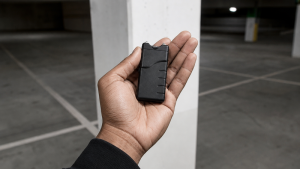
Canister size matters too. A small keychain unit might only push 6 to 8 feet because the propellant volume is limited. A 2 oz or larger canister has more propellant pressure behind it, which translates directly to more range. That’s not a knock on small units — they have their purpose — but it’s worth knowing before you rely on one for dog encounters on open trails.
Wind is the variable most people forget about. Even a mild crosswind can cut your effective range nearly in half with a cone or fog pattern. If you’re outdoors — and you almost always are when this situation comes up — wind direction matters. Stream formulas are far more reliable in outdoor conditions for this exact reason.
Is dog repellent spray different from regular pepper spray in terms of range?
This is a fair question, and the honest answer is: sometimes, but not always in the ways people expect. Dog repellent sprays are typically formulated with a lower OC concentration than human-directed pepper sprays — usually around 1% compared to the 2% to 10% range you’ll find in personal defense sprays. That’s intentional. Dogs are much more sensitive to capsaicin than humans are, so you don’t need the same concentration to stop them.
What that lower concentration means for range is essentially nothing — the OC percentage doesn’t affect how far the spray travels. That’s determined by the propellant, the nozzle, and the formula viscosity. A dog repellent spray in a stream pattern from a quality 2 oz canister will hit the same 12 to 15 foot range as a comparably sized personal defense spray.
Where the real difference shows up is in what happens if the spray drifts back toward you — a milder formula is less likely to cause you significant distress if you catch some blowback. Worth keeping in mind if you’re using it in tight quarters or in wind. You can also read more about how dog pepper spray compares to bear spray for stopping dogs if you’re trying to figure out which type fits your situation.
How close does a dog have to be before you should spray?
This is where range really becomes practical. A dog running at full speed can close 15 feet in under a second. Most medium to large dogs can do it in significantly less time than that. So even if your spray reaches 12 feet, you don’t have the luxury of waiting until the dog is 12 feet away — by the time you react, draw, and deploy, that gap is already closing.
The general guidance I give people is to start deploying at 15 to 20 feet if a dog is charging and you’ve assessed the situation. That gives the spray time to create a barrier the dog runs into. Waiting until the dog is right on top of you means you’re reacting, not preventing. This is one of the biggest reasons why carrying something accessible matters — a spray buried in a bag isn’t useful when a dog is already at 10 feet and closing fast.
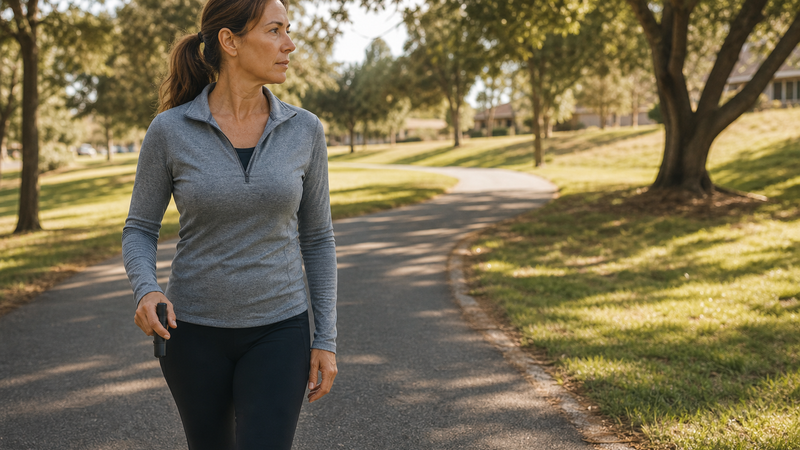
If you’re walking or running regularly in areas with loose dogs, look at a 2 oz pepper spray that you can hold in your hand or clip to your waistband. Accessibility is part of effectiveness. It also gives you the canister volume to reach a full 12 to 15 feet if needed.
Does spray pattern affect how you should aim at a dog?
Yes — and this is something most people never think about until they’re in the moment. With a stream formula, you’re aiming a tight jet at the dog’s face — eyes and nose specifically. That requires a degree of accuracy under stress. It’s not impossible, but it takes some practice to build confidence. If the dog is darting or moving unpredictably, a stream can miss.
A cone spray is more forgiving on aim. You’re essentially putting a cloud between you and the animal, and the dog runs through it. The tradeoff is shorter range and more wind sensitivity. In most outdoor dog-encounter scenarios, I’d still lean toward stream for the range advantage — but I always tell people to think about their specific situation. Are you walking on open trails with wind? Or navigating a neighborhood where the dog pops out from behind a fence at close range?
Gel formulas are worth mentioning here too. Pepper spray gel sticks to what it hits, doesn’t drift in wind, and works well in situations where you have a moment to aim. It’s not the fastest to saturate an area, but it’s reliable and controllable. For people who spend time outdoors in variable weather, that matters.
What’s the best way to carry dog repellent spray for quick access?
The carry method is almost as important as the product itself. A spray you can’t reach in two seconds under stress is a spray that’s going to let you down. Here’s what I tell people based on their situation:
Walkers and runners: Look at a unit you can hold in your hand or clip to a waistband. Something like a pocket pepper spray in a clip or jogger-friendly design keeps it where you can reach it without breaking stride or digging through anything.
People walking dogs of their own: You’re managing a leash with one hand. You need a unit that fits your other hand comfortably and can be operated with a thumb. Larger canisters work here because you’re less likely to be running.
Letter carriers, utility workers, anyone on foot in neighborhoods: A belt clip or hip holster setup makes the most sense. You want it accessible from your dominant hand without having to open a bag or unclip anything complicated.
Whatever carry method you choose, practice the draw a few times before you’re relying on it. Muscle memory in a stressful moment is worth more than the fanciest canister on the market. And if you’re also looking for something that doubles as everyday personal defense, there are options like pepper spray designed for purse carry that work for both situations.
Does the effective range change in cold weather or heat?
It does, and this is something most product descriptions don’t mention clearly. Cold temperatures reduce propellant pressure inside the canister, which shortens your effective range. If you’re in a climate that gets genuinely cold in winter, a spray that shoots 12 feet in summer might only push 8 to 9 feet at freezing temperatures. Keep your spray in a pocket close to your body in cold weather — your body heat helps maintain propellant pressure.
Extreme heat on the other end can increase pressure and potentially cause leakage or, in very rare cases, canister failure if the spray is stored in a hot car for extended periods. Don’t store your spray in your glove compartment through summer. A bag or carried on your person is always the better option.
These aren’t reasons to avoid carrying — they’re reasons to be aware of how your specific product performs in your specific environment. Check the manufacturer guidelines and, if you’re in an extreme climate, pick a formula designed with that in mind.
Frequently Asked Questions About Dog Repellent Spray Range
How far does dog repellent spray typically shoot?
Most dog repellent sprays shoot between 8 and 15 feet depending on the formula, canister size, and spray pattern. Stream formulas reach the longest distances, typically 12 to 15 feet from a standard 2 oz canister. Cone and fog patterns reach 8 to 10 feet. Gel formulas generally top out around 8 to 10 feet but resist wind drift better than mist-based options.
Is 8 feet enough range to stop a charging dog?
Eight feet is workable, but it requires fast reaction time. A dog running at full speed can cover that distance in under a second. With 8 feet of range, you need to deploy the moment you’ve identified a genuine threat — not after the dog is already close. Longer-range formulas give you more reaction buffer. For outdoor use, a 12 to 15 foot stream formula is a safer choice when you can access it.
Does wind affect how far dog repellent spray shoots?
Yes — and significantly. Cone and fog patterns lose effective range quickly in crosswinds and can even blow back toward you. Stream and gel formulas are far more wind-resistant because the formula travels as a concentrated jet or thick gel rather than a dispersed mist. For outdoor use where wind is unpredictable, stream or gel formulas are the more reliable choice for both range and accuracy.
Can I use regular pepper spray on a dog instead of dog-specific repellent?
In most cases, yes — the active ingredient (oleoresin capsicum) affects dogs similarly to humans. The range and spray behavior will be the same as a comparable personal defense spray. Dog-specific formulas are typically lower concentration because dogs are more sensitive to capsaicin. If you’re using regular pepper spray as a backup, it will work, but be aware the higher concentration may cause more intense effects. You can read more about using mace spray to stop a dog attack for a deeper look at this comparison.
Does canister size affect how far dog spray shoots?
Yes. Larger canisters contain more propellant, which means more pressure and longer range. A keychain-sized unit might reach 6 to 8 feet, while a standard 2 oz canister can push a stream formula to 12 to 15 feet. If you’re specifically buying for dog encounters on walks or runs, don’t go with the smallest canister available — the range difference matters in an outdoor scenario where the dog is moving fast and you need that buffer.
How should I hold my spray when a dog is approaching?
Hold the canister in your dominant hand with your thumb on the actuator, arm extended slightly in front of you. Don’t wait until the dog is right on you — start deploying at 15 to 20 feet if the dog is charging and you’ve assessed it as a real threat. Aim for the face — eyes and nose. With a stream formula, track the dog’s head. With a cone or fog pattern, put the spray between yourself and the dog and let the animal run into it.
Does cold weather reduce how far the spray shoots?
Yes. Cold temperatures lower propellant pressure inside the canister, which can reduce your effective range by 20 to 30 percent in freezing conditions. If you walk or run in cold climates, keep your spray in a pocket close to your body — your body heat helps maintain internal pressure. Avoid storing spray in a cold car or leaving it outside overnight. Regularly used and properly stored sprays perform significantly better than ones left in cold conditions for extended periods.
Do I need a special permit to carry dog repellent spray?
In most U.S. states, dog repellent and pepper spray formulas can be carried by adults without a permit, but laws vary by state, city, and concentration level. Some states restrict canister size or OC percentage. It’s worth knowing your local rules before you carry. For a helpful starting point, see our guide on pepper spray laws in all 50 states. When in doubt, check your state’s statutes directly or ask local law enforcement.
Now look — knowing the range of your spray is the kind of thing most people don’t think about until they’re standing in the middle of a situation wishing they had. That’s exactly why I put this together. The honest answer is that 8 to 15 feet covers most scenarios if you carry the right formula and — this part matters just as much — you keep it where you can actually reach it. A great spray buried in a backpack doesn’t protect you. A decent spray clipped to your waistband does.
If you’re not sure where to start, look at what fits your routine first, then pick a formula that matches how and where you spend your time outdoors. We’ve got options ranging from compact carry units to full-size formulas built for outdoor use. Spend two minutes now figuring this out so you don’t spend a panicked second wishing you had. Stay safe out there, and may you and your loved ones stay protected.