Pepper spray causes an immediate, overwhelming burning sensation in the eyes, skin, and respiratory system — typically described as the worst burning pain a person has ever felt in their face, lasting anywhere from 20 to 45 minutes. It forces the eyes shut, triggers uncontrollable coughing and gagging, and temporarily makes it nearly impossible to think about anything except the pain. It is not subtle, and it is not gentle. That is exactly the point.
I’ve been in this industry for over 25 years, and I’ve answered a lot of questions at trade shows, over the phone, and right across my own counter. But this one — how bad does pepper spray hurt? — hits differently every time. Because I can hear what’s underneath it. Someone wants to know if this thing they’re considering carrying will actually protect them. They want to know if it’s real. And I get that. Before you trust something to keep you safe, you deserve an honest answer. So let me give you one.
What does it actually feel like when pepper spray hits you?
The best way I’ve heard it described — and I’ve heard it from people who’ve been accidentally sprayed, from police officers who went through training, and from folks who tested it on themselves — is this: imagine someone pressed a flaming coal directly against your eyes and held it there. Then imagine that same fire spreading to your nose, your throat, and your lungs, all at the same time. That’s the closest thing to what pepper spray feels like.
The active ingredient is oleoresin capsicum — OC for short — which is derived from hot peppers. But we’re not talking about the jalapeños in your salsa. The concentration in self-defense sprays is extreme. When it hits the mucous membranes in your eyes and nose, it triggers an inflammatory response your body cannot ignore. Your eyes slam shut. Your nose runs uncontrollably. You start coughing, gagging, sometimes dry heaving. Your skin — especially if it’s in the spray zone — burns like a sunburn cranked up to eleven.
What I want you to understand is that this response isn’t just about pain. It’s involuntary. A person who gets hit with a quality pepper spray doesn’t decide to stop attacking you. Their body just stops cooperating. That’s what makes it such an effective tool — and that’s what I want you to really sit with.
How long does the pain from pepper spray last?
Here’s what most people don’t expect: this isn’t a ten-second thing. The burning and impairment from a good pepper spray typically lasts between 20 and 45 minutes. Some people feel residual effects — sensitivity, skin irritation — for hours afterward, especially if they touched their face and transferred the oil to other parts of their body.
For you, the person carrying it, that window matters. If something goes wrong and you need to use your spray, you’re not just buying yourself a few seconds — you’re buying yourself time to get to safety, get to your car, get to a phone, get to people. Twenty to forty-five minutes is a long time. Use it.
Recovery involves flushing the affected area with cool water — not rubbing, which drives the oil deeper into the skin — and getting fresh air to help with respiratory irritation. Milk and soap have both been cited as helpful for diluting the oil on skin. But the bottom line is this: there’s no instant antidote. Once it’s deployed, it does its job for a good, long while.
Does pepper spray affect everyone the same way?
Now look — this is the honest part of the conversation that some people skip over, and I’m not going to do that to you. Pepper spray is highly effective on the vast majority of people. But there are individuals — particularly those under the influence of certain drugs or alcohol, or people in a highly agitated psychological state — who may be less affected by the pain. They may still experience the physical effects on their eyes and airways, but their pain response may be dulled.
That’s not a reason not to carry it. It’s a reason to be aware of it. Any self-defense tool has limitations. A stun gun has limitations. Even a firearm has limitations. The goal isn’t a magic wand — it’s giving yourself a fighting chance to get away from danger. Pepper spray does that for the overwhelming majority of encounters.
Also worth knowing: people with asthma or other respiratory conditions may have more severe reactions. That’s not a deterrent from using it on an attacker — it just reinforces how seriously you should take this tool and handle it responsibly.
What type of pepper spray causes the most pain and stops a threat most reliably?
This is where my 25 years actually helps you make a better decision. Not all pepper spray is the same — not even close. The two things you want to pay attention to are OC percentage and the formulation type.
OC percentage tells you how much oleoresin capsicum is in the formula, but it doesn’t tell the whole story. SHU — Scoville Heat Units — tells you the heat level of the OC itself. You can have a high OC percentage with weak peppers, or a lower percentage with extremely potent ones. If you want to understand exactly what those numbers mean, I’ve written a full breakdown of OC percentage vs. SHU and what the numbers on pepper spray actually tell you — don’t skip that one.
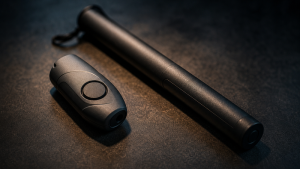
As for formulation, you’ve got stream, cone, fog, and gel. Each has real-world tradeoffs. Gel, for example, sticks to the target like glue and dramatically reduces blowback — which matters a lot indoors. Our pepper spray gel is something I recommend to anyone who spends time in enclosed spaces. Wildfire is one of the brands I carry that I personally trust at the higher heat levels. Streetwise and Pepper Shot are solid options that balance potency and affordability for everyday carry.
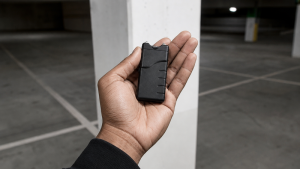
Size matters too. If you’re on foot — walking to your car, out on a jog — a pocket pepper spray gives you something you can reach fast without digging through a bag. If you want more range and more volume, our 2 oz pepper spray options give you more spray capacity without being bulky.
Is it safe to carry pepper spray in a purse or bag?
It can be — but only if you’re intentional about it. The biggest risk of purse carry isn’t the spray itself. It’s accidental discharge from a safety that got nudged, or from having to dig around for it when you need it fast. Adrenaline does not make you more coordinated. It makes you shaky and tunnel-visioned.
What I tell people — especially the women in my life, my daughter, my granddaughters — is to use a dedicated carry solution. Something designed to be accessed quickly, with a safety that won’t trip accidentally. We carry pepper spray specifically designed for purse carry, and the difference in design really does matter in a high-stress moment. If you want something that doesn’t look like a weapon at all, the lipstick pepper spray for women is genuinely clever — it looks exactly like a cosmetic and can sit in the top of your bag without a second thought.
Whatever you carry, practice getting to it. That’s not negotiable. You should be able to find it, flip the safety, and extend your arm without looking. Practice that at home, in low-stakes moments, so your hands know what to do when your brain is flooded with adrenaline.
Can pepper spray hurt you if you accidentally spray yourself?
Yes. I’m gonna tell you right now — if you accidentally deploy your pepper spray near your own face, you’re going to feel it. Wind blowback is real. Spraying in a tight space can drift. That’s why understanding your formulation matters, why gel is often the smarter indoor option, and why knowing how to position yourself before you spray — with the wind at your back, angled away from your own face — is part of actually being prepared to use it.
The good news is that accidental self-exposure, while extremely unpleasant, is temporary and non-damaging. Flush with water, get fresh air, and it passes. The same rules that apply to the attacker apply to you — it’s a powerful irritant, not a poison. But experiencing it even mildly will absolutely make you take your safety practices more seriously. Take them seriously before that happens.
If you want to understand your legal rights around carrying and using pepper spray in different locations, I’d encourage you to read up on pepper spray laws across all 50 states — because the rules vary and you deserve to know where you stand.
Frequently Asked Questions About How Bad Pepper Spray Hurts
Does pepper spray hurt immediately or does it take a few seconds?
The pain is essentially immediate — most people feel the burning sensation within one to two seconds of exposure. The eyes begin to shut involuntarily almost right away as the inflammatory response kicks in. There is no delay that an attacker can push through unaffected. The body’s reaction is reflexive, not a decision, which is what makes pepper spray such a reliable deterrent in a real encounter.
Can someone fight through pepper spray pain?
Most people cannot. The involuntary physical effects — eyes slamming shut, uncontrolled coughing, respiratory constriction — go beyond pain tolerance. However, individuals who are heavily intoxicated or in a severe psychological crisis may be partially resistant to the pain response while still experiencing physical impairment. This is why situational awareness and the ability to escape still matter even after deploying your spray.
Does pepper spray cause permanent damage to the eyes?
No. Pepper spray is not known to cause permanent eye damage when used as directed in a self-defense formulation. The effects — intense burning, swelling, temporary blindness — are painful but temporary. Medical research and law enforcement use over decades have established that OC spray does not permanently harm vision. Effects typically resolve fully within 30 to 45 minutes with proper flushing.
How do you treat pepper spray exposure?
Flush the affected area with cool running water. Do not rub — rubbing spreads the oil and drives it deeper into the skin. Get fresh air immediately to address respiratory irritation. Washing with soap and water or whole milk can help break down the oil on skin. Avoid touching your face and then other parts of your body. Most symptoms resolve within 30 to 45 minutes without medical intervention, though severe reactions should receive professional attention.
Is pepper gel less painful than regular pepper spray?
Gel formulas contain the same active ingredients and cause the same pain — the difference is in how they deploy, not in pain level. Gel sticks to the target on contact and doesn’t atomize into the air the way a stream or fog formula does. This reduces blowback risk for the user and makes it a smarter choice in enclosed spaces. The threat experiences the same intensity of burning. You just face less risk of catching your own spray.
What’s the difference between 1% OC and 3% OC pepper spray?
OC percentage refers to how much oleoresin capsicum is in the formula — but it doesn’t fully determine potency on its own. What matters equally is the SHU (Scoville Heat Unit) rating of the OC being used. A 1% formula made with extremely hot peppers can outperform a 3% formula made with weaker ones. Look at both numbers together, and don’t assume a higher percentage automatically means a more effective spray.
How far does pepper spray reach?
Range varies by size and formulation. Most personal-carry pepper sprays have an effective range of 6 to 12 feet. Larger 2 oz canisters often reach up to 12 to 15 feet. Gel sprays are accurate at closer range but extremely precise — less drift, more control. For most real-world self-defense situations, the range of a standard pocket spray is more than adequate. You want distance between you and a threat — even a few feet matters enormously.
Is pepper spray legal to carry in my state?
Pepper spray is legal in all 50 states, but some states have restrictions on concentration, canister size, age of the carrier, or where it can be used. California, for example, limits canister size for concealed carry. Michigan has OC percentage restrictions. New York has specific retailer requirements. Before you carry, know the rules where you live and where you travel. I’ve put together a complete guide on pepper spray legality across all 50 states — it’s worth reading before you head out the door.
Here’s what I want to leave you with. I’ve spent a career thinking about the moments when things go wrong — and more importantly, thinking about what gives good people a fighting chance when they do. Pepper spray, when it’s the right formula and you know how to use it, is one of the most reliable tools in that category. It hurts. A lot. And that matters, because your safety matters. The people who love you want you to come home.
You don’t have to carry a gun. You don’t have to take a self-defense class tomorrow. But carry something you can reach, something you know how to use, and something that was made to do the job right. Browse what we carry at Brainstorm Security Shop and find what fits your life. And whatever you choose — stay safe out there.