Kubotan Guide: Unlock the Benefits of Self-Defense
The self-defense kubotan, an unassuming yet powerful tool, stands at the intersection of tradition and modern personal safety. Originating from the innovative mind of martial arts master Takayuki Kubota, this compact implement has become a staple for civilians seeking discreet protection. With its ability to transform everyday situations into opportunities for self-empowerment, the kubotan’s significance extends beyond mere physical defense. But what makes this tool truly indispensable in the realm of personal safety, and how can one effectively harness its potential in critical moments? Understanding its nuances may unlock a new dimension of security and confidence.
History and Origin of Kubotan
The Kubotan, a compact self-defense tool, traces its origins to the late 20th century. It was designed by Takayuki Kubota, a Japanese-American martial arts master, as a strategic extension of unarmed self-defense techniques.
Originally, the Kubotan evolved from traditional martial arts implements like the yawara, a stick used in various Japanese disciplines. This evolution was marked by a shift towards a more versatile and discreet design, making it accessible to the general public, not just martial artists.
Kubotan’s cultural significance lies in its role as a modern self-defense instrument, particularly for civilians seeking non-lethal means of protection. Its widespread adoption reflects a growing awareness and desire for personal security in an increasingly unpredictable world.
Unlike conventional weapons, the Kubotan’s unobtrusive design enables it to blend seamlessly into everyday life, often doubling as a keychain. This practicality enhances its appeal across different cultural contexts, serving as a symbol of empowerment for individuals of varying backgrounds.
The Kubotan’s impact on self-defense practices underscores its unique place in contemporary culture. Its evolution from a martial arts tool to a mainstream self-defense option highlights an enduring commitment to personal safety and adaptability.
Choosing a Kubotan
When selecting a Kubotan for self-defense, key considerations include material and durability, which ensure the tool’s effectiveness and longevity.
Size and portability are also crucial, as the Kubotan should be easily carried and accessible in emergencies.
Additionally, design and features can enhance usability, offering options such as grip patterns and attachment points for personal preferences.
Material and Durability of a Kubotan
Selecting the right material for a kubotan is crucial for ensuring its effectiveness and longevity. Various material types are available, each offering distinct advantages. Commonly used materials include aluminum, plastic, and steel. Aluminum kubotans are lightweight and resistant to corrosion, making them popular for everyday use. Steel, on the other hand, provides superior strength and is preferred for its ability to withstand vigorous use. Plastic kubotans, while less durable, are lightweight and often chosen for their cost-effectiveness.
To assess the durability of a kubotan, durability tests are essential. These tests simulate real-world scenarios to ensure the kubotan can withstand repeated impact without deforming or breaking. Durability is a key factor, as a kubotan must maintain its structural integrity to be effective in self-defense situations.
Material Type
Durability Rating
Aluminum
High
Steel
Very High
Plastic
Moderate
It is important to choose a kubotan that aligns with your specific needs and expectations. While aluminum and steel offer enhanced durability, plastic may suffice for individuals prioritizing portability and cost. Ultimately, understanding the material types and their associated durability will aid in selecting the most suitable kubotan for self-defense purposes.
Size and Portability
A kubotan, often likened to a pocket-sized guardian, must balance size and portability with its usability in self-defense scenarios. The kubotan dimensions play a critical role in ensuring it remains discreet yet effective. Typically, a kubotan measures approximately 5 to 6 inches in length, with a diameter similar to that of a marker or pen. This compact size allows it to be effortlessly carried in a pocket, purse, or attached to a keychain, ensuring it is readily accessible in moments of need.
Portability is a paramount consideration when choosing a kubotan, as its primary advantage lies in its inconspicuous nature and ease of transport. Travel convenience is enhanced by its lightweight design, which does not burden the user with unnecessary weight. This feature is especially beneficial for those who seek self-defense tools that do not draw attention or require special carrying methods.
Moreover, the kubotan’s size adheres to general travel regulations, allowing it to be carried during daily commutes or while traveling, without raising security concerns. In essence, selecting a kubotan with optimal dimensions ensures it remains a practical and effective self-defense tool, ready to serve when needed.
Design and Features
Understanding the importance of size and portability leads naturally to an examination of the design and features of a kubotan. These self-defense tools come in a variety of kubotan styles, each offering unique benefits tailored to specific needs and preferences. The design often includes considerations for grip, weight, and the material used, all contributing to a kubotan’s effectiveness and ease of use. Ergonomic design is crucial, as it ensures that the kubotan can be comfortably and effectively wielded under stress. Additionally, certain features like pointed or flat ends can influence the tool’s application in defensive situations.
Kubotan Styles
Ergonomic Design
Material Considerations
Traditional
Contoured Grip
Aluminum or Steel
Keychain
Textured Surface
Plastic or Composite
Tactical
Finger Grooves
Titanium or Alloy
Selecting the right kubotan involves weighing these features against personal needs. Traditional styles may appeal to those seeking authenticity, while tactical designs are favored for their advanced ergonomics. The choice of material also affects the kubotan’s durability and weight, with metals like titanium offering both strength and lightness. Ultimately, a kubotan should feel like an extension of the user’s hand, balancing comfort with utility to provide confidence in self-defense scenarios.
Basic Techniques of Kubotan
Many individuals find that mastering basic techniques with a Kubotan can significantly enhance their self-defense capabilities. This compact tool, often disguised as a keychain, offers various advantages in self-defense scenarios. Its lightweight and discreet design make it an ideal choice for individuals seeking unobtrusive protection.
By learning simple yet effective techniques, users can leverage the Kubotan’s advantages to fend off potential threats and ensure personal safety.
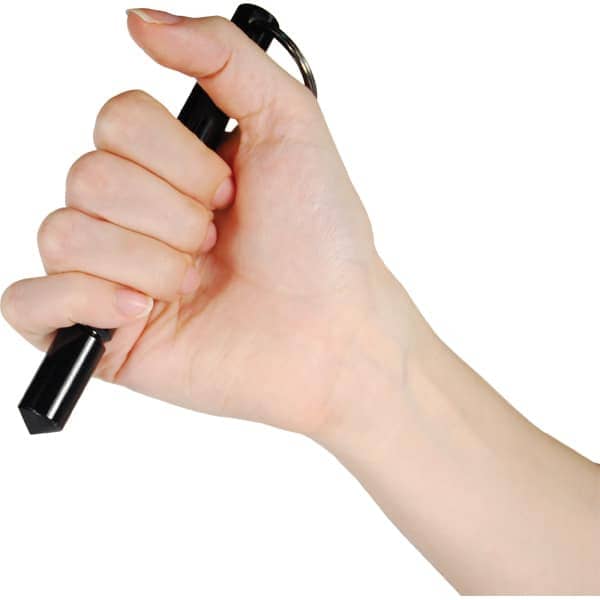
A fundamental technique involves gripping the Kubotan firmly, allowing it to extend from the fist, transforming it into a formidable striking weapon. This method can be used to target sensitive areas such as the ribs, collarbone, or groin, providing a powerful deterrent against aggressors.
Another basic technique is the use of pressure point control. By applying directed pressure on an assailant’s joints or nerve clusters, individuals can incapacitate or deter further attack.
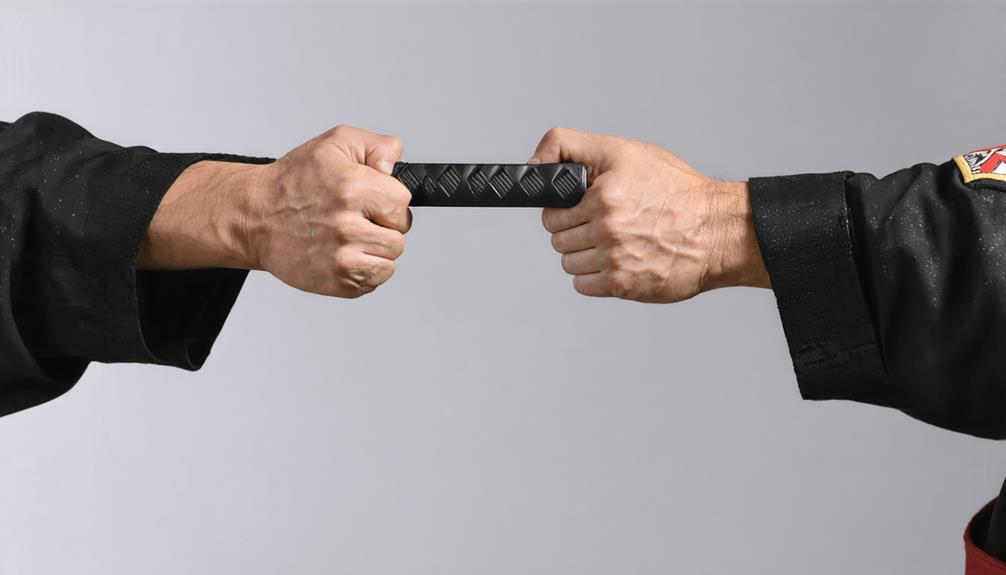
Additionally, the Kubotan can be utilized for joint locks and holds. By exploiting the leverage offered by the tool, one can effectively control an opponent’s movements, creating an opportunity for escape.
Mastery of these basic techniques ensures that the Kubotan remains an essential component in one’s self-defense toolkit, offering both versatility and efficacy in various confrontational situations.
Advanced Applications
Building upon foundational skills, advanced applications of the Kubotan encompass sophisticated techniques such as targeting pressure points to incapacitate an adversary effectively.
Mastery of effective blocking strategies enhances defensive capabilities, allowing practitioners to neutralize threats with precision.
Additionally, the Kubotan can be employed to swiftly disarm opponents, providing a strategic advantage in high-stakes confrontations.
Kubotan Pressure Point Techniques
Frequently overlooked in self-defense training, advanced pressure point techniques with a kubotan offer unparalleled control and effectiveness when executed correctly.
With a deep understanding of pressure point anatomy, practitioners can use the kubotan to target specific areas of the body that are more sensitive to pressure, potentially immobilizing or incapacitating an assailant with minimal effort.
Pressure point applications involve pinpointing these sensitive regions, such as the brachial plexus, solar plexus, or radial nerve, which are strategically located and can be exploited to maximize the impact of defensive maneuvers.
Mastering these techniques requires not only anatomical knowledge but also precision and accuracy in execution.
The kubotan, a compact and versatile tool, becomes an extension of the hand, amplifying the force applied to these critical areas.
This precision allows for swift and effective responses in high-stress situations, providing a significant advantage to those trained in its use.
Training in pressure point techniques with a kubotan fosters a heightened awareness of one’s surroundings and the ability to react decisively under duress.
As a result, individuals equipped with these skills possess a powerful means of self-defense, enhancing personal safety and confidence in potential threat scenarios.
Effective Blocking Strategies
Effective blocking strategies with a kubotan, when executed with precision and skill, elevate self-defense to an advanced level. Mastering these techniques requires understanding the kubotan’s unique properties and leveraging its impact resistance to neutralize threats.
The kubotan, a compact but formidable tool, offers tactical advantages in deflecting blows, safeguarding the user from potential harm while maintaining control over the situation.
One critical aspect of effective blocking is positioning. By holding the kubotan firmly and maintaining a strong stance, the defender can absorb and disperse the force of an attack, minimizing injury. The tool’s design allows it to withstand significant impact resistance, making it ideal for intercepting strikes aimed at vulnerable areas.
Additionally, the kubotan’s versatility enhances its tactical advantages during defensive maneuvers. Its cylindrical shape and solid build can be used to effectively parry or redirect an assailant’s attack, creating opportunities for counter-strikes or retreat.
Practitioners are advised to practice fluid movements, integrating blocks with offensive techniques to maintain momentum and control.
Incorporating these advanced blocking strategies within a comprehensive self-defense approach ensures a balanced defense, empowering individuals to protect themselves confidently and effectively.
Disarming Opponents Swiftly
Mastering effective blocking strategies with a kubotan lays the groundwork for more advanced self-defense techniques, such as swiftly disarming an opponent. In self-defense scenarios, understanding opponent psychology is crucial. The kubotan, a seemingly innocuous tool, becomes a formidable weapon when used correctly. Its effectiveness hinges on the ability to anticipate and manipulate an adversary’s expectations and reactions.
To achieve swift disarming, practitioners must focus on key pressure points and leverage. By targeting joints or sensitive areas, the kubotan can incapacitate an opponent quickly. This requires not only technical skill but also an acute awareness of the opponent’s psychological state, such as their confidence level and aggression.
Technique
Key Focus
Joint Manipulation
Leverage
Pressure Points
Quick Incapacitation
Feinting
Opponent Reaction
Redirection
Momentum Control
The table above illustrates techniques that can be employed to disarm opponents effectively. Each technique leverages different aspects of both physical and psychological dynamics. For instance, feinting can exploit an opponent’s reactive nature, leading them into a vulnerable position. In summary, combining strategic kubotan use with an understanding of opponent psychology equips practitioners with a powerful defense mechanism, allowing for rapid and effective disarmament in critical situations.
Legal Considerations
Navigating the legal landscape surrounding the use and possession of a Kubotan for self-defense requires careful consideration. Self-defense laws vary significantly across jurisdictions, impacting how individuals can legally use a Kubotan as a defensive tool.
It is crucial for those considering carrying a Kubotan to understand both local and state self-defense laws to ensure compliance. Generally, self-defense laws allow individuals to use reasonable force to protect themselves from imminent harm. However, what constitutes “reasonable force” can differ, and exceeding this may lead to legal repercussions.
Kubotan regulations are another critical aspect to examine. In some regions, Kubotans are classified similarly to other personal defense tools, such as pepper spray or knives. While they may be legally carried in certain areas, others may impose restrictions or require permits.
Furthermore, airports and certain public venues may enforce strict regulations against carrying even seemingly benign self-defense items like Kubotans.
To mitigate legal risks, individuals should thoroughly research the self-defense laws and Kubotan regulations pertinent to their location. Consulting legal professionals or authorities can provide additional insights and guidance, ensuring responsible and lawful possession and use of a Kubotan for self-defense purposes.
Training and Practice
While understanding the legal considerations is fundamental, developing proficiency in using a Kubotan for self-defense requires focused training and consistent practice. Mastery of the Kubotan does not come automatically; it involves a structured approach to learning that includes training drills and practice routines tailored to enhance effectiveness and confidence. These activities are designed to improve critical skills such as grip strength, target accuracy, and quick responsiveness in high-pressure situations.
A comprehensive training regimen can be organized as follows:
Training Element
Description
Frequency
Basic Drills
Focus on grip, stance, and strikes
Daily
Partner Exercises
Simulated attacks for realism
Weekly
Scenario Training
Real-life situational practice
Bi-weekly
Training drills should be conducted under the supervision of a qualified instructor initially. This guidance ensures the correct techniques are learned, minimizing the risk of injury and maximizing the Kubotan’s defensive potential. Moreover, practice routines must be varied and include both solo and partner exercises to provide a comprehensive skill set. Scenario training, which introduces realistic situations, is essential for preparing practitioners to react effectively in genuine threats. By adhering to a disciplined training schedule, individuals can significantly enhance their ability to use a Kubotan confidently and safely for self-defense.
Frequently Asked Questions
How Can a Kubotan Be Safely Carried in Everyday Situations?
Carrying a kubotan safely involves understanding kubotan legality in your jurisdiction. For everyday concealment, it can be discreetly attached to a keychain or placed in a pocket, ensuring it remains accessible while complying with local laws and regulations.
What Materials Are Kubotans Typically Made From?
Kubotans are typically constructed from materials like aluminum, stainless steel, or high-impact plastic. Throughout kubotan history, these materials have been chosen for their durability and effectiveness in self-defense, making them reliable tools for personal safety.
Can a Kubotan Be Used in Combination With Other Self-Defense Tools?
Incorporating a kubotan with other self-defense tools enhances personal security. The kubotan’s advantages, such as its compact size and versatility, complement various techniques, allowing for effective defense strategies when used alongside pepper spray or personal alarms.
Are There Any Specific Maintenance Tips for Keeping a Kubotan in Good Condition?
To maintain a kubotan in optimal condition, regular kubotan cleaning with a mild soap and water solution is recommended. Additionally, proper kubotan storage in a dry, secure location will prevent damage and ensure longevity.
How Does One Discreetly Use a Kubotan in a Self-Defense Scenario?
In a self-defense scenario, one can discreetly apply kubotan techniques by concealing the tool within the hand, employing subtle movements to target pressure points, thereby ensuring minimal visibility and maximizing effectiveness in neutralizing a threat.
Conclusion
The kubotan, a tool rooted in martial arts history, offers a practical solution for civilian self-defense. Understanding its origin and selecting the appropriate material and design are crucial for effective use. Mastery of basic techniques, along with advanced applications, enhances its utility in real-world situations. Awareness of legal considerations surrounding kubotan use is essential to ensure compliance with local regulations. Continued training and practice remain vital for maximizing the kubotan’s potential as a self-defense instrument.
With over 25 years in the Self Defense Industry, Jose Diaz has provided lots of advise to those seeking to protect themselves against danger. Jose is a hard working individual who has use his skills to address the many faults of self protection in our society. As a father, Grandfather and a Great grandfather he wants to keep his family safe. This is why he has created his business, "Brainstorm Security Shop". He wants to provide people with a choice to defend themselves in case of a personal attack. His self-defense gadgets, like stun guns, pepper sprays, knifes, personal alarms and others will provide protection against any attacker. Please take a look at his products since very well can save your life in case of a personal attack. May you and your loved ones be safe and enjoy a long and prosperous life.