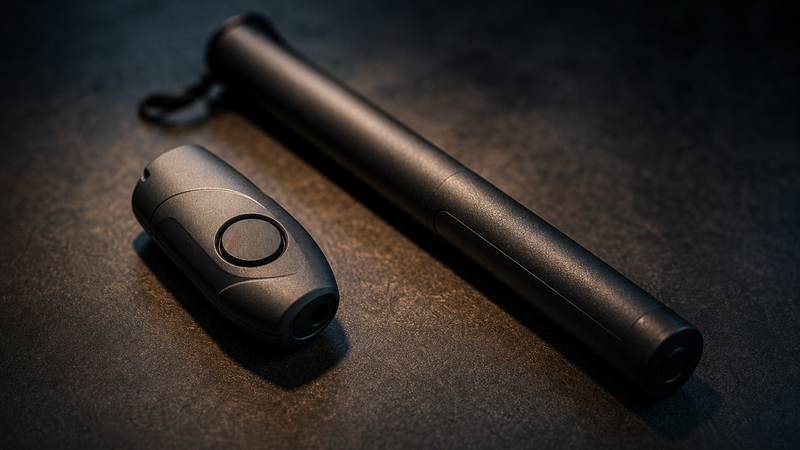
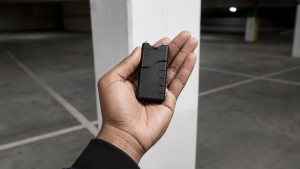
A stun gun is a compact, close-contact device you hold in your hand and press directly against an attacker’s body to deliver an electric shock. A stun baton does the same thing electrically — but it’s built into a long rigid shaft, giving you distance, a striking surface, and in some cases a built-in flashlight. Same core technology, very different tools, and choosing the wrong one for your situation is a mistake worth avoiding.
Most people assume these two things are basically the same — maybe just different sizes of the same gadget. That’s where they get it wrong. I’ve been in this industry for over 25 years, and I still see people grab the first thing that looks like it’ll work without really thinking through how they’d use it in a real situation. There’s more going on here than meets the eye — and once you see it, you can’t unsee it.
How does a stun gun actually work — and what makes it different from a baton?
Here’s the thing most people never get explained to them properly. Both a stun gun and a stun baton use the same underlying principle: high-voltage, low-amperage electricity that disrupts the body’s neuromuscular system on contact. The voltage causes involuntary muscle contractions and significant pain. The person on the receiving end loses voluntary muscle control temporarily. That’s the idea.
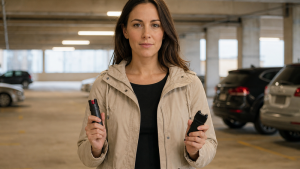
What separates them is form factor — and form factor changes everything. A compact stun gun fits in your palm. You close the distance, make contact, and activate it. That’s your whole strategy. It’s built for situations where you’re already within arm’s reach of someone, or where concealability and speed of access matter most. Think a woman reaching into her purse in a parking garage. Think someone working a night shift and walking to their car alone.
A stun baton, on the other hand, is built around a long rigid body — typically 16 to 21 inches — and it changes your defensive posture entirely. You can strike before contact is made. You’ve got reach. And here’s something most people don’t think about: many stun batons are electrified along the shaft, not just at the tip. That means if someone tries to grab it out of your hands, they’re in for an unpleasant surprise. That design choice wasn’t an accident.
The stun options available today cover both categories in more configurations than most people realize — and understanding the difference is the first step to picking the right one.
Who should carry a compact stun gun versus a stun baton?
Now look — this isn’t a one-size-fits-all answer, and I’m not going to pretend it is. The right tool depends on who you are, where you’re going, and what you’re most likely to face.
A compact stun gun is the right call when concealment matters. If you’re carrying in a purse, a jacket pocket, or clipped to a waistband, something small and flat is going to serve you a lot better than something the size of a flashlight. The pocket-sized stun gun category exists for exactly this reason — people who need something that disappears on their person and deploys fast. The Runt, for example, is one of those stubby little units that packs a serious punch in something you can wrap your whole hand around.
A stun baton fits a different profile. If you’re a homeowner who wants something near the bed. If you’re a security guard doing a night sweep of a parking lot. If you’re someone who wants a little more distance between themselves and a threat before things get physical. The baton gives you reach that a palm-sized device simply can’t. Brands like Streetwise and the Stun Bat line make batons specifically designed for this kind of defensive posture — and some of them double as serious flashlights, which adds another layer of usefulness in low-light situations.
The stun gun flashlight combo category bridges the gap for a lot of people — giving you a longer form factor with real illumination and the electrical deterrent built in. It’s worth a look if you’re still on the fence about which direction fits your lifestyle.
Does a stun baton have more power than a stun gun?
This is the question that pulls people in — and the answer is more interesting than you’d expect. Voltage numbers get thrown around in this industry like they tell the whole story. They don’t. A 20-million-volt stun gun and a 20-million-volt stun baton are listed the same on paper, but there are variables that matter more than the number on the box.
What actually matters is amperage, the quality of the electrical components, the duration of contact, and where on the body contact is made. Voltage creates the arc you can see and hear when you test-fire a unit. Amperage is what actually affects the body’s muscular response. Most self-defense stun devices operate in a range that is painful and disruptive without being lethal — that’s intentional design, not a flaw.
I’m gonna tell you right now — don’t buy based on the biggest voltage number you can find. Buy based on build quality, reliability, and whether the device makes sense for how you’d actually use it. A well-built compact unit from a brand like Streetwise or ZAP will outperform a cheap baton with a flashier spec sheet every single time.
If you want to understand what the electrical contact actually feels like before you commit to a purchase, this post on what a stun gun feels like is a genuinely useful read. No sugarcoating, just honest information.
Are stun batons legal in the same places as stun guns?
Here’s where it gets murky — and I mean that literally. The legal landscape around stun devices isn’t uniform, and stun batons add an additional layer of complexity because of their form factor. In some jurisdictions, a baton is regulated separately from a compact stun device — even if both are non-lethal and operate on the same electrical principle. The length alone can trigger different classification under local ordinances.
I’m not a lawyer and I’m not going to give you legal advice. What I will tell you is this: always check your local laws before you buy, and then check again before you carry. State law is one thing. City ordinances are another. And if you’re traveling — by car, by air, or by sea — the rules change again at every boundary you cross. There’s a whole separate conversation to be had about carrying stun guns on cruise ships, for example, and the answers there will probably surprise you.
Our legal stun gun for civilians page is a good starting point for understanding what’s available and what the general landscape looks like — but do your homework on your specific location before you commit to carrying anything.
What situations is a stun baton better suited for than a compact stun gun?
There’s a specific set of scenarios where a baton pulls ahead — and most people haven’t thought them through until someone like me walks them through it.
Distance is the big one. If someone is approaching you aggressively and you have even a few seconds to read the situation, a baton lets you establish a perimeter before they close the gap. You can extend it, you can use it as a visual deterrent — the crackling arc from a baton tip is loud and dramatic — and if contact is made, you’ve got the electrical element working for you.
The second scenario is animal encounters. Hikers, joggers, mail carriers, utility workers — people who operate in environments where aggressive dogs are a realistic concern. A stun baton keeps the animal at a distance a compact unit simply can’t. This is one of the most practical use cases that almost never gets discussed.
Third: home defense. If you keep a device near the bed or in a nightstand, a compact unit means you have to get close before it’s effective. A baton can be used as an impact weapon even before you activate the electrical element. That matters in a confined space at 2 a.m. when your adrenaline is going and your fine motor skills are compromised.
For compact everyday carry and concealability, ordering a stun gun in the smaller form factor is usually the smarter play. But don’t dismiss the baton without thinking through your actual environment.
Frequently Asked Questions About Stun Guns and Stun Batons
Can a stun baton knock someone out?
No — and this is a common misconception worth clearing up. Stun devices, whether compact or baton-style, cause pain, temporary muscle disruption, and disorientation. They do not render someone unconscious the way movies suggest. The effect typically lasts a few seconds to a few minutes, which is enough time to create distance and get to safety. They are designed to give you a window to escape, not to incapacitate indefinitely.
Is a stun baton harder to conceal than a stun gun?
Yes, significantly. A compact stun gun can fit in a jacket pocket, purse, or palm without drawing attention. A stun baton — typically 16 to 21 inches — is difficult to carry concealed and is generally used as an open-carry or home defense tool. If discreet everyday carry is your priority, a pocket-sized stun gun is the better choice. The baton’s value is in reach and deterrence, not concealment.
Do stun batons work through clothing?
Yes, though thick clothing like heavy denim or leather can reduce effectiveness. The electrical charge passes through most standard clothing layers, but the closer the contact probes are to skin, the more effective the device. This applies equally to compact stun guns and stun batons — the principle is the same. Direct skin contact delivers the most reliable result in either case.
How long does the effect of a stun baton last?
The neuromuscular disruption from a stun device typically lasts between one and five minutes, depending on the individual, the duration of contact, and where on the body contact is made. Larger muscle groups — the torso, neck, and upper hips — tend to produce stronger responses. The goal isn’t prolonged incapacitation. The goal is enough time for you to get away from a threat and reach safety.
What’s the benefit of a stun baton that’s electrified along the entire shaft?
This is a design feature worth paying attention to. Some stun batons are electrified not just at the tip but along the length of the shaft. This means if an attacker attempts to grab the baton to take it away from you, they make contact with the electrified surface and receive a shock. It’s a real tactical advantage. When you’re evaluating baton options, this is a spec worth checking — not all batons have it.
Can I use a stun baton as a regular flashlight?
Many stun batons include a functioning flashlight — and yes, you can use it like any other flashlight. In fact, that’s one of the strongest arguments for a stun baton in a home defense or outdoor setting. You get real illumination plus the electrical deterrent in the same unit. The Strikelight 2 is a good example of a device that bridges this gap well. It’s a legitimate flashlight that happens to also be a capable stun device.
Is a stun gun or stun baton better for a woman walking alone at night?
For most everyday situations — parking lots, walking to a car, leaving an office late — a compact stun gun is the more practical choice. It can be kept in a hand or purse, deployed quickly, and doesn’t require managing a long device in close quarters. A baton is harder to access quickly from a bag and can be difficult to maneuver in tight spaces. That said, for someone who walks in isolated areas or jogs on trails, the baton’s reach is a genuine advantage worth weighing.
Do stun batons require any special maintenance?
Most modern stun batons are rechargeable via USB or a wall adapter, so the main maintenance task is keeping the battery charged. You should also periodically test-fire the device in a safe direction to confirm it’s functioning — this is true of any stun device. Store it away from extreme heat or moisture. Some units have a built-in safety switch or disable pin; make sure you understand how yours works before you ever need to use it in a real situation.
The gap between a stun gun and a stun baton isn’t just physical size — it’s a fundamentally different defensive strategy. One tool says “I need to get out of this situation fast.” The other says “I’m going to control the distance before this becomes a situation.” Both have their place. The question is which one fits the life you’re actually living, not the life you imagine in the abstract.
Think it through honestly. Where do you spend your time? Who’s around you? What does your commute look like at night? The right answer lives in those details — not in a spec sheet. Browse what we carry at Brainstorm Security Shop, and if you’ve got questions, don’t hesitate to reach out. May you and your loved ones stay protected out there.