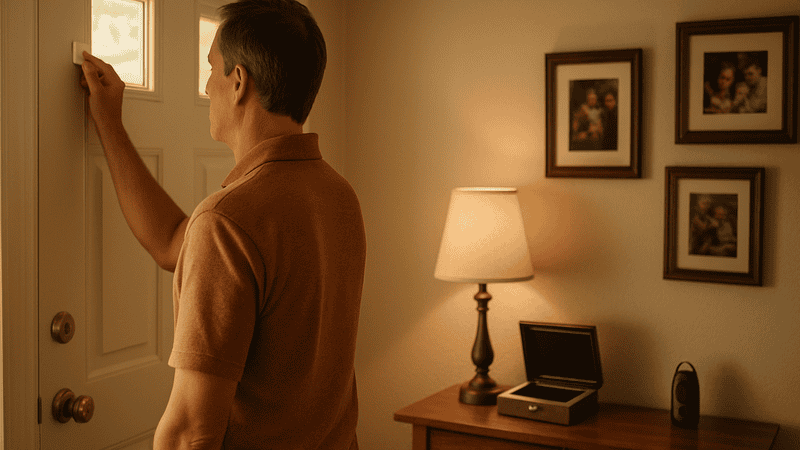
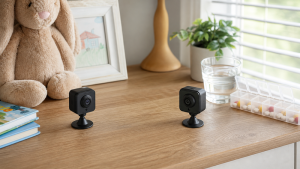
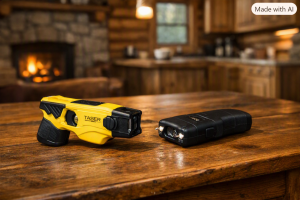
One device alone — a lock, an alarm, a camera — will always have a gap, because every security tool has a weakness that another tool covers. Layered home security means combining detection (alarms, cameras), deterrence (visible devices, dummy cameras), and response (stun guns, pepper spray) so that if one layer fails or gets bypassed, the next one is already working. The goal isn’t more gadgets — it’s building a system you can trust when it actually matters.
Here’s the thing about trust — you don’t build it by hoping one thing works. You build it by knowing that if Plan A fails, Plan B is already in place. That’s the entire philosophy behind layered home security, and it’s the same principle I’ve built my own home around for over two decades in this business.
I’ve talked to a lot of homeowners who bought one alarm system, felt good about it, and stopped there. I get it — it feels like a box you can check off. But real security isn’t a single box. It’s a series of them, stacked so that no single point of failure leaves your family exposed. In this post, I’m going to walk you through exactly why that is, and what a smart, trustworthy layered system actually looks like — no gimmicks, no overselling, just what works.
Why isn’t one security device enough to protect a home?
One device isn’t enough because every single security tool — no matter how good — has a blind spot. A lock can be picked or forced. A camera can be unplugged or have its footage stolen along with the router. An alarm can be disarmed if someone knows the code or the panel is exposed. None of these failures are hypothetical. They happen, and they happen because homeowners trusted one layer to do a job meant for several.
Think of it like a chain of custody. Detection tells you something is happening. Deterrence discourages it from happening in the first place. Response gives you and your family a way to protect yourselves if it happens anyway. A single device can usually only do one of those three jobs well. That’s not a knock on the product — it’s just physics and honesty. A camera doesn’t stop an intruder. An alarm doesn’t defend you in the moment. You need all three working together.
This is why I always tell people: don’t ask “what’s the best security device,” ask “what’s the best combination for my house.” That’s a completely different — and much smarter — question.
What are the layers in a trustworthy home security system?
A trustworthy home security system has three core layers: detection, deterrence, and personal response. Detection includes things like door and window sensors, motion-activated alarms, and security cameras — this layer tells you something is happening before it becomes a crisis. Deterrence includes visible cameras, yard signs, lighting, and even dummy cameras for the home that make a potential intruder think twice before they ever try the door. Response is the layer most people skip — and it’s the one that matters most if the first two layers didn’t stop someone from getting inside.
Response tools are things like a stun gun for home defense kept in a nightstand, or pepper spray for home defense stationed near an entry point. These aren’t scare tactics — they’re the layer that exists for the moment when the first two layers have already been bypassed. If you only build detection and deterrence, you’re trusting that a criminal will always be scared off. Most of the time, they will be. But “most of the time” isn’t the standard I want my own family living by, and it’s not one I’d recommend for yours either.
How do I decide which layers to stack first?
Start with detection, add deterrence, then build in response — in that order, based on your budget and your home’s specific risk points. If you’re renting or on a tighter budget, start with entry-point alarms and a couple of well-placed dummy cameras. These give you real detection and real deterrence without a big investment. Once that foundation is in place, layer in visible cameras at your most vulnerable entry points — usually the back door and any ground-floor windows facing away from the street.
The response layer comes next, and I’d argue it should never be skipped entirely, even on a limited budget. A stun gun or pepper spray isn’t expensive compared to a full camera system, and it’s the layer that protects you directly, not just your property. I always tell people — you don’t have to carry a gun, but carry something, and that “something” should live in your home too, not just your pocket.
If you’ve got elderly family members in the house, the stacking priorities shift a little. Mobility and reaction time matter more than raw deterrence. I wrote a full breakdown on this in Home Security Systems for Elderly if that’s your situation — it’s worth a read before you build out your layers.
What’s the difference between a visible deterrent and a hidden one?
A visible deterrent is meant to be seen and scare off trouble before it starts. A hidden layer is meant to protect what’s valuable even if someone gets past the visible layer. Both matter, and a trustworthy system uses both — not one or the other.
Visible deterrents include real or dummy cameras, alarm system signage, and motion-lights. These work because most break-ins are opportunistic — someone testing a door, not planning a heist. A visible camera or a blinking alarm panel light sends most of those people walking. That’s why dummy cameras for the home aren’t a joke or a gimmick — they’re a legitimate, budget-conscious layer that does real work, especially when paired with an actual working system elsewhere on the property.
Hidden layers work differently. A diversion safe for the home — something that looks like a can of shaving cream or a book on a shelf — protects your valuables even if someone gets past your locks, your alarm, and your cameras. I’ve seen too many people put all their trust in the front door and none in what happens if that door fails. A diversion safe is cheap insurance against that exact scenario.
Do I need a personal defense layer if I already have an alarm system?
Yes — an alarm system alerts you and possibly the authorities, but it doesn’t physically protect you in the moment an intruder is already inside. That gap, the time between the alarm going off and help arriving, is exactly what the response layer is built for. I’ve had this conversation more times than I can count with folks who assumed the alarm was the whole plan. It’s not. It’s one very important piece.
A stun gun for home defense kept accessible in a bedroom, or pepper spray near a main entry point, closes that gap. These tools are simple to use under stress, don’t require a lot of training to deploy correctly, and give you a real option in those first critical seconds. If you’re weighing your options on cost, I put together a straightforward guide called Stun Gun Price: What You Need To Know Before Buying One — worth a look before you decide what fits your budget.
And if pepper spray is more your speed, make sure you actually know how to use it under pressure — not just own it. I wrote How to Use Pepper Spray Correctly: What Most Women Are Never Taught specifically because too many people buy a can and never train with it. Owning a tool isn’t the same as being ready to use it.
How does layered security work for a vacation home or a house you’re not always in?
Layered security matters even more for a home you’re not always in, because there’s no one there to notice a failed layer right away. Detection becomes your eyes when you’re not physically present, so remote-monitored alarms and cameras take on more weight here. Deterrence still matters just as much — a home that looks empty and unguarded is a target, so visible cameras, timed lighting, and even dummy cameras help maintain the appearance of an occupied, protected property.
The response layer shifts too, since you’re not there to use pepper spray or a stun gun yourself. Instead, this layer becomes about making sure that if someone does get inside, they can’t easily walk out with everything of value. That’s where a diversion safe earns its keep — it’s quietly protecting what matters most, even in an empty house. I go deeper into this exact scenario in How To Use a Home Security System for Vacation Homes, including how to layer things when you can’t be there to respond in person.
Frequently Asked Questions About Layered Home Security
What is layered home security, in simple terms?
Layered home security means using multiple types of protection together — detection tools like alarms and cameras, deterrence tools like visible cameras and lighting, and response tools like stun guns or pepper spray — so that if one layer fails, another is already in place to protect you and your property.
What’s the most important layer to start with?
Detection is usually the smartest starting point because it’s often the most affordable and gives you immediate awareness of what’s happening at your home. From there, add deterrence, and don’t skip the response layer — it’s the one that protects you personally, not just your belongings.
Are dummy cameras actually effective as part of a security system?
Yes, when paired with real deterrents elsewhere. Most break-ins are opportunistic, and a visible camera — real or not — makes a potential intruder think twice. Dummy cameras work best as one layer among several, not as your only line of defense.
Do I really need a stun gun or pepper spray if I have an alarm system?
Yes. An alarm alerts you that something’s wrong, but it doesn’t protect you in the moments after that alert goes off. A stun gun or pepper spray gives you a direct way to protect yourself if someone is already inside before help arrives.
What is a diversion safe and why would I need one?
A diversion safe is an everyday object — a book, a can, a container — that secretly hides valuables in plain sight. It protects your belongings even if someone bypasses your locks, alarm, and cameras, making it a smart hidden layer in any full security plan.
How many layers of security does the average home actually need?
Most homes benefit from at least three layers: one detection tool, one deterrence tool, and one personal response tool. You don’t need to overspend on gadgets — you need each layer covering a different weakness so no single failure leaves you exposed.
Is layered security more expensive than a single alarm system?
Not necessarily. Many layers — dummy cameras, diversion safes, pepper spray — are inexpensive compared to a monitored alarm system alone. Building layers gradually, starting with the most affordable and highest-impact tools, is often more cost-effective than one expensive all-in-one system.
What’s the biggest mistake people make with home security?
The biggest mistake is trusting one device to do the whole job. People buy a camera or an alarm, feel protected, and stop there. Real protection comes from stacking detection, deterrence, and response together, so there’s no single point where the whole plan falls apart.
Trust isn’t built on hope — it’s built on knowing your bases are covered. That’s what layered security really comes down to: not buying every gadget on the shelf, but making sure detection, deterrence, and response are all working together, quietly, every day, whether you’re home or not. Start with what you can afford, add the next layer when you’re ready, and don’t skip the layer that protects you directly, not just your property.
If you’re ready to start building your own layered plan, take a look through our full lineup of home security tools and start with the layer your house is missing most. Stay safe out there.