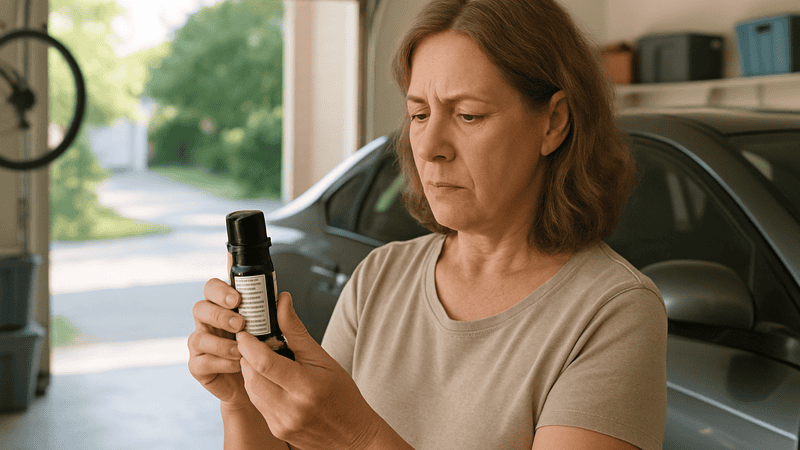
OC percentage tells you how much oleoresin capsicum is in the formula — but it’s not the number that determines how much it’ll hurt. SHU, or Scoville Heat Units, measures the actual heat/pain potency of the capsicum extract itself. A spray can list “10% OC” and still be weaker than a “5% OC” spray if the second one uses a higher-SHU extract. If you’re only reading one number on that label, you’re missing half the picture — and that gap is exactly where a lot of people get burned, literally, when they trusted a spray that wasn’t built the way they assumed.
What does OC percentage actually mean on a pepper spray label?
OC percentage tells you what portion of the total formula is oleoresin capsicum — the oily resin extracted from hot peppers that does the damage. That’s it. That’s all it tells you. It does not tell you how hot that resin is, how it was processed, or how effectively it’ll drop someone trying to get at you or your family.
Here’s where people get burned — figuratively, before they ever get burned literally. A manufacturer can slap “18% OC” on a bottle and make it sound like a flamethrower. Sounds impressive. But if that OC was extracted from a low-heat pepper stock, or diluted with cheap carrier oil, that 18% can perform weaker than a properly formulated 5% OC spray using high-grade capsicum. I’ve seen it. I’ve tested it. Percentage alone is marketing math — not performance math.
This is why I tell people all the time: don’t shop by the biggest number on the label. Shop by the company behind it. Reputable pepper sprays sold through pepper spray for sale pages from established manufacturers are formulated for real stopping power, not label bragging rights. If a company won’t tell you their SHU rating, that should raise a flag right there.
What is SHU and why does it matter more than most people think?
SHU stands for Scoville Heat Units — it’s the actual measurement of how “hot” the capsicum compound is, independent of how much of it is in the bottle. A jalapeño sits around 5,000 SHU. A ghost pepper can hit over a million. Most quality self-defense pepper sprays are formulated in the 2 million to 5.3 million SHU range using synthetic capsaicin or high-grade OC resin — because that’s the range that actually causes the eye-slamming, throat-closing, can’t-see-straight reaction you need in a real confrontation.
Now here’s the part that should alarm you: a lot of budget sprays skip listing SHU entirely. They’ll proudly display “10% OC” in bold letters and leave the heat rating off the label completely — because if that number were low, it’d expose the whole formula as weak. When a company hides the SHU number, they’re not being modest. They’re hoping you won’t ask the question that actually matters.
When you’re comparing options, especially ones you’re trusting for high-stakes situations — pepper spray for elderly defense, where a single accurate burst may be someone’s only chance to get away — SHU rating isn’t a technical detail. It’s the whole ballgame.
Can a low OC percentage still stop an attacker?
Yes — and this catches people off guard every time. A well-formulated 5% OC spray with a high SHU rating and a good delivery stream can outperform a poorly made 10% OC spray every time. I’ve watched people stand in my shop, pick up two bottles, and choose the one with the bigger percentage number because it “sounds stronger.” That instinct will get you the wrong tool.
What actually determines stopping power is a combination: SHU rating, spray pattern, distance of the stream, and how consistently the canister delivers under stress. A stream pattern like you’ll find in the pepper spray for car lineup gives you distance and accuracy in a tight space, where a fogger might blow back on you inside a vehicle. A gel formula, which we break down in detail in Pepper Gel vs. Spray: Which Protects You Better?, sticks to the target instead of drifting — which matters more outdoors, in wind, or in close range confrontations, than raw percentage ever will.
Here’s the thing — don’t get hypnotized by one number. Get the whole spec sheet before you trust your life to it.
How do I know if a pepper spray brand is telling me the truth?
Look for brands that publish both numbers — OC percentage and SHU rating — clearly, without you having to dig for it. That transparency is the tell. Manufacturers like Mace, Wildfire, Streetwise, and Pepper Shot typically disclose both figures because their formulas are built to perform, not just to advertise a scary-sounding percentage.
Second thing to check — is it independently lab-tested? Reputable defense spray makers test their formulas for consistent SHU output batch to batch. Cheap import sprays often vary wildly from bottle to bottle because there’s no quality control on the capsicum extraction. You could get a hot batch or a dud, and you won’t know which one you’re carrying until it’s too late to matter.
Third — check the delivery system. A great formula in a cheap, leaky canister with an unreliable trigger is still a bad product. I always tell people: the chemical matters, but so does the hardware pushing it out. That’s a corner too many manufacturers cut to hit a lower price point.
Does a higher SHU rating mean a higher legal risk?
Not typically for civilian-strength sprays — but you need to know your state’s rules before you buy, and that’s on you to check, not on the label. Most self-defense pepper sprays sold for personal protection sit within legal limits for civilian use across the country, but a handful of states restrict OC percentage or canister size. That’s a separate conversation from SHU, and one worth having with yourself before you buy, not after.
What I can tell you is this: for most people asking “what strength do I actually need,” the answer isn’t the maximum available. It’s a well-formulated, properly rated spray that you’ll actually carry, actually reach for, and actually know how to use under stress. If you’ve never fired a test burst, don’t know your spray pattern, or you’re not sure how to react if wind blows it back at you, the SHU number won’t save you. Training will. We cover that in How to Use Pepper Spray Correctly: What Most Women Are Never Taught — read it before you ever need to use what’s in your bag.
What should I actually look for when comparing pepper spray products?
Compare these four things side by side, every time, no exceptions:
1. SHU rating — this is the real heat measurement. Look for 2 million SHU or higher for reliable stopping power.
2. OC percentage — useful only in combination with SHU, never alone.
3. Spray pattern and range — stream, fog, or gel each perform differently depending on wind, distance, and whether you’re indoors, outdoors, or in a vehicle.
4. Canister reliability — consistent trigger action, no leaks, and a safety mechanism you can operate under adrenaline.
If a product is missing any of these details on its listing, that’s your signal to ask questions before you buy — not after you’re standing in a parking lot at night hoping it works. If you’re specifically outdoors a lot, distance matters even more — we go deep on that exact issue in Bear Spray Range and Coverage: The Spray Distance Numbers That Actually Save Lives, and the same math applies whether you’re facing wildlife or a person.
Frequently Asked Questions About OC Percentage vs. SHU
Is a higher OC percentage always stronger pepper spray?
No. OC percentage only tells you how much capsicum resin is in the formula, not how potent that resin is. A spray with a lower percentage but a higher SHU rating can be significantly more effective. Always check both numbers together, and be wary of any product that only advertises percentage without disclosing SHU.
What SHU rating should I look for in a self-defense pepper spray?
Most reliable civilian defense sprays fall between 2 million and 5.3 million SHU. Anything significantly lower may not deliver the incapacitating reaction you need in a real confrontation. If a product doesn’t list SHU at all, treat that as a red flag rather than an oversight.
Why do some pepper sprays not list their SHU rating?
Often because the number would expose a weak formula. Reputable manufacturers disclose SHU because they’ve tested their product and stand behind its performance. When SHU is missing from a label, it usually means the company is relying on the OC percentage alone to sell the product — and that’s exactly the gap that leaves people unprotected.
Can pepper spray with a low OC percentage still be effective?
Yes, if it’s paired with a high SHU rating and a reliable delivery system. Effectiveness comes from the combination of heat potency, spray pattern, and consistent canister performance — not from the percentage number alone. Don’t judge a spray by one figure on the label.
What’s the difference between pepper spray gel and traditional stream spray?
Gel formulas stick directly to the target and resist wind blowback, making them a strong choice outdoors or in close range situations. Traditional stream sprays travel farther and work well for keeping distance, especially in a vehicle. Your situation should determine which delivery type you choose — read our full breakdown for details.
Do I need a permit to buy high-SHU pepper spray?
In most states, no — civilian-strength pepper spray is legal to purchase and carry without a permit, though a few states have restrictions on size or percentage. Check our pepper spray no permit required page for products designed to meet common legal carry standards, and always verify your specific state’s rules.
How can I test if my pepper spray still works before I need it?
Check the expiration date first — most sprays are rated for 2 to 4 years. Give it a very brief test burst in a safe, ventilated outdoor area, away from your face and others, to confirm the trigger and stream are functioning. Never wait until an emergency to find out your canister is empty, expired, or jammed.
Is pepper spray a good option for hiking or outdoor situations?
Yes, especially formulas designed for range and wind resistance. Outdoor situations demand different performance than a close-range indoor encounter — distance, wind, and even wildlife encounters change what “effective” looks like. Check out our pepper spray for hiking and camping selection built specifically for those conditions.
Now look — I’ve spent 25 years watching people make buying decisions off a single number on a label, and I’ve seen how that goes wrong. A scary-looking percentage doesn’t mean a thing if the SHU rating’s weak, the canister leaks, or the spray pattern’s wrong for your situation. Read both numbers. Ask questions. Buy from people who’ll actually answer them. Your safety isn’t something to guess at — it’s something to get right the first time, because there usually isn’t a second chance to get it right after.
Stay safe out there.