Diversion safes and gun safes are built for completely different jobs — and mixing them up can leave your valuables, your firearms, and your family exposed in ways you didn’t plan for. A diversion safe hides valuables in plain sight inside a disguised everyday object, while a gun safe uses reinforced steel and locking mechanisms to physically resist theft and unauthorized access. Neither one replaces the other. Used together, they create a layered home security strategy that’s significantly harder to defeat than either alone.
Here’s the thing — most burglaries in this country last under ten minutes. The average thief isn’t running a forensic search of your home. They’re moving fast, grabbing what they can see, and getting out. Understanding that one fact completely changes how you think about what you need to protect and where you put it. Let me walk you through this the right way, because the wrong call here has real consequences.
What is a diversion safe and how does it actually protect your valuables?
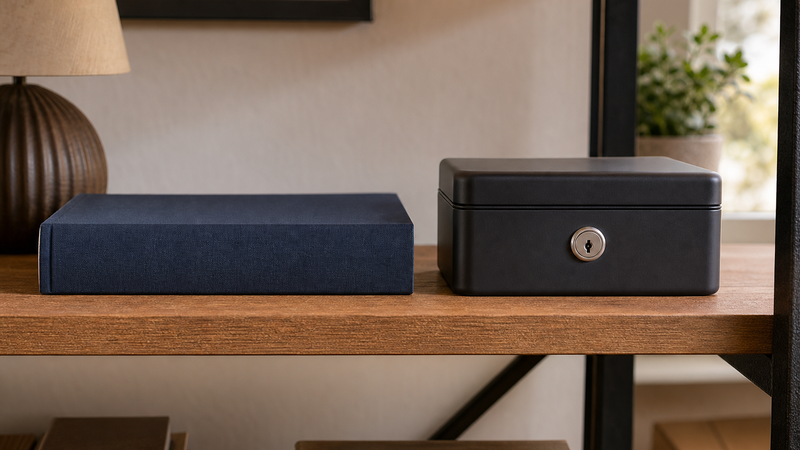
A diversion safe is a concealment device — not a vault. It’s designed to look exactly like something a burglar wouldn’t bother with: a can of shaving cream, a book on a shelf, a hairbrush, a soup can in the pantry. The protection comes entirely from deception, not physical resistance. If nobody looks for it, nobody finds it.
And the numbers back this up. Studies on residential burglary patterns consistently show that most thieves head straight for the master bedroom — jewelry, cash, small electronics. They rarely spend time methodically checking every shelf in the kitchen. A well-placed diversion safe for valuables sitting on a bathroom shelf or tucked into a pantry cabinet is genuinely effective against that kind of fast, opportunistic grab-and-go theft.
What diversion safes are not good for: protecting anything a thief is actively searching for by reputation, like firearms. If someone knows or suspects there’s a gun in the house, they’re going to look harder. A disguised object is not going to stop a determined search. That matters. Know what you’re protecting and match the tool to the job.
If you want a deeper look at the mechanics, check out how a diversion safe actually works — it’s worth understanding before you decide where and how to use one.
What does a gun safe actually protect against that a diversion safe cannot?
A gun safe is a physical barrier. Steel walls, reinforced hinges, a locking mechanism rated against forced entry — that’s a completely different category of protection. A gun safe is not trying to fool anyone. It’s trying to physically stop them.
Now look, gun safes vary enormously in quality. A $150 cable lock box from a big-box store is not the same as a 12-gauge steel floor safe bolted through a concrete subfloor. When I talk about gun safes here, I’m talking about genuine rated security enclosures — the kind that require time, tools, and significant effort to breach, which is exactly what a smash-and-grab burglar doesn’t have.
Beyond theft prevention, gun safes serve a second critical function that diversion safes simply cannot: keeping firearms away from people who shouldn’t access them. Children, teenagers, household visitors. This is non-negotiable. If you have a firearm in your home, it needs to be in a secure, access-controlled container when it’s not on your person. That’s not a suggestion — that’s a safety standard. A diversion safe disguised as a candle on a shelf is not an acceptable substitute for that level of control.
The bottom line: gun safes protect against both unauthorized access and physical theft. Diversion safes protect against being found. These are different problems that require different solutions.
When should you use a diversion safe instead of a gun safe?
Use a diversion safe for items that are small, valuable, and not something a burglar would specifically target if they didn’t know it was there — cash reserves, backup credit cards, a spare set of keys, prescription medications, jewelry you wear regularly but need a quick-access storage spot for. These are exactly the things a diversion safe handles well.
I’m gonna tell you right now — the single biggest mistake people make with diversion safes is putting firearms in them. Don’t do it. A diversion safe has no meaningful physical resistance. If a thief finds it — accidentally or otherwise — there’s nothing stopping them from walking out with it, contents and all. You do not want to be the person whose firearm ends up on the street because it was in a fake soup can.
Diversion safes are also useful in situations where a full gun safe isn’t practical — a college dorm room, a small apartment, an office. Somewhere you need to secure small valuables discreetly without the footprint or cost of a rated security enclosure. They fill a real gap. You can buy a diversion safe online at a fraction of the cost of a quality gun safe, and for the right use case, that investment is absolutely worth it.
Still unsure where to put one once you have it? I covered that in detail in another post: where to hide a diversion safe in your house — good starting point if you’re thinking through placement.
Can a diversion safe and a gun safe work together as a layered security system?
Yes — and this is exactly how serious home security is built. Layering is the concept, and it’s the same logic that applies everywhere from commercial security to military operations: the more independent barriers a threat has to defeat, the less likely it succeeds.
Here’s a practical layered setup that makes sense for most households. Your firearms go in a properly rated gun safe, bolted to the floor or wall studs, in a location that isn’t immediately obvious from the entry point. Your cash, backup documents, and small valuables go in a diversion safe placed in a low-priority room — a guest bathroom, a utility closet, a pantry shelf. Your daily-carry items — keys, wallet, phone — stay in your normal routine spots because you need fast access.
Now a burglar who gets through your front door faces a situation where the things they’d normally grab are either physically locked away or hidden in plain sight as decoys. That combination of deception and physical resistance is dramatically more effective than either strategy alone. Neither tool is doing more than its job — and that’s the point.
What are the real limitations of each safe type that most buyers overlook?
With diversion safes, the limitations come down to one word: discovery. The protection is entirely psychological. If a burglar has time, a reason to search thoroughly, or just happens to pick up the wrong “soda can,” the concealment fails. Diversion safes also have limited capacity — they’re designed for small items, not documents, hard drives, or anything bulky. And they offer zero fire protection. If your home suffers a fire, the disguised canister on the shelf is going to burn like everything else around it.
With gun safes, the limitations are cost and placement. A quality safe rated to genuinely resist forced entry is not cheap, and if it’s not anchored properly, a determined thief can simply remove it entirely and crack it later at their leisure. A safe that isn’t bolted down is just a heavy box. Installation matters as much as the safe itself.
Both types also share a limitation that’s easy to overlook: they only protect what’s inside them. If you leave your firearm on a nightstand, your safe doesn’t protect it. If you carry your cash in your wallet to the car, your diversion safe doesn’t protect it. The discipline to actually use these tools consistently is what makes them effective. Any security layer only works if you actually engage it.
How much do diversion safes cost compared to gun safes, and is the price difference justified?
Diversion safes are significantly more affordable. Most quality diversion safes run anywhere from $15 to $60 depending on size and design. A book safe, a soda can safe, a wall outlet safe — these are accessible to virtually any budget. That’s part of their value proposition. You can deploy multiple diversion safes throughout your home for less than the cost of a single quality gun safe.
Gun safes are a larger investment. A genuinely rated, anchor-ready gun safe starts around $200 for basic models and climbs quickly for multi-gun capacity, fire ratings, and higher security certifications. Premium long-gun safes with serious fire protection can run well into the thousands. That price reflects what you’re getting: real physical resistance, real fire protection, and a product built to a verifiable standard.
The price difference is absolutely justified — because they’re protecting different things at different levels of risk. You wouldn’t put your car in a cardboard box and call it secured. You wouldn’t bolt a $2,000 steel safe to the floor to protect three dollars in change. Match the security level to the value and risk of what you’re protecting. That’s the checklist that matters here.
Frequently Asked Questions About Diversion Safes vs. Gun Safes
Can I store a firearm in a diversion safe?
No — this is one of the most important rules in home security. Diversion safes have no physical resistance and can be carried off intact if discovered. Firearms must be stored in a properly rated, lockable gun safe, ideally anchored to a structural surface. Storing a gun in a disguised container creates serious risks for unauthorized access and theft. A diversion safe is a concealment tool, not a secure firearm storage solution.
Are diversion safes effective against professional burglars?
Against a professional or experienced burglar with time to search thoroughly, a diversion safe offers limited protection. Diversion safes are most effective against opportunistic smash-and-grab burglars — which make up the large majority of residential break-ins. Professionals who specifically target homes for firearms or jewelry will search more deliberately. For high-value items, a diversion safe should be part of a layered strategy, not the only layer.
Does a diversion safe offer any fire protection?
No. Standard diversion safes are made from plastic, metal, or materials that match their disguise — none of which offer fire resistance. If fire protection is a priority for documents, cash, or keepsakes, you need a fire-rated safe designed for that purpose. Many quality gun safes include fire ratings as a listed specification. If fire protection matters to you, look for a UL or ETL fire rating on any safe you’re considering.
Where should I put a diversion safe in my home?
The best locations are rooms burglars typically skip — kitchen pantries, bathrooms outside the master bedroom, laundry rooms, utility areas, and home offices. Avoid the master bedroom, which is the first place most burglars search. The goal is to place the diversion safe somewhere it blends naturally into its surroundings. A fake shaving cream can belongs in a bathroom. A fake soup can belongs on a pantry shelf. Placement that looks natural is placement that works.
Do I need both a diversion safe and a gun safe?
If you own a firearm, yes — a proper gun safe is non-negotiable for secure storage. A diversion safe complements the gun safe by protecting smaller valuables in a different way and in different locations. Using both gives you a layered approach that’s meaningfully harder to defeat than either alone. They serve different functions and protect different categories of items. The question isn’t which one to choose — it’s understanding how to use both correctly.
Can a burglar tell what a diversion safe is?
An experienced burglar who knows what to look for can sometimes identify common diversion safe designs — especially cheap ones that feel obviously lightweight or have visible seams. Quality diversion safes are weighted and constructed to feel and look like the real product. Buying a well-made diversion safe and placing it among real products of the same type (a soup can safe surrounded by actual cans) significantly reduces the chance of detection.
Is a gun safe worth the cost for home security?
Yes — especially if you have children, frequent guests, or a firearm that isn’t on your person around the clock. A quality gun safe prevents unauthorized access, deters theft through physical resistance, and in fire-rated models, protects the contents from heat damage. It is one of the highest-value security investments a homeowner can make. The cost of a proper gun safe is small compared to the consequences of a firearm falling into the wrong hands.
How many diversion safes should I have in my home?
There’s no fixed number, but most security-conscious households benefit from two to four placed in different rooms. The advantage of diversion safes is that they’re affordable enough to deploy in multiple locations — spreading your valuables across several hiding spots means a burglar would have to find all of them to clean you out. Think of each one as an independent layer. The more independent hiding spots you use, the harder the job becomes for anyone who shouldn’t be in your home.
When you think through home security the right way — methodically, room by room, item by item — you start to see that no single product does everything. Diversion safes and gun safes aren’t competitors. They’re teammates, and they each cover ground the other one can’t. The checklist isn’t complicated: secure your firearms in a rated safe, hide your small valuables in smart decoy storage, and stay consistent about using both. That’s a layered system that holds up under real-world pressure.
If you’re ready to put some of this into practice, browse our selection of diversion safes for valuables — and if you’re rounding out your home security beyond just storage, take a look at what we carry in personal protection tools as well. May you and your loved ones stay protected.