The best places to hide a diversion safe are the spots a burglar will never bother checking — and that list is longer and more surprising than most people expect. Your kitchen pantry, bathroom cabinet, laundry room shelf, and kids’ bookshelf are statistically far safer than the master bedroom closet or nightstand, which are the first places a thief hits. The whole strategy flips conventional wisdom on its head: the more “boring” the location, the more secure your valuables actually are.
Why does location matter more than the safe itself?
Here’s the thing — a diversion safe’s entire security model is based on psychology, not steel thickness. A traditional safe says, “There’s something valuable in here, come crack me.” A diversion safe says, “There’s nothing worth stealing in here, keep moving.” That psychological misdirection is the product’s core feature, and a bad location completely destroys it.
Studies on residential burglary behavior consistently show that the average break-in lasts between 8 and 12 minutes. Burglars follow a script: master bedroom first, then home office, then living room. They skip the garage, the laundry room, the bathroom vanity, and the kitchen pantry almost entirely — not because those rooms are hard to access, but because they don’t mentally register as “valuables territory.” Your diversion safe needs to live in that cognitive blind spot.
Think of it this way: the location is the first layer of security, the disguise is the second, and the locked compartment is the third. If you nail all three, you have something remarkably effective for the cost. Blow the first layer by putting a wall-socket safe in the master bedroom or a book safe in the home office library, and you’ve given a savvy burglar a reason to look twice.
What are the best rooms to hide a diversion safe?
The kitchen and bathroom are your two highest-value rooms for diversion safe placement, and most people never consider them. Here’s why they work so well — and what specific products belong in each space.
The Kitchen
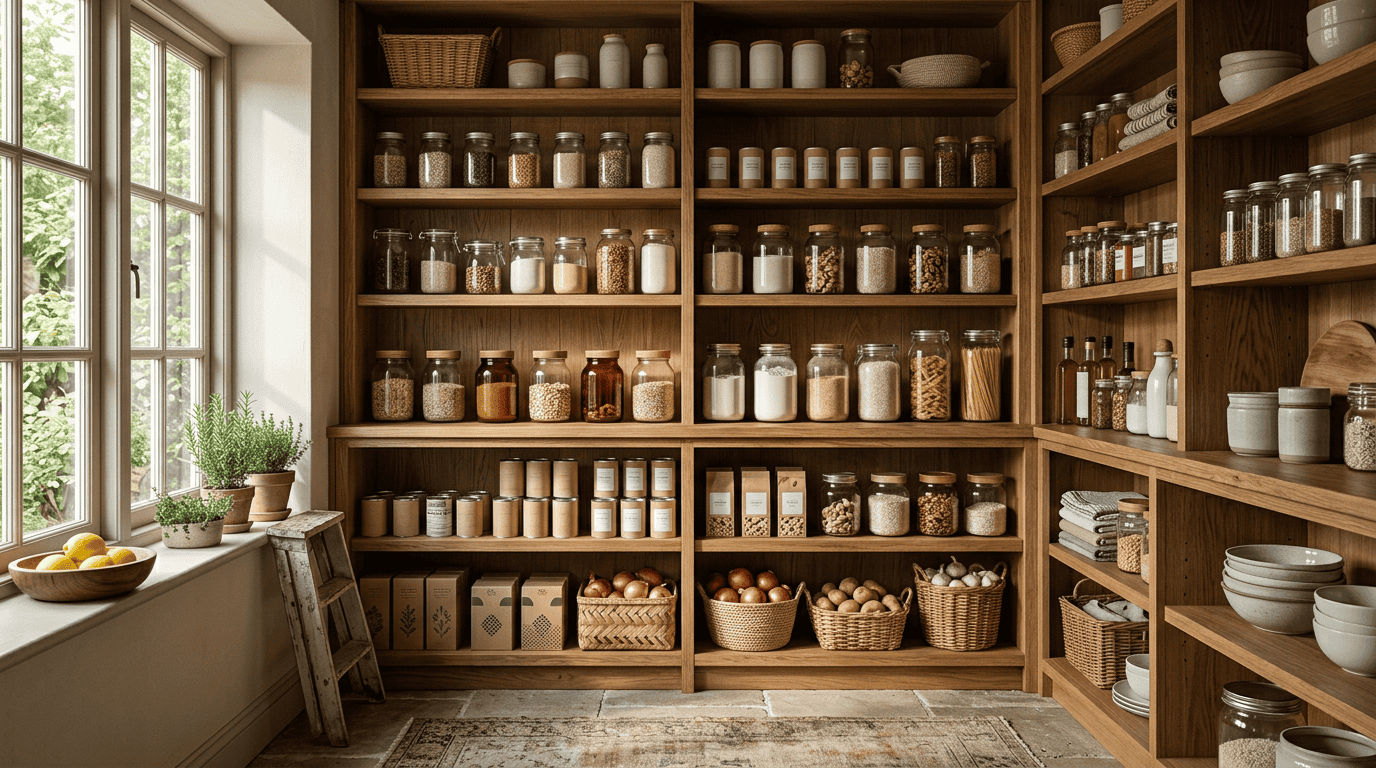
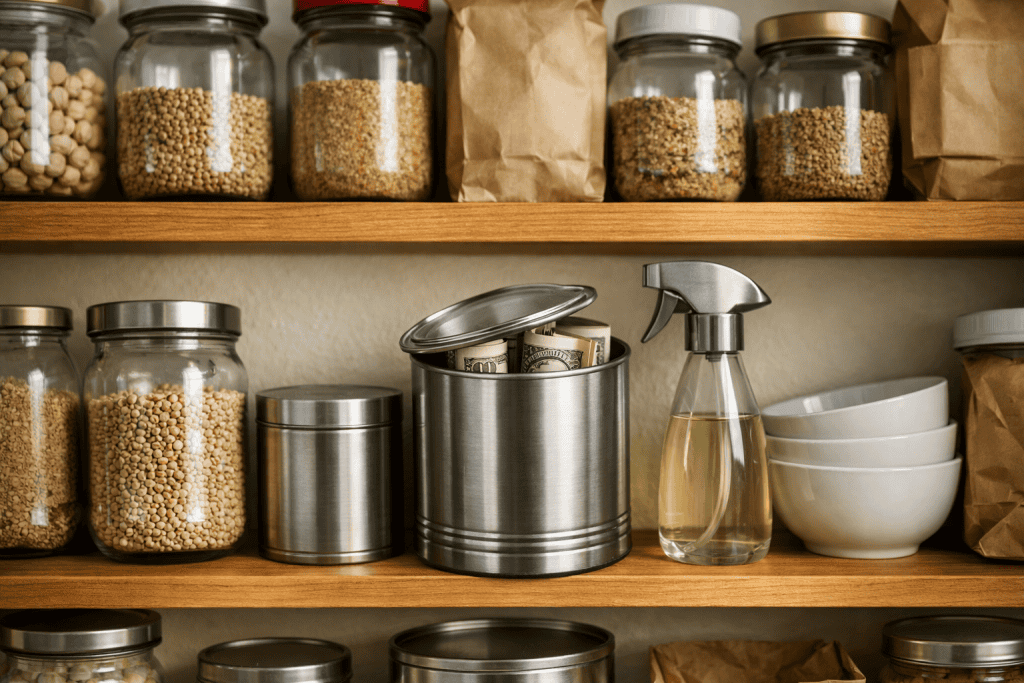
Your pantry shelf is prime real estate. A can safe disguised as a name-brand food product — think a can of mixed nuts, a soup can, or a cleaning spray bottle — disappears completely on a pantry shelf surrounded by 40 similar items. A burglar isn’t going to shake every can in your kitchen. The sheer visual noise of a stocked pantry is camouflage. Place it mid-shelf, label side facing out, surrounded by matching products. Don’t put it on a shelf by itself — that’s a tell.
Under the kitchen sink also works well for cleaning product diversion safes. A bottle of Ajax, WD-40, or spray cleaner blends into an environment burglars rarely disturb. One important note: keep real cleaning products nearby so the diversion safe isn’t the only item under there.
The Bathroom
A shaving cream can safe or hairspray safe on the bathroom counter is so mundane it’s almost invisible. Bathrooms get passed quickly during a burglary — there’s rarely anything of obvious value in there. A diversion safe disguised as personal care products (deodorant, hair products, lotion bottles) fits in perfectly and draws zero attention. The bathroom is particularly good for storing smaller items: a backup key, emergency cash, a spare credit card, or jewelry you wear infrequently.
Where should you never hide a diversion safe?
The master bedroom is the worst room in your house for a diversion safe, full stop. I’m gonna tell you right now — if you put a book safe on your bedroom nightstand or a wall outlet safe behind your headboard, you’ve put it exactly where a burglar expects to find something worth stealing. The master bedroom is looted in the first 60 seconds of a break-in. Anything in that room needs to be in a real, bolted-down safe.
Similarly, avoid the home office if it’s clearly marked as a workspace. Burglars know people keep financial documents, electronics, and backup drives in offices. A book safe on an office bookshelf is plausible camouflage only if the bookshelf is large and the safe is one of dozens of books — even then, the risk is higher than a pantry shelf.
The other trap people fall into is putting a diversion safe somewhere inconvenient for themselves. If you have to move furniture to access it, you’ll stop using it consistently. A safe you can’t quickly and naturally access when you need it isn’t working for you — it’s just a hiding place that’s hard to reach.
How do you make a diversion safe blend in even better?
The secret most people overlook is context, not just camouflage. A single can safe sitting alone on a bare shelf is suspicious precisely because of its isolation. Surround it with context — other cans, other bottles, other books — and it vanishes. This is the same principle professional stage magicians use: misdirection isn’t about one trick, it’s about creating an environment where the trick can hide.
Here are a few practical upgrades that make any diversion safe dramatically more effective:
Match the brand to your household. If your pantry is full of store-brand products, a premium name-brand can safe sticks out. Buy a few matching items from the same brand to surround it.
Add realistic weight. Some diversion safes feel obviously hollow. Add a few coins, a small wrapped item, or a rolled-up piece of paper to give it a more realistic weight if picked up.
Don’t tell people. This sounds obvious, but family members mention it, kids mention it, and word travels. The fewer people who know the location and the product, the better. Even within your household, limit knowledge on a need-to-know basis.
Rotate locations occasionally. If you move every six to twelve months, anyone who might have overheard your location loses their advantage.
Use multiple safes. A set of three or four inexpensive diversion safes spread across your home is significantly more secure than one premium product in a single location. Distribute your valuables.
What should you actually store in a diversion safe?
Now look — a diversion safe is not a replacement for a quality gun safe or a bolted floor safe. It’s a complement to your layered home security, not the whole system. That distinction matters because it tells you exactly what belongs inside one.
Diversion safes are ideal for:
Emergency cash in small denominations
Backup credit or debit cards
Spare house or car keys
Jewelry worn infrequently
USB drives with important documents
Small quantities of precious metals or coins
Medication you don’t want household visitors or guests to access
What they are not built for: firearms, large quantities of jewelry, important original documents (birth certificates, passports), or anything you’d be devastated to lose. Those items belong in a proper bolted safe or a bank safety deposit box. Diversion safes protect the stuff a burglar would grab in passing — and they do it brilliantly within that lane.
Can you use multiple diversion safes as a system?
Absolutely — and this is where the strategy gets genuinely clever. Think of it like a distributed network rather than a single vault. Instead of concentrating your valuables in one spot, you spread them across four or five locations in low-traffic rooms. Even if a burglar stumbles onto one diversion safe by chance, they don’t find everything. Your cash is in the pantry, your backup key is in the bathroom, your spare credit card is in the laundry room, and your USB drive is in the garage workshop shelf.
This distributed approach also has a psychological benefit for you: it forces you to think about your valuables strategically rather than re actively. Most people toss important items wherever feels convenient in the moment, which means they’re in predictable, high-traffic spots. Building a small network of diversion safes makes you intentional about where things live — and that habit alone improves your overall home security posture.
Are diversion safes burglar-proof?
No, and any product that claims to be burglar-proof is lying to you. Here’s the honest picture: a diversion safe is highly effective against the most common type of residential burglar — the opportunistic thief who has 10 minutes and is looking for obvious, easy scores. It is much less effective against a targeted, experienced burglar who knows what to look for and has time to work methodically through your home.
The good news is that the vast majority of residential break-ins are opportunistic, not targeted. Research consistently shows that most residential burglars are looking for fast, portable, obvious value — electronics, wallets, visible jewelry, unlocked gun cases. A diversion safe tucked into a boring room defeats exactly that threat profile. For targeted theft, you need a real safe, an alarm system, and good exterior security. Diversion safes are one tool in a toolbox, not the whole kit.
The kitchen pantry is hard to beat. A can safe surrounded by real food products on a mid-shelf position is virtually invisible to a burglar working quickly. The visual noise of a stocked pantry provides natural camouflage, and burglars rarely spend time in kitchens because they don’t mentally associate them with high-value items. Surrounding your diversion safe with matching products of the same brand makes it even more convincing.
Is the master bedroom a good place for a diversion safe?
No — the master bedroom is actually the worst room in the house for a diversion safe. It’s the first room burglars target and the one they spend the most time in. Anything you put in the master bedroom is at maximum exposure risk. Items that must stay in the bedroom, like a firearm, should be in a quality bolted-down safe, not a diversion product. Reserve diversion safes for low-traffic, “boring” rooms.
Can kids in the house accidentally expose a diversion safe?
Yes, and this is a real risk people underestimate. Children talk — to friends, to other family members, to anyone who will listen. The fewer household members who know the exact location and product type, the better. If you have young children, place diversion safes in rooms or at heights they don’t regularly access. Limit knowledge of your safe locations to adults in the household on a strict need-to-know basis.
Do diversion safes work in apartments?
They work extremely well in apartments — sometimes better than in houses. Apartment break-ins tend to be faster and more opportunistic because of neighbor proximity and noise risk. A diversion safe in a kitchen pantry or bathroom shelf in an apartment defeats the most likely threat almost entirely. The distributed-safe strategy also works well in smaller spaces: one can safe in the kitchen, one personal care product safe in the bathroom.
How many diversion safes should I have?
Three to five is a solid number for most households. The goal is to distribute your valuables so that no single discovery exposes everything. Think of each safe as holding a different category: emergency cash, backup cards, spare keys, jewelry, and digital storage. Spreading them across different rooms — kitchen, bathroom, laundry room, garage — maximizes both the camouflage effect and your resilience if one location is ever compromised.
Should I tell my spouse or partner where the diversion safes are?
Yes, your immediate household partner should know — you need to be able to access your valuables in an emergency. But keep it between the two of you. Write the locations down somewhere secure rather than discussing them where guests might overhear. Avoid telling extended family, housekeepers, babysitters, or contractors unless absolutely necessary. The security of a diversion safe depends entirely on limited knowledge of its existence and location.
What should I not store in a diversion safe?
Avoid storing firearms, original legal documents (passports, birth certificates, deeds), large amounts of cash or jewelry, or anything irreplaceable. Diversion safes are designed for moderate-value items that would be grabbed in passing — not your most critical assets. Those belong in a quality bolted safe or a bank deposit box. Use diversion safes as a first line of distributed defense, not as your primary secure storage solution.
The Bottom Line
The counter intuitive truth about diversion safes is that their power has almost nothing to do with the product itself — it’s entirely about where you put it and how well it blends into its surroundings. The most secure location in your house is the most boring one: your pantry, your bathroom shelf, your laundry room. Burglars follow a mental script, and smart placement means your valuables never even make it onto that script.
Use multiple safes, match them to their environment, limit who knows about them, and treat them as one smart layer in a broader home security approach. They won’t replace a real safe or a quality alarm system — but as a low-cost, surprisingly effective tool for protecting the everyday valuables a thief would grab in passing, they’re one of the most underrated products I carry. Stay safe out there.
With over 25 years in the Self Defense Industry, Jose Diaz has provided lots of advise to those seeking to protect themselves against danger. Jose is a hard working individual who has use his skills to address the many faults of self protection in our society. As a father, Grandfather and a Great grandfather he wants to keep his family safe. This is why he has created his business, "Brainstorm Security Shop". He wants to provide people with a choice to defend themselves in case of a personal attack. His self-defense gadgets, like stun guns, pepper sprays, knifes, personal alarms and others will provide protection against any attacker. Please take a look at his products since very well can save your life in case of a personal attack. May you and your loved ones be safe and enjoy a long and prosperous life.