Self‑defense laws in the United States are constantly evolving. What’s legal to carry in Tennessee might be restricted in New York. A stun gun that’s perfectly fine in Florida could require a permit in Illinois. And with more people choosing personal protection tools, understanding your state’s laws isn’t optional — it’s essential.
This 2026 guide breaks down what you can legally carry, where you can carry it, and how laws differ state‑by‑state, all explained in a clear, human voice.
What Self‑Defense Tools Are Legal to Carry in Most States Right Now?
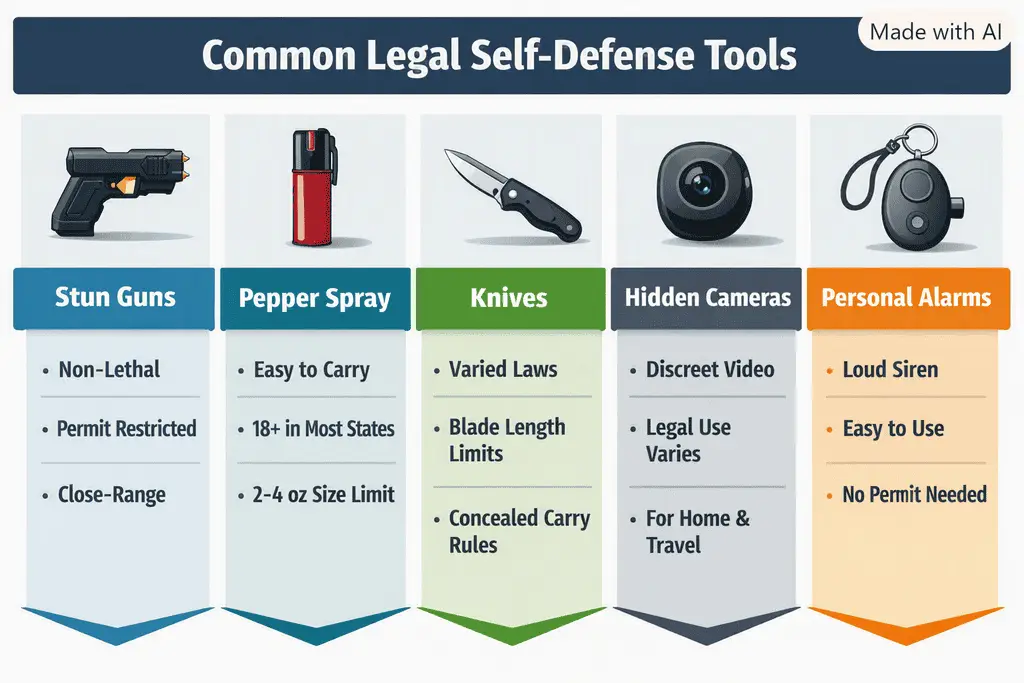
Across the U.S., several self‑defense tools are widely legal with minimal restrictions. These include:
Pepper Spray (OC Spray)
Legal in all 50 states. Some states regulate size, formula, or purchase method (e.g., NY, MA, CT require in‑state purchase).
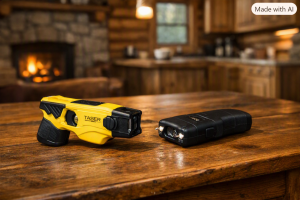
Stun Guns & TASERs
Legal in most states, but a few require permits or have city‑level restrictions. Examples:
- Illinois: FOID card required for stun gun purchase.
- Hawaii: Legal but regulated; training recommended.
- Rhode Island: Legal for adults; misuse penalties apply.
Personal Alarms
Legal everywhere. No restrictions.
Self‑Defense Keychains (Kubotans, Tactical Pens)
Legal in most states, but some schools and government buildings restrict them.
Knives
Knife laws vary dramatically:
- Some states allow concealed carry of any blade.
- Others restrict automatic knives, fixed blades, or length.
- A few cities (NYC, Chicago, Los Angeles) have stricter local ordinances.
Batons & Impact Weapons
Legal in many states, but several classify them as “dangerous weapons.” Examples:
- California: Batons illegal for civilians.
- New York: Batons and clubs prohibited.
- Texas: Legal to carry batons openly or concealed.
Firearms
Concealed carry laws vary widely.
- Many states are now “constitutional carry.”
- Others require permits, training, or background checks.

Which States Have the Strictest Self‑Defense Carry Laws in 2026?
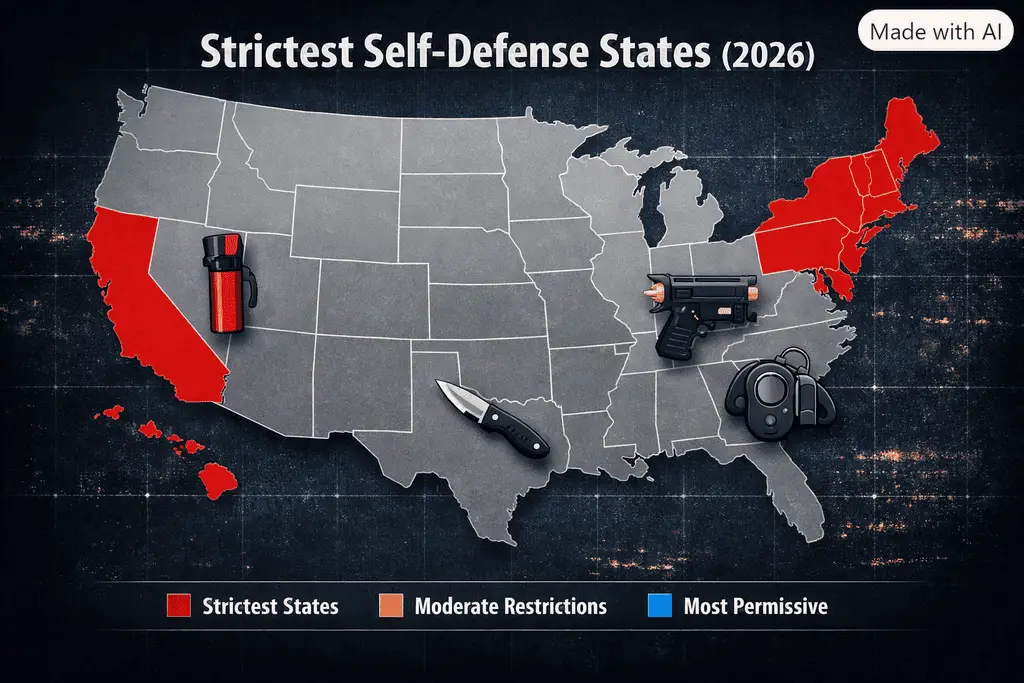
Some states regulate self‑defense tools more heavily than others. The strictest states typically include:
New York
- Pepper spray: Must be purchased in‑state from licensed dealers.
- Batons: Illegal.
- Stun guns: Legal but regulated.
- Knives: Strict blade and carry rules; gravity knives banned.
Massachusetts
- Pepper spray: In‑state purchase only.
- Stun guns: Legal but regulated.
- Firearms: Strict permitting process.
Connecticut
- Pepper spray: Must be purchased from licensed firearms dealers.
- Stun guns: Restricted for minors.
- Knives: Some carry restrictions.
Hawaii
- Pepper spray: In‑state purchase only; age 18+.
- Stun guns: Legal but regulated.
- Firearms: Very strict permitting.
California
- Pepper spray: Max size 2.5 oz.
- Batons: Illegal for civilians.
- Knives: Some concealed carry restrictions.
These states allow self‑defense tools, but they regulate how, where, and what type you can carry.

What Self‑Defense Tools Require Permits or Special Conditions?
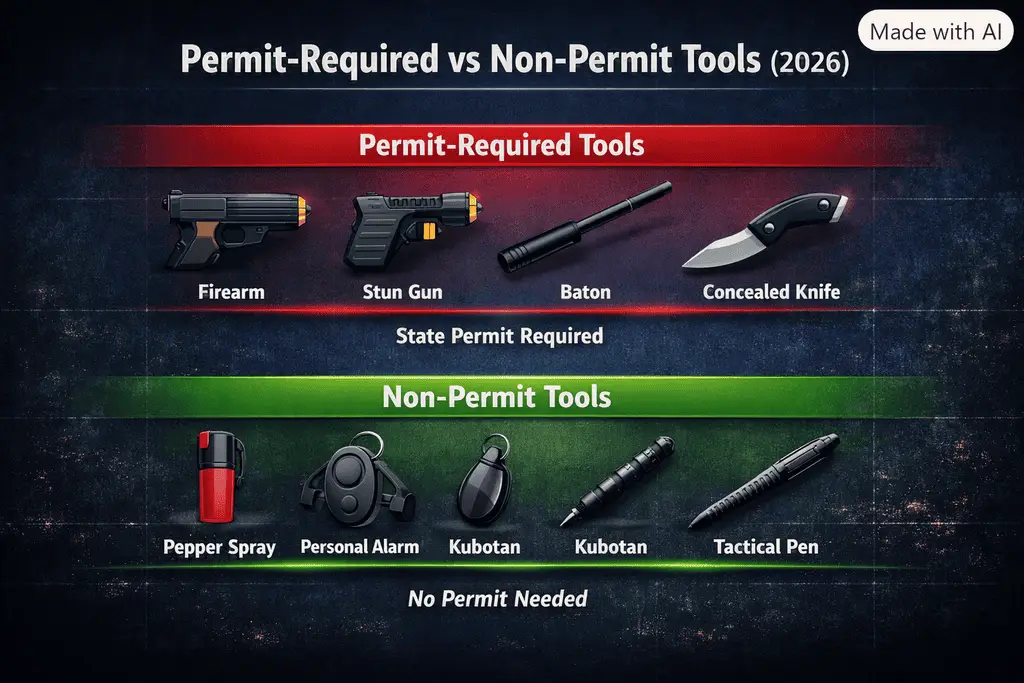
Most self‑defense tools don’t require permits, but a few do depending on the state.
Tools That May Require Permits
- Stun guns (Illinois, certain counties in Hawaii)
- Concealed knives (varies by state)
- Firearms (non‑constitutional carry states)
- Batons (illegal or restricted in CA, NY, MA)
Tools That Never Require Permits
- Pepper spray
- Personal alarms
- Kubotans
- Tactical pens
- Keychain self‑defense tools (in most states)
Tools With Conditional Legality
Some tools are legal only under certain conditions:
- Automatic knives – Legal in many states, banned in others.
- Brass knuckles – Legal in TX, illegal in CA and NY.
- Expandable batons – Legal in TX, illegal in CA.

Where Can You Legally Carry Self‑Defense Tools Right Now?
Even if a tool is legal, certain locations restrict or prohibit carrying it.
Places Where Self‑Defense Tools Are Usually Allowed
- Public streets
- Parks
- Jogging trails
- Parking lots
- Inside vehicles
- College campuses (varies by school)
Places Where They Are Commonly Restricted
- Federal buildings
- Courthouses
- Schools (varies by district)
- Airports (TSA rules apply)
- Stadiums and arenas
- Government buildings
- Some public transportation systems
Air Travel Rules (2026)
- Pepper spray: Allowed in checked baggage only, max 4 oz, safety mechanism required.
- Stun guns: Checked baggage only.
- Knives: Checked baggage only.
- Batons: Checked baggage only.
How Do Knife Laws Differ by State in 2026?
Knife laws are some of the most inconsistent in the country.
States With the Most Freedom
- Texas
- Arizona
- Utah
- Georgia
- Tennessee
These states allow most knives, including automatic knives, with few restrictions.
States With Moderate Restrictions
- Florida
- Michigan
- Wisconsin
- Colorado
These states may restrict concealed carry or blade length.
States With Strict Knife Laws
- New York
- California
- Massachusetts
- New Jersey
Common restrictions include:
- Bans on automatic knives
- Limits on concealed carry
- Blade length restrictions
- City‑specific ordinances (NYC is especially strict)
Are Stun Guns and TASERs Legal to Carry in 2026?
Yes — stun guns and TASERs are legal in most states, but with varying rules.
States With Minimal Restrictions
- Tennessee
- Texas
- Florida
- Georgia
- Arizona
- Nevada
States With Moderate Restrictions
- Michigan
- Wisconsin
- Illinois (FOID card required)
- Rhode Island
- Hawaii
States With Notable Restrictions
- New York (legal but regulated)
- Massachusetts (legal but regulated)
- New Jersey (legal for adults only)
Common Requirements
- Must be used only for self‑defense
- Must not be carried into restricted buildings
- Some states require safety features or training
What Are the Penalties for Misusing Self‑Defense Tools?
Self‑defense tools are legal — misuse is not.
Common Penalties
- Misdemeanor charges
- Fines ranging from $100 to $5,000
- Assault charges
- Felony charges if used during a crime
- Confiscation of the tool
- Possible ban on future possession
Examples of Misuse
- Using pepper spray offensively
- Brandishing a knife during an argument
- Carrying prohibited weapons into restricted areas
- Using a stun gun as a threat rather than defense
- Carrying concealed weapons without a permit (in permit states)
Self‑Defense Standard
To be legally justified, your use of force must be:
- Reasonable
- Proportional
- In response to an immediate threat
Frequently Asked Questions (2026)
1. What self-defense tools are legal in all 50 states?
Pepper spray, personal alarms, kubotans, and tactical pens are legal nationwide.
2. Are stun guns legal everywhere?
Yes, but some states require permits or have restrictions (e.g., Illinois, Hawaii).
3. Can I carry a knife for self-defense?
Yes, but knife laws vary widely. Some states allow all knives; others restrict blade length or concealment.
4. Can I bring self-defense tools on an airplane?
Only in checked baggage. Pepper spray, stun guns, knives, and batons are banned from carry‑on bags.
5. Are batons legal to carry?
It depends on the state. Batons are legal in Texas but illegal in California and New York.