Quick Answer: The best self-defense weapons for college students are pepper spray, personal alarms, and stun guns – in that order, depending on what your campus allows. Before you carry anything, check your school’s specific policies and your state laws, because both matter. Carrying the wrong thing in the wrong place can get you expelled or charged – so let’s get this right from the start.
Why Does Campus Self-Defense Require a Different Approach?
Here’s the thing – college campuses are not the same as carrying on a public street. You’ve got dorm rules, student codes of conduct, state laws, and sometimes federal guidelines all stacked on top of each other. What’s perfectly legal to carry in your home state might get you kicked out of housing the moment you walk into a residence hall.
I’m gonna tell you right now – I’ve talked to parents who bought their kid a stun gun, sent them off to school proud, and then got a phone call two weeks later because campus security found it during a routine check. That’s not a good situation for anybody. Awareness is the first layer of self-defense. Know your environment before you pick your tool.
That said, most students are navigating situations that are genuinely dangerous – late-night walks to the parking lot, rides back from the library, walking alone through campus after a night class. You deserve to have something in your hand that works. Let’s talk about what that looks like legally and practically.
What Self Defense Tools Are Actually Legal on Most College Campuses?
Most campuses prohibit firearms outright, even with a concealed carry permit. A smaller number of states – like Texas – allow concealed carry on public university campuses under specific conditions, but that’s still the minority. Here’s where most students will land legally:
- Pepper Spray: Legal in most states and permitted on many campuses, with restrictions on size and concentration. This is the most universally accepted option.
- Personal Alarms: Legal everywhere, restricted nowhere. A 120-130 dB alarm draws immediate attention and requires zero training to use effectively.
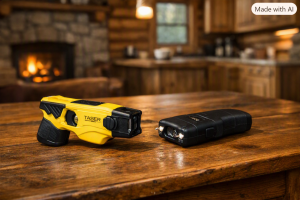
- Stun Guns and Tasers: Legal in many states but banned on campus more often than pepper spray. Always verify with your school’s housing and conduct office before carrying one.
- Tactical Pens: Generally legal as writing instruments, but they can be flagged in certain situations. Useful as a secondary tool, not a primary one.
- Self-Defense Key-chains (Kubotan style): Often a gray area – some campuses prohibit them, others ignore them entirely. Check before you carry.
What’s not going to make this list: knives with blades over a certain length, brass knuckles, collapsible batons, and anything designed exclusively to injure. Most of those are flat-out illegal in multiple states, and all of them are going to create serious problems in a campus environment.
What Is the Best Pepper Spray for a College Student?
Pepper spray is my number one recommendation for most students, full stop. It’s effective at distance, it doesn’t require you to be close to your attacker, it’s legal in nearly every state with minor restrictions, and it’s small enough to clip to a backpack zipper or keychain.
Now look – not all pepper sprays are equal. Here’s what to look for when you’re choosing one:
- OC Concentration: Look for sprays with a minimum of 1-2% Major Capsaicinoids (MC) – that’s the actual heat compound. Don’t get distracted by Scoville units alone; MC percentage is what matters for effectiveness.
- Spray Pattern: Stream patterns reduce blowback risk in wind. Cone or fog patterns cover more area but can affect you too. For outdoor campus use, a stream or gel formula is smarter.
- Size and Carry Method: A keychain unit is fine for everyday carry. If you’re hiking or going to off-campus events, a slightly larger unit with more volume gives you more options.
- Safety Mechanism: It needs a flip-top or twist-lock safety so it doesn’t discharge in your bag – but the safety must be removable fast under stress. Practice this.
- Expiration Date: Pepper spray expires. Check the date when you buy it and replace it on schedule – usually every 2-4 years depending on the formula.
One more thing I want you to remember: owning pepper spray is not the same as knowing how to use it. Practice removing the safety. Know which direction you’re pointing it. That sounds basic, but when your heart is pounding and your hands are shaking, the basics are everything.
Are Personal Alarms Actually Effective for College Students?
Yes – and they’re underrated. A loud alarm serves two purposes: it startles and disorients an attacker, and it draws immediate attention from anyone nearby. In a campus environment where there are almost always people within earshot, that second function is genuinely powerful.
Personal alarms are the only self-defense tool with zero legal restrictions – no age requirements, no state bans, no campus policies against them. That alone makes them worth having, even if you’re also carrying something else.
Here’s what to look for in a personal alarm:
- Decibel Level: 120 dB minimum. 130 dB is better. At that volume, the sound is physically painful and impossible to ignore.
- Activation Method: Pull-pin designs are fast and reliable. You yank it, it screams, and even if the attacker grabs it from you, removing the pin keeps it active.
- Battery Life: Check how long the alarm runs on a full battery. Some units are good for 30+ minutes continuous – plenty of time for help to arrive.
- Size and Attachment: It should attach to a keychain, backpack, or purse strap so it’s accessible in under two seconds.
I tell every college student – even the ones carrying something else – to have an alarm as a backup. It’s the one tool you never have to think twice about carrying anywhere.
Should College Students Carry a Stun Gun?
This is where I have to be careful with you, because the answer is: it depends on your campus and your state. Stun guns are banned in some states entirely (Hawaii, Rhode Island, and a few others have restrictions), and even where they’re legal statewide, many campuses prohibit them in dorms and campus buildings.
That said, if your campus allows them and your state permits them, a stun gun is a genuinely effective deterrent. The sound alone – that crackling electrical arc – has stopped situations before contact was ever made. And if contact is made, a quality stun gun delivers enough of a shock to give you time to run.
Critical warnings before you buy a stun gun for campus carry:
- Verify your state law first. Look up your specific state’s stun gun statute – not a summary, the actual law.
- Contact your campus housing office directly. Don’t assume. Ask in writing so you have a record of the answer.
- Understand the contact requirement. Unlike pepper spray, a stun gun requires you to be in close physical proximity to your attacker. That’s a real tactical limitation.
- Keep it charged. A stun gun with a dead battery is just a piece of plastic. Charge it regularly and test the arc monthly.
- Practice accessing it. If it lives at the bottom of your bag, it’s not a self-defense tool – it’s an expensive paperweight.
What Self Defense Mistakes Do College Students Most Often Make?
I’ve been doing this a long time, and I see the same mistakes repeat. Here’s the short list of what gets people hurt or in legal trouble – and how to avoid every single one:
- Buying something without checking local and campus laws. Read the actual policy. Call the campus police non-emergency line if you’re unsure.
- Carrying it buried in a bag. If you can’t access your tool in under three seconds, it’s not going to help you. Carry it on your person or on the outside of your bag.
- Never practicing with it. Spray at a target in a safe outdoor area. Know how your alarm activates. Run through the motions until they’re automatic.
- Assuming awareness alone is enough. Staying alert is the first layer – not the only layer. Carry something too.
- Relying on a tool without a plan. If you use your pepper spray, what’s next? You run. You call 911. Think through the scenario before it happens.
- Letting your spray expire. Check dates. Replace on schedule. This is not optional.
- Carrying something illegal and losing everything over it. A disciplinary hearing or criminal charge will derail your education faster than almost anything else. Know what you’re carrying and why it’s legal where you carry it.
Frequently Asked Questions About Campus Self-Defense
Pepper spray is legal in most states and permitted on many college campuses, but regulations vary widely. Some campuses restrict canister size or OC concentration, and a handful prohibit it in dorms entirely. Always check your specific school’s code of conduct and your state’s laws before carrying. When in doubt, contact campus police directly – they’ll give you a straight answer.
Can college students carry stun guns on campus?
It depends entirely on your state and your school. Some states restrict or ban civilian stun gun possession, and many campuses prohibit them in campus buildings and dorms even where state law allows them. Never assume statewide legality means campus-wide legality. Check both layers before you buy. Carrying a prohibited stun gun on campus can result in conduct violations and potential criminal charges.
What is the safest self-defense option for a college freshman?
A personal alarm combined with a legal-in-your-state pepper spray is the safest starting point for most freshmen. Alarms are universally legal, easy to use, and draw immediate help. Pepper spray adds a deterrent with stopping power at a safe distance. Together, they cover the most common threat scenarios on campus without creating legal complications or requiring extensive training to use effectively.
Do personal alarms really work as self-defense tools?
Yes – more than most people give them credit for. A 130 dB alarm is physically disorienting and immediately draws attention from bystanders, which most attackers desperately want to avoid. In campus environments where people are typically nearby, an alarm can break off an attack before it escalates. They’re also the only self-defense tool with zero legal restrictions anywhere in the country.
Can I carry a knife on a college campus?
Most campuses prohibit knives with blades over a certain length – often two to four inches – and some ban them entirely in campus buildings. State knife laws vary significantly. Even where a folding knife is technically legal, it’s rarely practical as a primary campus self-defense tool and creates unnecessary legal exposure. Pepper spray or an alarm is a far more defensible choice for typical campus situations.
How do I carry pepper spray so it’s actually accessible?
Attach it to the outside of your backpack on a keychain clip, keep it in a front pants pocket, or use a small holster that clips to a waistband. The goal is to access it in under three seconds under stress. Practice the motion – remove the safety, aim, spray. Do it until it’s automatic. Pepper spray inside a bag zipper pocket is not accessible when it matters.
What should I do after using a self-defense tool on campus?
Get to safety immediately – run toward people, enter a building, put distance between yourself and the threat. Call 911 right away, not campus security first. Be cooperative and clear when you speak to responding officers. Document everything you remember while it’s fresh: time, location, description of the threat, exactly what happened. Contact your campus counseling center and a legal advisor if charges are a possibility.
Does carrying a self-defense tool mean I don’t have to stay aware of my surroundings?
Not even close. Situational awareness is still your first and most important layer of protection. Noticing a threat early gives you time to avoid it entirely – no tool required. A self-defense tool is what you use when avoidance has already failed. You need both. Stay off your phone when walking alone at night, trust your instincts, and have your tool accessible before you need it – not after.
The Bottom Line on Campus Self-Defense
You don’t have to carry a gun to be prepared. You don’t have to be an expert or take a course before you’re allowed to protect yourself. But you do have to be intentional. Know your state laws. Know your campus policies. Choose tools that fit your life, your comfort level, and your legal situation – and then carry them correctly.
If I were sending my own kid off to college right now, here’s what I’d put in their bag: a quality pepper spray clipped to the outside of their backpack, a personal alarm on their keychain, and a five-minute conversation about when to use them, how to run, and when to call for help. That’s not complicated. That’s just being prepared.
Stay safe out there – and may you and your loved ones stay protected.