Can You Bring a Personal Alarm on a Plane? TSA Rules Every Traveler Should Know
Quick Answer: Yes, personal alarms are allowed on planes — but there are specific rules you need to follow depending on the type of alarm you carry. Most keychain and wearable personal alarms are permitted in both carry-on and checked baggage with no restrictions. However, compressed-gas alarms are a different story, and getting this wrong could cost you the device at the security checkpoint. Read every word of this before you pack.
What Exactly Does the TSA Say About Personal Alarms?
The TSA does not explicitly list standard battery-powered personal alarms as prohibited items. That means your everyday keychain alarm — the kind that pulls a pin and emits a 120+ decibel screech — is generally cleared for both carry-on bags and checked luggage. The TSA’s focus at checkpoints is on weapons, hazardous materials, and items with the potential to cause harm mid-flight. A battery-powered alarm doesn’t fit that profile.
That said, I’m gonna tell you right now: always check the TSA website at TSA.gov before you travel, because rules can be updated. And here’s the thing — individual TSA officers have discretionary authority. Even if something is technically permitted, an agent can flag it if they’re unsure. Being prepared means knowing what you’re carrying and being ready to explain it calmly at the checkpoint.
Here’s a quick checklist of what to verify before you fly with any personal alarm:
Confirm the alarm is battery-powered, not compressed-gas
Check the TSA website’s “What Can I Bring?” search tool the week before you fly
Keep the alarm easily accessible in your bag so it can be inspected without unpacking everything
Have a clear, calm explanation ready if an agent asks about the device
Know the rules for your destination country if flying internationally
Are Compressed-Gas Personal Alarms Allowed on Planes?
No — and this is where a lot of travelers get tripped up. Compressed-gas personal alarms, which use a pressurized canister to produce sound (similar to a small air horn), are treated as hazardous materials by the TSA. Pressurized containers pose a risk in the aircraft cargo hold and cabin due to pressure changes and temperature fluctuations at altitude. These are not allowed in carry-on bags, and they are also prohibited in checked luggage.
If you currently carry a compressed-gas alarm as your go-to travel safety tool, you need to swap it out before you hit the airport. The good news is that battery-powered personal alarms have caught up significantly in terms of decibel output — many now hit 120 to 130 dB, which is more than enough to draw attention and disorient an attacker. There is no functional reason to fly with a compressed-gas model.
Warning: Do not attempt to pack a compressed-gas alarm in checked baggage thinking it won’t be caught. TSA scanners flag pressurized canisters. You risk having your bag delayed, searched, and the item confiscated — and in some cases, you could face additional screening or a civil penalty.
Which Types of Personal Alarms Are the Safest to Fly With?
Battery-powered keychain personal alarms are your safest and smartest choice for air travel. They are compact, TSA-friendly, and genuinely effective. Here are the three categories that fly without issues and what to look for in each:
Keychain Pull-Pin Alarms
These are the gold standard for travel safety. You pull a pin, the alarm screams. Simple, reliable, and no moving parts that can fail under stress. Look for a unit with at least 120 dB output, a weatherproof casing, and a pin that won’t accidentally release in your bag. These pack flat, weigh almost nothing, and clip to a purse strap, backpack, or belt loop.
Wearable and Clip-On Alarms
Wearable alarms — designed to attach to a wrist, bag strap, or clothing — are excellent for travelers who want their safety tool on their body rather than buried in a bag. Some models double as a flashlight. When evaluating a wearable alarm, check that the activation mechanism is both easy to reach under stress and difficult to trigger accidentally during normal movement.
Combination Alarms with Added Features
Some personal alarms include a built-in LED flashlight or a door/window alarm function — useful for hotel room security. These multi-function units are still battery-powered and TSA-compliant. Just make sure the battery compartment is secure and the unit won’t activate inside your bag. A sound-activated door alarm sitting in your suitcase going off mid-flight is the kind of story you don’t want to tell.
What About Pepper Spray — Can You Fly With That Too?
This is a completely separate category, and the rules are strict. Pepper spray is NOT allowed in carry-on baggage under any circumstances. One small container (up to 4 fl oz / 118 mL) with a safety mechanism is permitted in checked baggage only — and it must contain no more than 2% by mass of tear gas (CS or CN). Anything stronger is prohibited entirely, carry-on or checked.
Now look — I always tell people: if you rely on pepper spray as your primary self-defense tool at home, you need to plan ahead when flying. Your options are to check it in a qualifying container, ship it to your destination ahead of time, or purchase a new canister when you arrive. Do not attempt to sneak it through a carry-on. TSA X-ray machines will find it every single time, and you’ll lose the canister and potentially face additional screening.
Here is a specific warning checklist for flying with pepper spray:
Only one canister, 4 fl oz or less, allowed in checked baggage
Must have a safety mechanism to prevent accidental discharge
CS or CN tear gas content must not exceed 2% by mass
Zero pepper spray permitted in carry-on bags — no exceptions
International flights may ban pepper spray in checked luggage entirely — check destination country laws
How Should You Pack a Personal Alarm for a Flight?
Packing smart prevents problems. Even though battery-powered personal alarms are permitted, a little preparation keeps you moving through security without a second look. Follow these steps every time you fly with a personal alarm:
Disable or lock the activation mechanism. If your alarm has a locking feature or a safety cap over the activation button, use it. You don’t want the alarm triggering inside a security bin.
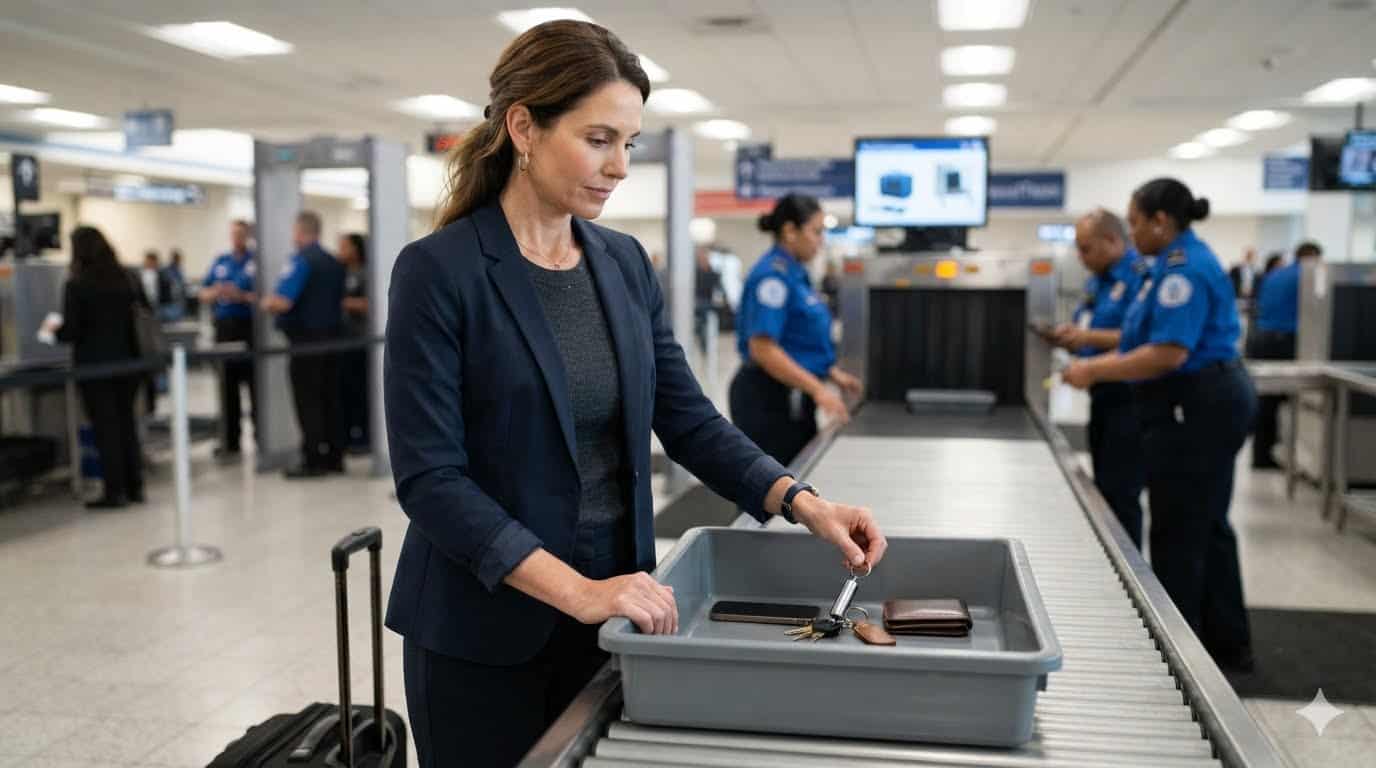
Pack it where it’s easy to access for inspection. Place it in an outer pocket of your carry-on rather than buried under clothes. If a TSA agent wants to examine it, you want to produce it quickly and without drama.
Remove the battery for long flights if possible. For checked baggage especially, removing the battery eliminates any risk of accidental activation. This is optional for carry-on but worth considering.
Know what it is before they ask. If an agent pulls your bag aside, don’t act nervous or unsure. Calmly state: “It’s a personal safety alarm — it’s battery-powered, not pressurized.” Confidence and clarity speed things up.
Carry the product packaging or a photo of it on your phone. This is especially useful for international travel where customs agents may be less familiar with the item.
Are Personal Alarms Allowed in Other Countries?
This is the question travelers forget to ask — and it matters. While personal alarms are widely accepted in most countries, a few destinations have restrictions on self-defense tools that could affect you at customs. The United Kingdom, Australia, and Canada are generally permissive toward personal alarms. However, some countries in Asia and the Middle East have stricter import rules on items classified as self-defense tools.
I’m gonna be straight with you: before you fly internationally with any self-defense item — alarm, pepper spray, stun gun, or knife — research the laws of your destination country specifically. The embassy website or a quick search of your destination’s customs regulations will tell you what you need to know. Getting stopped at international customs with a prohibited item creates delays, confiscations, and in rare cases, legal trouble. Do the research. It takes 10 minutes and could save you a serious headache.
Here’s a rapid-check list for international travel:
Check destination country customs rules for “self-defense devices” or “personal safety alarms”
Check connecting country rules — a layover in a strict country could cause problems even if you’re not staying
Verify that your airline’s own prohibited items list doesn’t go further than TSA rules
Consider shipping your alarm to your hotel ahead of time for complex international itineraries
What’s the Best Personal Alarm Strategy for Frequent Travelers?
Here’s the thing — the best personal alarm for travel isn’t necessarily the most powerful one. It’s the one you actually have with you when something goes wrong. For frequent travelers, I recommend building a dedicated travel safety kit that lives in your carry-on and never gets unpacked. That way you’re never leaving home without it because you forgot to transfer it from your gym bag.
Your travel safety kit should include:
A battery-powered keychain alarm (120 dB minimum) clipped to your bag’s exterior
A door-stop alarm or portable door alarm for hotel room security
A small flashlight or alarm with built-in light for dark parking structures and unfamiliar streets
A fully charged phone with emergency contacts pre-saved and location sharing enabled with a trusted contact
Awareness — knowing the layout of your hotel, the nearest exits, and the local emergency number for your destination
You don’t have to carry a gun on a plane. But carry something. A personal alarm weighs less than your lip balm and takes up no space. There is no legitimate reason to fly unprotected when the solution fits in the palm of your hand.
Frequently Asked Questions
Can I bring a personal alarm in my carry-on bag?
Yes. Battery-powered personal alarms are permitted in carry-on baggage by the TSA. Make sure the device is battery-operated, not compressed-gas powered. Keep it accessible in your bag in case a security agent wants to examine it. Disable or lock the activation mechanism before packing to prevent accidental triggering during screening or while on the aircraft.
Can I put a personal alarm in my checked luggage?
Yes, battery-powered personal alarms are also allowed in checked baggage. For added peace of mind during a long flight, consider removing the battery before checking the bag. This eliminates any chance of the alarm activating in the cargo hold, which would be disruptive and could trigger additional inspection of your luggage by airline staff.
Are compressed-gas personal alarms allowed on planes?
No. Compressed-gas alarms — including air-horn style devices — are prohibited in both carry-on and checked baggage. The TSA treats pressurized containers as hazardous materials. Swap to a battery-powered alarm before flying. Modern battery-powered alarms output 120 to 130 decibels, making them just as effective without any of the travel restrictions or safety concerns tied to pressurized canisters.
Will a personal alarm set off airport security?
Not if it’s packed correctly. A battery-powered alarm will show up on an X-ray scanner as an electronic device. As long as it isn’t activated and doesn’t have a pressurized component, it won’t trigger alarms or cause significant delays. If an agent pulls your bag for inspection, calmly identify the item. Having it in an easily accessible pocket helps speed up the process considerably.
Can I fly internationally with a personal alarm?
In most cases, yes — but always verify the laws of your destination country before you travel. Most Western countries permit battery-powered personal alarms without restriction. Some nations in Asia and the Middle East classify self-defense tools more broadly and may restrict import. Research both your destination and any layover country. When in doubt, ship the alarm to your accommodation ahead of your trip.
What is the loudest personal alarm I can legally bring on a plane?
There is no TSA decibel limit on personal alarms. You can bring a 130 dB alarm just as easily as a 100 dB one, provided it is battery-powered. Focus on finding the highest-decibel battery-powered alarm you can, as louder means more disorientation for an attacker and greater reach to draw the attention of bystanders. 120 dB is a solid baseline — 130 dB is even better.
Can a personal alarm replace pepper spray when I fly?
Not entirely — but it fills the gap well. Pepper spray incapacitates; a personal alarm deters and draws attention. When flying carry-on only and unable to bring pepper spray, a high-decibel personal alarm is your best legal alternative. Pair it with situational awareness and confident body language. Plan to pick up pepper spray at your destination if it’s legal there and you want full self-defense capability.
What should I do if TSA confiscates my personal alarm?
First, stay calm. If TSA confiscates a battery-powered alarm in error, politely ask the agent to explain the specific regulation being applied. You can request to speak to a supervisor. If the alarm is compressed-gas, the confiscation is valid — accept it and move on. After your trip, you can file a complaint with the TSA if you believe a permitted item was wrongly seized. Always document what was taken.
The Bottom Line: Fly Smart, Stay Protected
A personal alarm is one of the most travel-friendly self-defense tools available. It’s lightweight, legal, simple to use, and requires zero training to deploy under stress. Battery-powered models clear TSA checkpoints without issue. The only alarm types that will get you stopped are compressed-gas canisters — and those you leave at home.
Before every flight, run through your checklist: battery-powered only, activation locked, packed where it’s accessible, destination country rules verified. Two minutes of prep before you zip that bag could be the difference between breezing through security and having your only line of defense taken away at the checkpoint.
Don’t wait until something goes wrong to wish you’d packed smarter. Stay safe out there — and may you and your loved ones stay protected every mile of the journey.
With over 25 years in the Self Defense Industry, Jose Diaz has provided lots of advise to those seeking to protect themselves against danger. Jose is a hard working individual who has use his skills to address the many faults of self protection in our society. As a father, Grandfather and a Great grandfather he wants to keep his family safe. This is why he has created his business, "Brainstorm Security Shop". He wants to provide people with a choice to defend themselves in case of a personal attack. His self-defense gadgets, like stun guns, pepper sprays, knifes, personal alarms and others will provide protection against any attacker. Please take a look at his products since very well can save your life in case of a personal attack. May you and your loved ones be safe and enjoy a long and prosperous life.