The seven specs that actually separate a serious hidden camera from a disappointing one are resolution and low-light performance, storage type and capacity, battery life versus power source, field of view, motion detection accuracy, connectivity and remote viewing, and build quality of the disguise itself. Everything else — app bells, marketing claims, box graphics — is noise. Get these seven right and you own a device that performs when it matters. Get them wrong and you own an expensive paperweight.
What actually separates a serious hidden camera from a toy?
Let’s be honest about something most listings won’t tell you: the market is flooded with hidden cameras built to look impressive in a photo and fall apart in practice. A discerning buyer doesn’t ask “does it have a camera in it.” Anyone can put a lens in a phone charger. The real question is whether the seven specs below were engineered with intention — or bolted on as an afterthought to hit a price point.
This guide is for the buyer who’s done comparing shiny thumbnails and wants to know what actually matters when the footage needs to hold up — whether that’s protecting an aging parent, monitoring an office, or documenting something you hope you never need to prove happened. Quality shows up in the details nobody puts on the box.
What resolution do I actually need for a hidden camera?
1080p is the floor, not the ceiling. Anything below that isn’t a serious option — it’s a novelty. If you’re evaluating a device and the resolution isn’t clearly stated in true, native pixels (not “up to” or “enhanced”), that’s your first red flag.
But resolution alone is a vanity metric if low-light performance isn’t part of the conversation. Most incidents worth capturing don’t happen under a spotlight. A camera that produces a crisp 1080p image in daylight and a grainy, useless smear at 9pm hasn’t actually solved your problem. Look for devices with genuine low-light or infrared capability specified separately from daytime resolution — that’s the mark of a manufacturer that thought through real conditions instead of just chasing a spec sheet number.
The difference here isn’t subtle once you’ve seen both side by side. One gives you a usable, identifiable image. The other gives you a shape in the dark and a headache.
How much storage does a hidden camera actually need?
Storage capacity determines whether your camera is a tool or a liability waiting to overwrite itself at the worst possible moment. A device that loops and overwrites footage every 24–48 hours on a small card isn’t monitoring anything — it’s guessing that nothing important happens on a schedule that suits its memory limits.
Look for support for larger capacity cards (64GB and above) paired with intelligent loop recording that prioritizes motion-triggered clips over continuous filler. The better-built devices give you the option to expand storage without forcing you into a subscription cloud service you didn’t ask for. That’s a meaningful distinction for anyone who values owning their footage outright rather than renting access to it.
If you’re setting up monitoring for a sensitive situation — hidden cameras for elderly care, for instance — storage capacity isn’t a technical detail. It’s the difference between having the exact footage you need and discovering it was overwritten three days before you thought to check.
How long should a hidden camera’s battery actually last?
Here’s where a lot of buyers get misled by marketing copy. “Long battery life” means nothing without context — long compared to what, under what recording mode, at what resolution? A device advertised at “30 days standby” often means something entirely different once motion detection and recording are actively engaged.
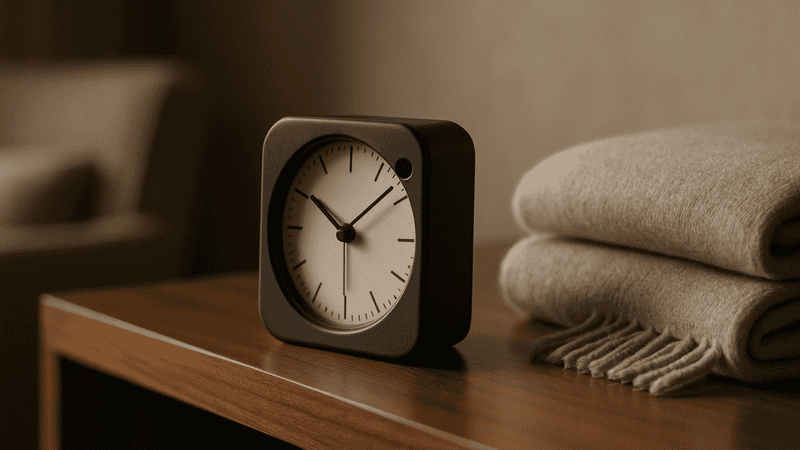
The more refined approach is to separate your use case from the spec sheet fantasy. A camera that plugs into continuous power — disguised as a working charger, clock, or outlet — sidesteps the battery question entirely and is often the smarter buy for a stationary application like a nursery or an office desk setup. A battery-powered unit makes sense for portability, but you should expect real-world runtime to be a fraction of the advertised number once motion triggers are active.
A quality device tells you both numbers honestly. A lesser one only tells you the flattering one.
What field of view actually matters for a hidden camera?
A wide field of view sounds like a universal win, but it isn’t. This is a spec where more isn’t automatically better — it’s about matching the lens angle to the room and the purpose.
A 120° or wider field of view makes sense for covering an entire room from a corner vantage point — a living room, an open office floor. But if your goal is identifying a face at a doorway or a desk drawer being opened, an overly wide lens can actually distort and shrink the subject you care about most, making identification harder, not easier. The better manufacturers specify field of view alongside recommended placement and distance — that level of detail signals they’ve actually tested the device in real rooms, not just measured it on a bench.
Why does motion detection accuracy matter more than the feature itself?
Nearly every hidden camera on the market claims motion detection. Almost none of them tell you how accurate it is — and that gap is where cheap devices fail buyers the most. A camera with poorly calibrated motion sensitivity either misses the moment you needed captured, or floods your storage with hundreds of clips triggered by a curtain moving in the breeze.
What separates a well-engineered device is adjustable sensitivity zones and the ability to fine-tune detection to the actual environment — a hallway versus an open room versus a desk. This is a spec that rewards patience during setup and punishes buyers who assume “motion detection” is a single, interchangeable feature across every product on the shelf.
Does connectivity and remote viewing actually matter?
For most buyers, yes — but not in the way the marketing suggests. Remote viewing through an app matters far less than remote viewing that’s stable, private, and doesn’t require routing your footage through a third-party server you have no control over. A discerning buyer asks not “can I view this on my phone” but “who else can.”
Look for devices offering local network viewing or direct connection options, not just cloud-dependent apps. This is a case where the more premium approach is often the quieter one — a device that just works over your own Wi-Fi without asking you to trust a stranger’s server with footage from inside your home or office.
Why does the disguise quality matter as much as the electronics?
This is the spec buyers overlook most, and it’s arguably the one that matters most. A hidden camera with excellent electronics housed in a disguise that looks slightly “off” — a clock that’s too heavy, a charger with a suspicious seam, an object that doesn’t match anything else in the room — has already failed at its core job before it ever records a frame.
The best-built devices use materials and weight that match the real object convincingly, with power cords, buttons, and finishes that hold up to a casual glance and a curious hand. This is where you genuinely get what you pay for. A well-made disguise is a small manufacturing detail that most buyers never think to ask about — until the cheap one gets noticed.
Frequently Asked Questions About Buying a Hidden Camera
What’s the single most important spec when buying a hidden camera?
If forced to pick one, it’s low-light performance. Daytime footage is easy for almost any camera to produce well. What separates a serious device from a disappointing one is whether it still produces a usable, identifiable image after dark — since that’s when most concerning incidents actually occur.
Is a higher resolution always better for a hidden camera?
Not automatically. 1080p is a solid, reliable floor for most home and office applications. Higher resolutions like 4K produce sharper detail but also demand significantly more storage and processing, which can shorten battery life and fill storage faster. Match resolution to your actual need, not just the biggest number on the box.
Do hidden cameras need Wi-Fi to work?
No. Many quality hidden cameras record locally to a memory card and don’t require any internet connection at all. Wi-Fi-enabled models offer the convenience of remote viewing, but a local-recording device is often more private and just as effective for most monitoring situations.
How long does footage typically stay stored on a hidden camera?
It depends entirely on card capacity and recording mode. A 64GB card with motion-triggered recording can often hold weeks of footage, while continuous recording on the same card might only last a day or two before older footage loops and gets overwritten. Always check the manufacturer’s estimate for your specific settings.
Are hidden cameras legal to use at home or in an office?
Laws vary significantly by state and by location within a property, particularly around audio recording and areas with a reasonable expectation of privacy. For a detailed breakdown, see our guide on state laws for hidden spy cameras in 2026. This isn’t a substitute for legal advice specific to your situation.
What’s the difference between battery-powered and plug-in hidden cameras?
Battery-powered units offer placement flexibility but limited runtime once motion detection is active. Plug-in units, disguised as everyday powered objects, offer continuous, worry-free operation but require a nearby outlet. The right choice depends on whether your priority is portability or reliability.
Can a hidden camera be used to monitor a caregiver or home health aide?
Yes, this is one of the most common legitimate uses, particularly for families monitoring care for an elderly parent. Choosing a device with strong low-light performance and reliable storage matters most here, since concerning incidents can happen at any hour. See our dedicated guide on hidden cameras for elderly care for specific recommendations.
What should I avoid when buying a hidden camera?
Avoid devices that only advertise flattering best-case numbers — resolution without low-light specs, battery life without a recording-mode caveat, storage without loop-recording behavior explained. A manufacturer that hides these details usually has something to hide about performance too.
The bottom line on choosing a hidden camera worth owning
Now look — anyone can sell you a camera. What you’re actually shopping for is confidence: confidence that when you need that footage, it exists, it’s clear, and it holds up. That confidence isn’t built from a single flashy feature. It’s built from seven specs working together, each one engineered with your actual use in mind instead of your attention span in a listing photo.
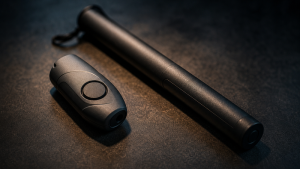
Take the time to match these specs to your specific situation, whether that’s a quiet office desk or a loved one’s living room. It’s a decision worth making carefully — the same way you’d think through what to check before buying a self-defense baton or any other tool you’re trusting to perform when it counts. Stay sharp, ask the right questions, and buy once.