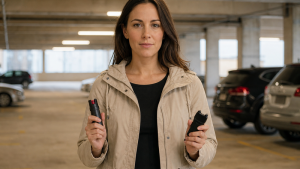
There’s no single “best” tool between stun guns, pepper spray, and personal alarms — each one protects a different kind of moment. Pepper spray creates distance before a threat gets close. Stun guns stop contact once someone’s already in your space. Personal alarms buy you time and pull attention when you need people to look your way, fast. The right answer isn’t which one wins — it’s which one fits the life you’re actually living.
Why does this even matter? Isn’t any protection better than none?
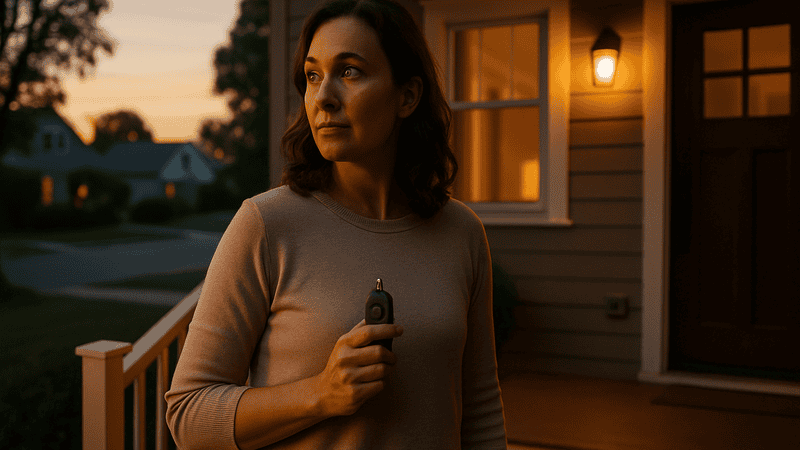
I’ve sat across the table from a lot of people over the years — moms, daughters, grandmothers, college kids heading off on their own for the first time — and I always ask the same thing before I recommend anything: “Tell me about your day. Where do you park? Where do you walk? Who are you protecting besides yourself?” Because here’s the thing — the tool that saves you isn’t the one with the scariest name. It’s the one you’ll actually have in your hand when your heart starts pounding.
I think about my daughter walking to her car after a late shift. I think about my granddaughter jogging before school. I think about my own mother, years back, living alone and scared of every creak in the house. Three different people. Three completely different tools would’ve made sense for each of them. That’s what this comes down to — not which product wins on paper, but which one actually gets used when it counts.
How does pepper spray actually perform in a real confrontation?
Pepper spray’s whole job is distance. If someone is closing in on you — across a parking lot, down a hallway, at your car door — pepper spray lets you stop them before they ever get their hands on you. That’s the beauty of it. You don’t have to be strong. You don’t have to fight. You just have to aim and spray, and it buys you the seconds you need to get away and get loud.
But I’m gonna tell you right now — pepper spray has limits, and I won’t sugarcoat them for you. Wind can carry it back at you. Some people, especially under the influence, don’t react to it the way you’d expect. And it takes a beat to work — it’s not instant like in the movies. That’s why I always tell people: know how to use it before you need it. We put together a whole guide on how to use pepper spray correctly because most folks are never actually taught the right grip, the right stance, or the right moment to deploy it. And if you’re someone who runs alone — I’ve got a soft spot for this one because it’s exactly what I’d want my own daughter carrying — check out our piece on pepper spray options built for women on the move.
One more thing, and this matters more than people think: pepper spray laws are different depending on where you live. Before you buy anything, take two minutes and read up on pepper spray laws by state so you’re not caught off guard.
What happens when a stun gun is your last line of defense?
A stun gun is a different animal entirely, and it serves a different moment. This is for when someone’s already gotten too close — grabbed your arm, blocked your path, gotten into your space in a way that pepper spray’s distance advantage can’t help you with anymore. This is contact range. This is the moment nobody wants to think about, but I think about it for you so you don’t have to be caught without an answer.
Here’s what I love about a good stun gun — it doesn’t require strength, it doesn’t require training you don’t have time to get, and it doesn’t require you to hurt someone in a way that follows either of you home. You press it against someone, you activate it, and it interrupts their ability to keep coming at you. That’s it. That’s the whole job, and it does that job well.
What I care about most when I recommend a stun gun isn’t the voltage number on the box — it’s whether you can actually get to it fast. That’s why I’m partial to a stun gun with a belt clip for people who want it accessible without digging through a purse or a glove box. When your hands are shaking and your adrenaline’s up, you don’t want to be fumbling. You want muscle memory. Practice pulling it, practice activating it, practice like your life depends on it — because one day it might.
Can a personal alarm really stop someone, or is it just noise?
I get asked this one a lot, and I understand the skepticism. A personal alarm doesn’t touch anyone. It doesn’t spray anyone. All it does is scream — loud, sharp, 130 decibels of “something is wrong here, look at me.” But don’t underestimate that. Most people who mean you harm are counting on staying invisible. A personal alarm rips that invisibility away in half a second, and that alone makes plenty of people back off before anything else happens.
This is the tool I recommend to people who might never carry pepper spray or a stun gun — and that’s okay, not everybody will, and I’d rather you carry something than nothing. I think about my mother again here. A woman living alone doesn’t need to fight anyone off. She needs to make enough noise that a neighbor comes running or a stranger changes their mind. That’s exactly why we built out a whole section on personal alarms for elderly family members — because dignity and independence matter, and so does someone hearing you if things go wrong.
Runners get a different kind of value out of alarms too — that instant burst of sound when you can’t exactly stop and dig through a hydration pack. Take a look at our personal alarms for runners if that’s your world. And if you’re someone who travels — hotels, unfamiliar cities, rideshares late at night — our guide on personal alarms for travelers covers exactly the scenarios that keep me up thinking about my own family on the road.
Which one should I actually carry — can I only pick one?
You don’t have to pick just one, and honestly, I don’t want you to. The people I trust most with their own safety — the ones who’ve thought it through — usually carry two things, not one. A personal alarm on their keys for the moment someone’s following too close, and pepper spray or a stun gun in their bag or on their belt for the moment that follows if the alarm doesn’t scare them off.
Think of it like layers. The alarm is your early warning. The spray is your distance weapon. The stun gun is your last line if someone gets inside that distance anyway. None of them replace the others — they cover different gaps. I’ve built my own daily carry that way for 25 years, and I’d tell my own daughter to do the same thing. You don’t have to carry a gun, but carry something — and honestly, carry more than one something if you can.
If you want a broader look at layered protection at home too, not just on your body, our post on whether door alarms actually deter burglars walks through the same layered thinking applied to your front door.
Does the situation change which tool makes sense?
Absolutely, and this is where I see people get it wrong the most — they buy one tool and expect it to cover every scenario in their life. It won’t. The tool that makes sense walking your dog at 6am is not necessarily the tool that makes sense flying somewhere unfamiliar, where a stun gun might not even be allowed through security. If you’re headed somewhere like Puerto Rico, for example, we’ve got a full breakdown on traveling with a stun gun and what TSA rules require so you’re not caught flat-footed at the checkpoint.
My advice, every time, is the same: map your actual life first. Where do you walk. Where do you park. Who are you protecting. Then build your carry around that — not around whatever product looks the toughest on a shelf. That’s how I’ve built this business, and that’s how I’d want my own family to think about it too.
Frequently Asked Questions About Stun Guns, Pepper Spray, and Personal Alarms
Is pepper spray or a stun gun better for self-defense?
Neither is universally “better” — they solve different problems. Pepper spray works at a distance, stopping someone before they reach you. A stun gun works at contact range, once someone is already close. Many people carry both so they’re covered whether a threat approaches from far away or gets in close before they can react.
Do personal alarms actually work to stop an attacker?
Personal alarms don’t physically stop anyone, but the sudden loud sound — often around 130 decibels — startles attackers and draws attention from anyone nearby. Most people looking to do harm want to stay unnoticed, and a personal alarm removes that advantage instantly, which is often enough to make them back off.
Can I carry a stun gun and pepper spray at the same time?
Yes, and it’s actually a smart layered approach. Pepper spray covers the moment someone is approaching but hasn’t reached you yet. A stun gun covers what happens if they get past that distance. Carrying both means you’re not relying on a single tool to handle every possible scenario.
What’s the biggest mistake people make when choosing between these tools?
Buying based on which product sounds toughest instead of thinking through their actual daily routine. The right choice depends on where you walk, when you’re most vulnerable, and whether you’ll realistically carry and practice with the tool — not on voltage numbers or spray distance alone.
Is a personal alarm enough protection on its own?
For some people, yes — especially those who want a simple, non-confrontational option they’ll actually carry every day, like elderly family members or someone who’s uncomfortable with spray or a stun device. It won’t physically stop a determined attacker, but it can prevent many situations from escalating in the first place.
How do I know which self-defense tool fits my lifestyle?
Start by thinking through your actual routine — where you park, whether you walk alone at night, if you travel, and how comfortable you are with each type of tool. A runner’s needs look different from a traveler’s, and a traveler’s needs look different from someone walking to their car after a late shift.
Do I need training to use a stun gun or pepper spray effectively?
Yes, and this matters more than people realize. Owning the tool isn’t enough — you need to practice pulling it out quickly, know exactly how to activate it, and understand its limitations before you’re ever in a stressful situation. Adrenaline changes everything, and muscle memory is what carries you through it.
Are personal alarms legal everywhere pepper spray and stun guns aren’t?
Personal alarms are legal virtually everywhere and face no restrictions, which makes them a great option for travel or areas with stricter self-defense product laws. Pepper spray and stun gun regulations vary by state and country, so it’s worth checking local laws before you travel or relocate with either.
At the end of the day, this isn’t about picking a winner between three products on a shelf. It’s about you getting home safe, your daughter getting to her car safe, your mother feeling secure in her own house at night. That’s the only scorecard that’s ever mattered to me in 25 years of doing this. Layer your protection, practice with what you carry, and build a setup that actually fits the life you live — not the life you think you should be living.
Stay safe out there. And may you and your loved ones stay protected.