Yes — door alarms deter burglars, and the evidence isn’t soft science, it’s straight from the source. Studies on convicted burglars, including the well-cited research out of the UK and reinforced by U.S. law enforcement surveys, show that noise and delay are two of the top reasons burglars abandon a target. A loud alarm does both at once. It’s not a maybe. It’s a documented fact that changes how criminals behave the second they hear it.
Do door alarms actually stop burglars, or is that just a sales pitch?
Let’s cut through it right now — this isn’t a sales pitch, this is documented behavior. Convicted burglars have been interviewed repeatedly by criminologists, and the same answers come up over and over: they avoid homes that make noise, they avoid homes that take too long to get into, and they avoid anything that draws attention to them standing at your door. A door alarm delivers all three in one shot. The second that alarm sounds, the burglar’s entire plan falls apart. They didn’t come to get caught. They came to get in, get out, and disappear.
I’ve been in this industry over 25 years, and I’m gonna tell you right now — the data lines up with what I’ve seen from customers for two and a half decades. A burglar’s biggest enemy is time. Every second they spend at your door is a second they could get seen, get identified, or get caught. A 120dB alarm doesn’t just scare them — it starts a clock they can’t afford to let run.
What does the research actually say about burglars and noise?
The research is blunt: noise ranks near the top of what burglars actively try to avoid. In studies where incarcerated burglars were asked what would stop them from targeting a home, alarms and loud deterrents consistently outranked things like visible cameras or even dogs in some cases — because noise draws neighbors, and neighbors call police. Burglars don’t fear your alarm because it’s loud. They fear what the loud sound sets in motion.
This is why a simple wireless door alarm does more heavy lifting than people expect. It’s not complicated tech. It’s a psychological trigger. The second that alarm goes off, the burglar isn’t thinking about your TV or your jewelry box anymore — they’re thinking about the door they need to get back through before someone shows up.
How fast do burglars actually leave once an alarm sounds?
Fast. Faster than most people assume. Law enforcement data and burglar interviews both point to the same window — most burglars will abandon a job within seconds of an alarm sounding, not minutes. They’re not sticking around to see if it’s a false alarm. The uncertainty alone is enough to push them out the door.
Here’s the thing — this is exactly why delay matters as much as noise. A door alarm doesn’t just make sound, it removes the one advantage a burglar is counting on: surprise. Once that’s gone, they’ve lost control of the situation, and burglars do not operate well when they’ve lost control. I’ve said this to customers for years — you don’t need to stop a burglar with force. You need to take away their confidence. A loud alarm does that instantly.
Are door alarms enough on their own, or do I need more?
A door alarm is a strong layer, but I’m not going to tell you it’s the only layer you need — that’s not how real security works, and I don’t sell false confidence. What I will tell you is this: alarms handle the entry points burglars actually use. Most break-ins happen through a door or a ground-floor window, not some dramatic second-story climb. That means your alarms need to be on the points of entry that matter most.
If you’re renting or living in an apartment, you don’t need to touch a single wall to get real protection — check out door and window alarms built for renters and apartments. If you’ve got a household member who wanders at night, whether that’s a child, a sleepwalker, or a parent living with dementia, there are alarms designed specifically for those situations — see the options for sleepwalkers, dementia patients, and kids and toddlers. These aren’t just burglar deterrents — they’re peace-of-mind tools for the people you’re protecting inside the home too.
What’s the difference between a cheap alarm and one that actually works?
Decibel rating and reliability — that’s the whole game. A weak alarm that maxes out at 90dB isn’t going to do the job a 120dB unit does. You want something loud enough to be heard through walls, loud enough to startle, and loud enough to alert neighbors two doors down. I’m not going to sugarcoat it — some of the alarms on the market are glorified toys. That’s not what you want guarding your family.
Brands like SMART, MultiGuard, and Streetwise build alarms with the output and reliability that actually match what the research says works. This is good for anyone who wants something they mount once and trust to perform when it matters — not something they have to think about twice. Reliability isn’t a bonus feature here. It’s the entire point of owning one.
Where should I put door alarms to get the most protection?
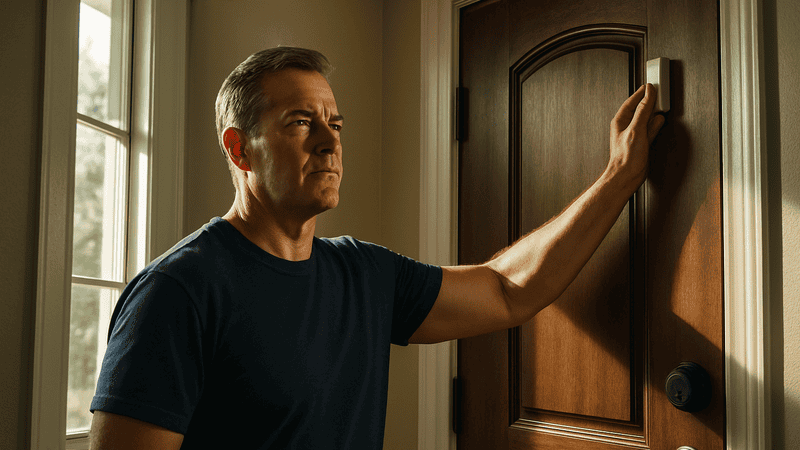
Cover the points of entry a burglar would actually use — not just your front door. That means back doors, sliding glass doors, ground-floor windows, and any side entrance that’s out of view from the street. Burglars gravitate toward entry points that are hidden from neighbors and passing cars, so that’s exactly where your coverage needs to be strongest.
If you want a full breakdown on setup and placement, I put together a straightforward guide on how to use door alarms effectively — it walks through exactly where these units earn their keep. And if you’re weighing your legal options for protecting your property beyond alarms, it’s worth understanding what the law actually says about defending your property before you make any decisions on that front.
Frequently Asked Questions About Door Alarm Deterrence
Do door alarms really scare off burglars, or do they just alert you after it’s too late?
They do both, but the deterrence happens before entry in most cases. Burglars interviewed in criminology studies say noise and time pressure are top reasons they abandon a target. A loud alarm creates both instantly, which is why most burglars retreat within seconds rather than risk being heard.
What decibel level should a door alarm be to actually deter someone?
Look for 100dB minimum, ideally 120dB or higher. That’s loud enough to be heard through interior walls and by neighbors outside. Anything weaker risks being drowned out by ambient noise or simply not being alarming enough to trigger a burglar’s instinct to flee.
Can burglars just disable or remove a door alarm quickly?
Most burglars won’t take the time to try. The whole point of these alarms is instant, loud noise the moment a door or window opens — there’s no window for a burglar to quietly disable it before it sounds. That immediate response is what makes them effective as a deterrent.
Are door alarms better than security cameras for stopping burglars?
They serve different purposes and work best together. Cameras document what happened; alarms interrupt it while it’s happening. Research on burglar behavior shows noise-based deterrents often rank higher than cameras alone, because sound creates immediate urgency a camera simply can’t replicate in the moment.
Do door alarms work on sliding glass doors and windows too?
Yes, and they should be a priority. Sliding doors and ground-floor windows are common entry points precisely because they’re seen as easier and less visible than a front door. A magnetic contact alarm on these entry points closes that gap completely.
How many door alarms do I actually need for my home?
Cover every ground-level entry point — front door, back door, side doors, and any accessible windows. For most homes that’s four to six units. Skipping a single vulnerable entry point gives a burglar exactly the opening the rest of your alarms are designed to eliminate.
Do apartment renters get the same deterrence benefit from door alarms?
Absolutely, and often it’s an easier win. Renters can use adhesive or wireless alarms that require no drilling or permanent installation, delivering the same noise-based deterrence as a hardwired system. It’s one of the most effective security upgrades a renter can make without violating a lease.
Bottom line
The evidence doesn’t leave room for debate — door alarms work because they attack the exact things burglars fear most: noise, time, and exposure. This isn’t theory. It’s what burglars themselves have said, over and over, when researchers asked them directly. You don’t need to guess whether an alarm will make a difference. The data already answered that question for you.
Here’s the thing — owning the alarm is step one. Placing it right, keeping it charged, and covering every real entry point is what turns “I bought an alarm” into “my home is actually protected.” Take control of that now, not after something happens. Stay safe out there.