The best self defense keychain for college students is one that combines genuine stopping capability with instant accessibility — something you can reach in under two seconds, activate without fine motor precision, and carry every single day without thinking twice about it. The top options include the Brutus knuckle keychain, cat ear keychains, and compact stun guns — each suited to different comfort levels and campus environments.
Here’s the thing — most students don’t give their keychain a second thought until the moment they wish they had. I’ve been in this industry for over 25 years, and I can tell you from experience that the people who carry the right tool and the people who carry nothing often look identical walking across a parking lot at 11 PM. The difference isn’t how dangerous they look. It’s how prepared they actually are. A quality self defense keychain changes that equation without changing your whole lifestyle to do it.
Not all keychain tools are created equal. Some are built with real materials and real purpose. Others are cheap novelties that will crack under pressure — literally — when you need them most. What follows is a breakdown of what separates a serious everyday carry keychain from something that just takes up space on your ring.
What makes a self defense keychain worth carrying for a college student?
The standard worth holding yourself to is simple: if you wouldn’t trust it in the worst ten seconds of your life, it has no business on your keychain. That means the construction matters — aluminum and reinforced polymer outperform cheap plastic in every meaningful test. It means the activation is intuitive — because under adrenaline, complicated is the same as broken. And it means the tool fits the reality of campus life, not a tactical training course.
College students are dealing with late-night library sessions, campus parking structures, rideshare pickups on the edge of campus, and walks through off-campus neighborhoods that don’t always feel as safe as they should. A serious self defense keychain addresses those specific scenarios — not an abstract threat concept, but the actual moment a woman is walking alone to her car at midnight and hears footsteps behind her.
Weight and carry comfort matter too. If a tool is awkward or embarrassing to carry, it stays in the backpack instead of the hand. The best keychain tools are designed to sit naturally in your grip the moment you grab your keys — which is exactly when you need them, and exactly when there’s no time to dig around.
What is the difference between a Brutus keychain and a cat ear keychain?
Both are built around the same principle — a hard-material striking tool that fits between the fingers — but they serve slightly different preferences and use cases. The Brutus self defense keychain has two finger holes and two forward-facing prongs, giving you a compact, aggressive grip that concentrates force into a small surface area. It’s designed for people who want something that means business without advertising itself.
The cat self defense keychain — often called a cat ear keychain — positions two pointed ears forward when held in a fist. The ears function the same way as the Brutus prongs, but the form factor reads differently. For many women, the cat ear design carries more naturally and raises fewer eyebrows in everyday settings. Both are legitimate self defense tools, and choosing between them is largely a matter of personal preference and how you grip your keys.
I’ll be straight with you — neither of these is a magic solution. They require you to be within arm’s reach of a threat, which means they work best as a last line of defense after awareness and distance have already been part of your strategy. But in a close-contact situation where you need to buy yourself a few seconds to break contact and run, either one puts meaningful force behind your response. That matters.
Should college students consider a keychain stun gun over a striking tool?
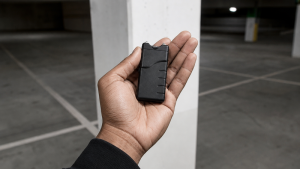
If you want to step up to a higher tier of non-lethal deterrence, a compact stun gun is worth serious consideration. A quality stun gun with a built-in flashlight does double duty on a college campus — the flashlight is legitimately useful every single night, and the stun capability is there if the situation escalates. Carrying something you actually use regularly means it’s in your hand more often, which is exactly where it needs to be.
Brands like Streetwise and Runt produce compact stun guns built specifically for everyday carry — not oversized tactical devices, but tools sized for a jacket pocket or the exterior pocket of a backpack. The Runt stun gun, for example, is small enough to fit in a closed fist while still delivering a charge that will make someone reconsider their decision-making rapidly.
Now look — before you put any stun gun on your keychain or carry it on campus, check your school’s policies and your state laws. Some campuses restrict stun guns even if the state permits them. I always recommend our resource on self defense weapons for college students and what’s legal on campus as a first stop before you buy. Being prepared means being legally prepared too.
What should a college student look for when evaluating keychain self defense tools?
Start with material construction. Aircraft-grade aluminum and reinforced polymer are the benchmarks worth meeting. Anything that flexes under hand pressure before you’ve even used it is telling you something important. Quality tools feel solid from the moment you pick them up — there’s a density and precision to them that cheap alternatives simply don’t replicate.
Next, consider activation speed. Can you deploy this tool in the dark, in a parking garage, with cold hands and elevated heart rate? Anything that requires multiple steps, a safety release you have to think about, or a grip adjustment you have to make deliberately is going to cost you time you may not have. The best keychain tools are ready the instant your hand closes around them.
Finally, think about your personal carry habits honestly. A Brutus or cat ear keychain attached to your actual key ring is always with you when you grab your keys. A stun gun clipped to a bag zipper is accessible but separate. Neither is wrong — what matters is that it’s reachable, that you’ve practiced the motion, and that you’ve thought through how you’ll use it before the moment demands it.
For a broader look at what belongs on your keychain and why, the self defense tools for keychain category at Brainstorm Security Shop is worth browsing with intention. There’s a real difference between adding the right tool and adding a collection of things that clutter your carry without improving your readiness.
Are cat ear keychains specifically designed for women, or can anyone carry them?
Cat ear keychains are marketed heavily toward women — and with good reason. The design is compact, the profile is low-key, and it integrates naturally into daily carry without the tactical aesthetics that some people aren’t comfortable with. But the effectiveness of the tool has nothing to do with gender. The physics work the same for anyone who grips it correctly.
For college women specifically, the cat ear keychain for college women is one of the most practical options available at any price point. It doesn’t require a permit. It’s legal in most jurisdictions. It’s discreet. And it works by concentrating the force of your natural strike response — something everyone already has — into two hard points that land with precision. That’s a smart tool, not a gimmick.
Frequently Asked Questions About Self Defense Keychains for College Students
Are self defense keychains legal to carry on college campuses?
Most striking tools like the Brutus and cat ear keychains are legal in the majority of states, but individual campus policies vary. Some schools restrict stun guns even where state law permits them. Before you carry anything, review your campus code of conduct and check your state laws. When in doubt, contact your campus security office directly for written clarification.
How do I actually use a cat ear or Brutus keychain if I need to?
Insert your index and middle fingers into the two holes so the ears or prongs face forward. Close your hand naturally into a fist. Strike with the forward-facing points aimed at soft tissue — the face, throat, or solar plexus. The goal is not to win a fight. The goal is to create enough pain and disruption to break contact and escape. Practice the grip regularly so it’s automatic.
What is the best self defense keychain for a college student who doesn’t want to carry a weapon?
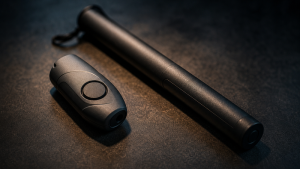
A high-decibel personal alarm is an excellent choice for students who aren’t comfortable with striking tools or stun guns. A quality alarm in the 120–130dB range draws immediate attention and can disorient an attacker. Look for one with a pull-pin activation — the pin pulls when grabbed, which means the alarm triggers automatically in a grab scenario. It pairs well with any other keychain tool you choose.
Can I attach a stun gun to my keychain?
Some compact stun guns are specifically designed for keychain carry with a built-in key ring loop. Others are better clipped to a bag or carried separately. The important factors are size, weight, and whether the safety mechanism prevents accidental discharge in a crowded backpack. Brands like Runt and Streetwise make models purpose-built for close-carry use by students and everyday carriers.
What’s the difference between a cheap cat ear keychain and a quality one?
Material is everything. Budget versions are often made from brittle plastic or thin cast metal that can crack or bend under impact — which defeats the entire purpose. A quality cat ear or Brutus keychain is made from aircraft-grade aluminum or reinforced polymer that holds its shape under real striking force. You’ll feel the difference in your hand before you ever need to use it in the field.
Should I carry pepper spray in addition to a keychain striking tool?
Yes, if your campus and state permit it. A striking tool works at contact range. Pepper spray gives you a standoff option — you can deploy it before a threat closes the distance on you. Brands like Mace, Wildfire, and Pepper Shot offer compact spray canisters that fit naturally on a keychain alongside a striking tool. Layered options give you more response choices, not just one.
How do I choose between the Brutus keychain and the cat ear keychain?
Both work on the same principle — hard-point striking — but the grip and profile differ. The Brutus has two finger holes and forward prongs; the cat ear design also uses two forward points but has a different visual profile. If you prefer a discreet, everyday aesthetic, the cat ear typically blends in better. If you want something more minimal and utilitarian, the Brutus is a clean choice. Handle both if you can and go with what fits your grip naturally.
Is just owning a self defense keychain enough to stay safe on campus?
No, and I’ll never tell you it is. The tool matters, but awareness is what keeps most people out of situations that require a tool in the first place. Stay off your phone when walking alone at night. Know where you’re going before you start walking. Keep your keys in your hand — and your keychain tool ready — before you reach your car, not after you get there. Situational awareness is free, and it’s the most powerful thing you carry.
You don’t need a dozen gadgets on your keychain. You need one or two things that are right for you, that you’ve actually thought through, and that you’ll have in your hand when it matters. That’s the standard worth meeting — not impressive to look at on a shelf, but genuinely useful in the moment that counts. Browse the full range of self defense tools for keychain carry at Brainstorm Security Shop, and take the time to choose something you’ll actually carry every day.
Stay safe out there — and may you and your loved ones stay protected.