Pepper gel has a clear advantage over traditional pepper spray for real estate agents because it discharges in a thick stream instead of a fog, which means it doesn’t drift, doesn’t blow back, and doesn’t fill an enclosed room with airborne irritant. In a small bedroom, hallway, or staged closet — the exact spaces agents walk into alone every day — that difference matters more than most people realize.
Here’s the assumption almost everyone gets wrong
Most agents think pepper spray is pepper spray — grab a canister, clip it to your keys, done. That assumption works fine outdoors. It falls apart the second you’re standing in a 10×10 bedroom showing a vacant listing with the door closed behind you.
Traditional pepper spray is built for open air. It’s designed to travel — a fog or stream that reaches a target several feet away outdoors, where wind and space let the irritant dissipate. Put that same fog pattern inside a small room with the windows shut, and physics doesn’t care that you’re the one holding the can. The particles bounce off walls, drift on air currents, and land on you just as easily as your attacker.
Nobody selling pepper spray tells you that part. It’s not because they’re hiding something — it’s because most pepper spray marketing is written for the outdoor scenario: campus walk, jogging trail, parking lot. Real estate agents live in a different scenario entirely, and almost nobody has adjusted the advice for it.
What actually happens when you spray fog indoors?
Fog-pattern pepper spray creates a wide, dispersed cloud designed to cover a larger area and increase your chance of hitting a moving target. Indoors, that same wide dispersion becomes the problem — it doesn’t stay contained to your target. Enclosed rooms trap the aerosolized particles, and normal air movement from HVAC vents, open doors, or even your own exhale can carry it right back into your face.
This is the part that surprises most agents when they finally learn it: the tool built to protect you can incapacitate you in the exact environment you spend the most time working in — vacant homes, empty condos, staging appointments where you’re alone with a stranger in a room with the door shut.
Gel doesn’t behave this way. Because it discharges as a stream rather than a mist, it travels in a straight, contained line to the target and drops rather than dispersing into the air. No cloud. No drift. No blowback risk from a ceiling fan or a cracked window. It sticks to skin and clothing on contact instead of floating.
Why does pepper gel work better in tight spaces?
Pepper gel was engineered specifically to solve the contamination problem that fog sprays create — that’s its entire reason for existing, not a side benefit. The gel formula uses a thicker consistency that shoots in a rope-like stream up to 8 to 10 feet, giving you range in a hallway or open-concept living room without the airborne spread that turns a small space into a hazard for everyone in it, including you.
There’s a second advantage most agents haven’t connected yet: gel is dramatically harder to have blown back at you. Fog spray can be deflected by wind outdoors or by a sudden hand motion indoors — and once deflected, it’s airborne and unpredictable. Gel’s stream pattern makes deflection far less effective, because there’s no cloud to redirect.
If you’re weighing formulas for the first time, this is exactly the kind of numbers-versus-reality comparison worth understanding at the ingredient level — OC percentage vs. SHU breaks down what those specs actually tell you before you buy based on strength alone.
Is fog spray ever the better choice for agents?
Yes — outdoors, and only outdoors. If your biggest exposure risk is the walk from your car to a listing, or meeting a client in a parking lot after dark, fog spray’s wider dispersion pattern gives you a better margin for error at distance. It’s genuinely a better tool in open air.
But most agent safety conversations stop at “carry pepper spray” without asking where you’ll actually need to use it. If your real exposure is indoor — vacant showings, open houses with unknown foot traffic, private appointments in empty units — gel is the format built for that environment. The honest answer isn’t “gel is better” or “fog is better.” It’s that your environment determines which formula actually protects you, and most agents have never been asked that question before choosing.
What should agents actually carry for showings?
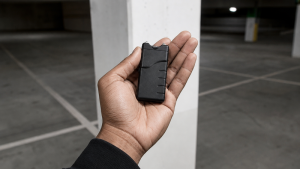
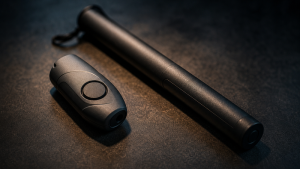
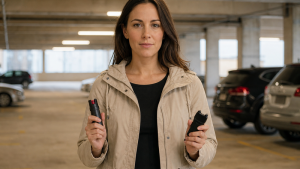
A compact gel canister that fits in a blazer pocket or clips discreetly to a keyring is the most practical setup for daily showings — something you’d never think twice about carrying and something that doesn’t scream “self-defense tool” to a client sitting across the table. Browse the full range of pepper spray for sale and you’ll notice gel formulas are increasingly the default recommendation for anyone working indoors regularly, not just agents.
For agents who want something even less conspicuous — no canister shape, no obvious clip — a lipstick-style pepper spray carries a gel or fog formula inside a disguised tube that sits in a purse or jacket pocket without drawing attention during a showing. It’s a smart option for agents who want protection without a visual cue that puts a nervous client on edge.
And here’s the detail almost nobody accounts for: canisters expire. A gel formula sitting in your car console for two years past its date won’t perform the way you’re counting on. Check your canister’s date and swap it out through a pepper spray replacement before it becomes the thing that fails you during the one showing that actually goes sideways.
Do agents need a permit to carry pepper gel?
In most states, no — pepper spray and pepper gel are legal to carry without a permit, though limits on canister size and concentration vary by state. If you split time between listings in different states or work near a state line, it’s worth checking pepper spray no permit required options built to stay compliant across jurisdictions, and reviewing pepper spray laws by state before you assume your current canister is legal everywhere you work.
Agents who also carry a stun device for added protection during vacant showings should look at stun gun laws for real estate agents — the legal picture for stun devices is entirely different from pepper spray, and the two rarely line up the way people assume.
Frequently Asked Questions About Pepper Gel vs. Pepper Spray for Real Estate Agents
Is pepper gel actually stronger than pepper spray?
Strength depends on OC concentration, not delivery method — gel and fog can carry identical potency. The real difference is how the formula travels once it leaves the canister. Gel stays contained in a stream; fog disperses into a cloud. Indoors, that delivery difference matters more than a slightly higher concentration number.
Can pepper gel still miss a target indoors?
Yes, gel requires reasonably accurate aim since it doesn’t spread like fog. In a tight hallway or doorway, that’s rarely an issue, but agents should still practice a quick draw and aim with an inert training canister before relying on it in the field.
Will pepper gel stain furniture or flooring during a showing?
It’s possible on light-colored fabric or unfinished wood, similar to any oil-based irritant. This is a real consideration for agents in staged homes, but it’s a minor tradeoff against the alternative of contaminating an entire room with airborne fog spray.
How far does pepper gel actually reach?
Most gel formulas reach 8 to 10 feet in a controlled stream, which comfortably covers the distance across a bedroom, hallway, or entryway. That range is typically enough to create space between you and someone approaching before they close the gap.
Should older agents carry something different than gel?
Not necessarily — gel’s ease of aim and lack of blowback risk actually make it a strong option for agents of any age or hand strength. Agents assisting elderly clients or working with older colleagues may want to review pepper spray for elderly defense options built with easier-grip activation in mind.
Does pepper gel expire faster than regular pepper spray?
No, both formulas typically carry a similar shelf life, usually around two to four years depending on the manufacturer. What matters is checking the expiration date printed on your specific canister and replacing it on schedule, regardless of which formula you carry.
Is pepper gel legal everywhere pepper spray is legal?
Generally yes — most states regulate pepper spray by concentration and canister size rather than by formula type, so gel and fog face the same legal restrictions in most jurisdictions. Always confirm your specific state’s rules before carrying, especially if you cross state lines for work.
What’s the biggest mistake agents make when choosing between the two?
Buying based on brand recognition instead of use case. Most agents grab whatever pepper spray is most familiar without asking where they’ll actually need it. Since the majority of an agent’s real exposure happens indoors during showings, gel is the format built for that specific risk — a detail most buyers never get told before they purchase.
The tool should match the room you’re standing in
Nobody sets out to buy the wrong self-defense product. They just buy the one everyone else has, without anyone explaining that the room you’re standing in changes which formula actually protects you. Now you know the difference — and for agents walking into empty showings alone, that’s not a small detail. It’s the whole decision.
If you’ve been carrying fog spray out of habit, it might be worth rethinking what’s clipped to your keyring before your next solo showing. Stay sharp out there, and may every walk-through end exactly the way it’s supposed to.