What self defense tools are illegal to own in the United States?
Some self-defense tools are outright illegal in certain states, cities, or counties — and carrying one without knowing the law can get you arrested faster than any threat you were trying to protect yourself from. Federal law sets a baseline, but state and local laws vary dramatically, and what’s perfectly legal in Texas might land you in handcuffs in California, New York, or Massachusetts. Before you buy anything, you need to know exactly where your state and city stand — because ignorance of the law is not a defense in court.
Why do self-defense tool laws vary so much across the United States?
The United States doesn’t have a single national law governing every self-defense tool. The Second Amendment protects the right to bear arms, but states have broad authority to regulate everything else — stun guns, pepper spray, batons, brass knuckles, and more. That patchwork of legislation means a legal EDC item in one state can be a criminal offense the moment you cross a state line. Here’s the thing — this isn’t just a technicality. People get charged with weapons possession crimes every year simply because they didn’t check local law before traveling.
The key factors courts and legislatures typically weigh are: the potential for harm if misused, whether the tool has a legitimate defensive purpose, and the historical context of violence involving that item. That’s why something like a switchblade knife — which has a legitimate defensive use — is still banned or heavily restricted in a significant number of states.
Which self-defense tools are most commonly illegal or restricted?
Certain categories of tools show up repeatedly on restricted or prohibited lists across multiple states. Knowing these categories is your first line of defense against accidentally breaking the law. Below is a breakdown of the most commonly regulated items — and what those regulations typically look like.
Brass Knuckles
Brass knuckles — also called metal knuckles or knuckle dusters — are illegal to own, carry, or sell in a significant number of states, including California, Michigan, Vermont, and Illinois. Even in states where they’re technically legal to own at home, carrying them in public is often a separate offense. Some states classify them as a felony weapon, meaning possession alone can result in serious criminal charges. This is one of those items I’m gonna tell you right now — the legal risk far outweighs the defensive benefit, especially when better legal options exist.
Switchblades and Automatic Knives
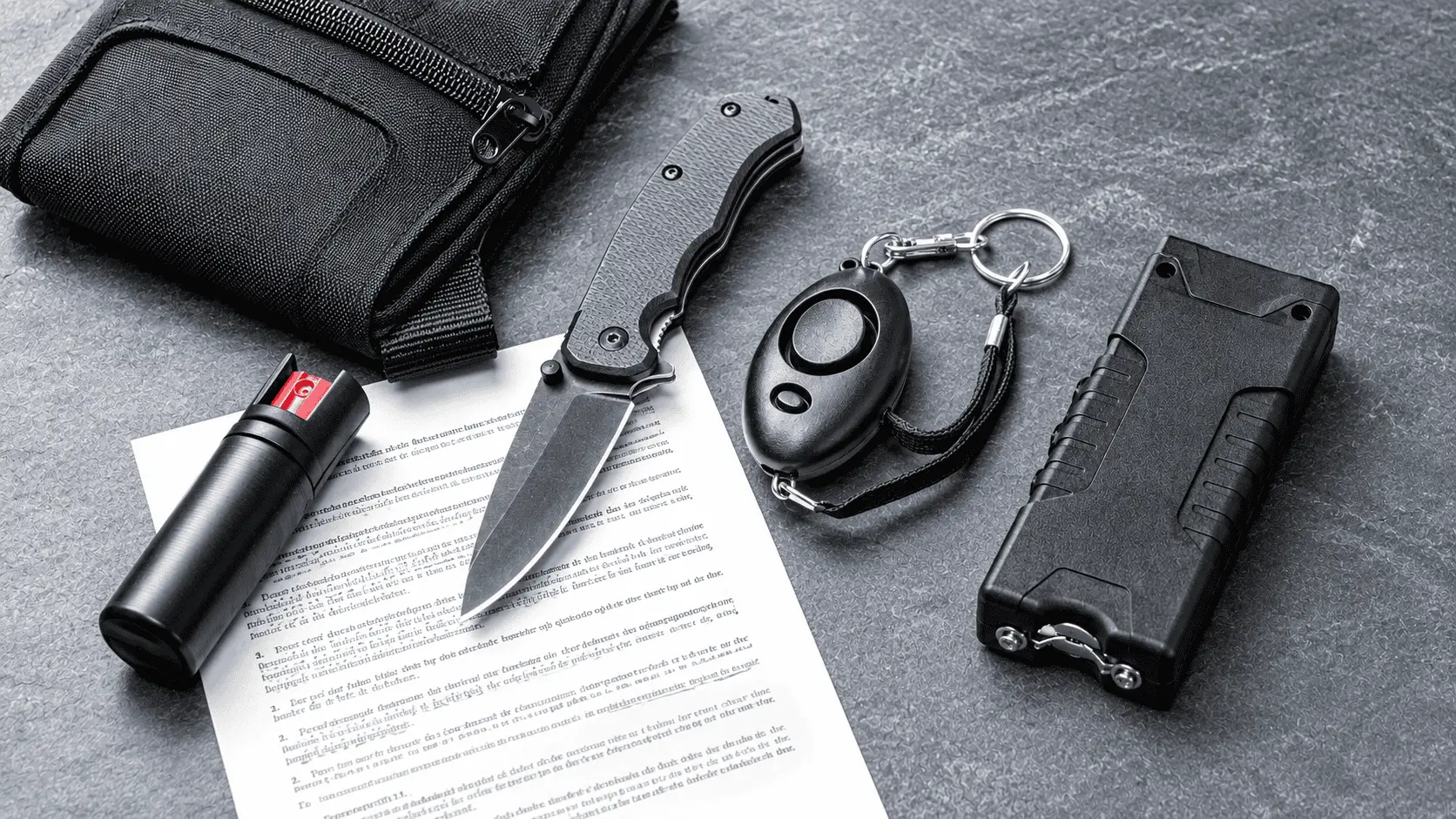
Switchblades — any knife that opens automatically with a button or spring mechanism — are banned or heavily restricted in states including California, New York, New Jersey, and Minnesota. Federal law under the Federal Switchblade Act of 1958 prohibits interstate commerce of switchblades and their possession on federal property. Some states allow ownership but prohibit carry in public. Others have blade length restrictions that effectively ban most practical defensive knives. Always check your state’s specific knife laws, including blade length limits, before carrying any fixed or folding knife.
Stun Guns and Tasers
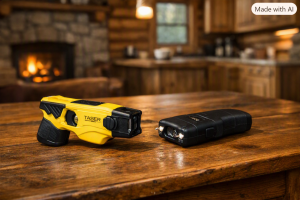
Now look — stun guns are one of the most effective non-lethal self-defense tools available, and in most of the country, they’re perfectly legal for adults to own and carry. But there are important exceptions. Hawaii prohibits civilian possession of stun guns and Tasers entirely. Rhode Island bans civilian Taser ownership. New York City has historically treated stun guns as illegal weapons, though this was challenged in court. Several states require a permit or restrict where you can carry them — near schools, government buildings, and other sensitive locations. Always verify city-level laws in addition to state law, because local ordinances can be more restrictive.
Pepper Spray and OC Spray
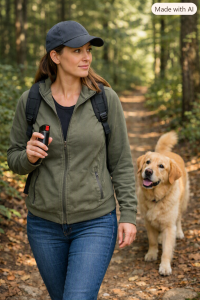
Pepper spray is legal in all 50 states, but that doesn’t mean it’s unregulated. This is critical — the restrictions can catch you completely off guard if you don’t pay attention. Here’s what varies by state:
Canister size limits: Massachusetts limits canisters to 1.5 oz. Michigan caps them at 35 grams (roughly 1.2 oz). California allows up to 2.5 oz.
Age restrictions: Most states require purchasers to be 18. Some states are 21.
Concentration limits: Michigan restricts OC concentration to 2% or less. Some states ban CN (tear gas) formulas and allow only OC.
Felony restrictions: Convicted felons are prohibited from purchasing or possessing pepper spray in most states.
Restricted locations: Airports, schools, courthouses, and other government buildings typically prohibit carry regardless of state law.
You don’t have to carry a gun, but if you carry pepper spray — and I strongly recommend you do — carry it legally. Double-check your state’s specific canister size and concentration rules before purchasing.
Expandable Batons and Billy Clubs
Expandable batons — sometimes called ASP batons or collapsible batons — are restricted or outright illegal in California, New York, Massachusetts, and several other states. In California, carrying a collapsible baton in public is a criminal offense. In some jurisdictions, even owning one at home can be illegal. Fixed-length batons and nightsticks are subject to similar restrictions. These items are powerful defensive tools in the right hands, but because they’re associated with law enforcement, many states have drawn a hard line on civilian possession.
Ballistic Knives
Ballistic knives — which fire a detachable blade using a spring or compressed gas — are federally illegal under the Ballistic Knife Prohibition Act of 1986. Federal law prohibits their manufacture, sale, importation, and possession in interstate commerce. Many states have additional laws banning them entirely. This is one of the clearest and most consistent federal prohibitions in the self-defense tool space — there is no gray area here.
Throwing Stars and Shuriken
Throwing stars, also known as shuriken or ninja stars, are banned in a number of states and localities, including California, New York, Indiana, and Ohio. They’re typically classified under the same category as “exotic weapons” or “dangerous weapons” in state penal codes. Even in states where they’re technically legal to own, transporting them in public is almost always restricted. I’m not saying there’s a huge market for these in everyday self-defense — there isn’t — but I see people try to carry them without realizing they’re committing a crime.
Nunchucks
Nunchucks — two sticks connected by a chain or rope — are illegal to possess in New York and California, among other states, and are banned in several countries internationally. New York’s ban was challenged and partially overturned in federal court in 2019, but the legal landscape remains complicated. If you’re a martial arts practitioner who trains with these, check your specific state and local laws carefully before transporting them — even from a gym to your car.
Silencers and Suppressors
Firearm suppressors are not banned at the federal level — they’re regulated under the National Firearms Act (NFA), which requires a $200 tax stamp, an extensive background check, and a wait period that can stretch to several months. However, eight states ban civilian ownership of suppressors entirely: California, Delaware, Hawaii, Illinois, Massachusetts, New Jersey, New York, and Rhode Island. Possessing a suppressor without proper federal registration is a federal felony. This is a hard line — get it wrong and you’re looking at serious time.
What locations are universally off-limits for self-defense tools, even legal ones?
Even if your self-defense tool is completely legal in your state, certain locations override that permission entirely. Carrying a legal stun gun into a federal building, airport security checkpoint, courthouse, or school zone can result in federal charges. Here’s a checklist of locations that almost universally restrict or prohibit self-defense tools of any kind:
Federal buildings and facilities (post offices, federal courthouses, Social Security offices)
Airports and aircraft — TSA security checkpoints prohibit virtually all weapons, including legal pepper spray in checked bags with restrictions
Schools, school grounds, and school events — Gun-Free School Zones Act extends to many tools beyond firearms
Courthouses and government buildings at state and local levels
Correctional facilities and prisons
Polling places in many states during elections
Private property where the owner has posted prohibition notices
Here’s the thing — location restrictions apply even to tools you’re legally licensed or permitted to carry. Always know where you’re going before you head out with any self-defense tool on your person.
How do you check whether a specific self-defense tool is legal in your state?
I’m gonna tell you right now — do not rely on product listings, online forums, or anything I write here as your final legal answer. Laws change, and the consequences of getting it wrong are real. Here’s how to actually verify legality before you buy:
Check your state’s penal or criminal code directly. Most state legislatures publish searchable databases online. Search the name of the tool plus “penal code” or “statute” alongside your state name.
Check your city and county ordinances. Municipal codes often add restrictions on top of state law. Many municipalities publish their codes at municode.com.
Consult a local attorney if you’re uncertain — a 30-minute consultation is far cheaper than a weapons charge.
Contact your local law enforcement non-emergency line. Officers can often give you a practical answer about local enforcement priorities, though they’re not a substitute for legal counsel.
Review the law again after any recent election or legislative session. Weapons laws are frequently updated, and a tool that was legal last year may not be legal today.
What self-defense tools are legal in most states and worth carrying?
Good news — there are plenty of effective, widely legal options that don’t require a law degree to carry responsibly. These are the tools I recommend for most people who want solid protection without navigating a legal minefield:
Pepper spray: Legal in all 50 states with varying restrictions. Highly effective, easy to use, affordable. Know your state’s canister and concentration rules.
Stun guns: Legal in most states except Hawaii and Rhode Island. Effective deterrent. Check local ordinances before carry.
Personal alarms: Legal everywhere, no restrictions. A 130 dB alarm draws attention, disrupts an attack, and requires zero training. Great for kids, seniors, and anyone who doesn’t want to escalate.
Fixed and folding knives: Legal in most states with blade length restrictions. Know your state’s rules on blade length and carry method (open vs. concealed).
Tactical flashlights: Legal everywhere. A quality 1,000+ lumen flashlight disorients a threat and doubles as an impact tool in an emergency.
Frequently Asked Questions
Are brass knuckles illegal in all states?
No, but they’re banned or heavily restricted in a large number of states, including California, Michigan, Illinois, and Vermont. In states where they’re technically legal to own, carrying them in public is often a separate criminal offense. Some states classify possession as a felony. Because the legal risk is high and better legal alternatives exist, brass knuckles are generally not a practical choice for everyday self-defense carry.
No. Stun guns and Tasers are prohibited from carry-on and checked baggage on commercial aircraft under TSA regulations, regardless of your state’s laws. Attempting to bring a stun gun through airport security is a federal violation and can result in significant fines and criminal referral. If you’re traveling, ship your stun gun to your destination or make other arrangements — do not risk it at the checkpoint.
Is pepper spray legal for minors to purchase?
In most states, you must be 18 years or older to purchase pepper spray. Some states set the minimum age at 21. Additionally, in many states it is illegal to sell or provide pepper spray to anyone with a felony conviction. Parents who want their minor children to carry pepper spray for safety should check their specific state law — some states make exceptions for minors with parental consent, while others do not.
What makes a knife illegal to carry in public?
The most common factors that make a knife illegal to carry publicly are: blade length (many states restrict blades over 3-4 inches), automatic or spring-assisted opening mechanisms (switchblades), concealed carry without a permit, and the type of knife itself (such as ballistic knives, which are federally prohibited). Laws vary significantly by state and city — always look up both your state statute and your local municipal code before carrying any knife outside your home.
Are nunchucks illegal to own?
Nunchucks are banned for civilian possession in states including California and New York, though New York’s ban faced a successful federal court challenge in 2019. In other states, ownership may be legal but public carry is restricted. Martial arts practitioners who train with nunchucks should verify their specific state and local laws and avoid transporting them in ways that could be interpreted as public carry of an illegal weapon.
Do self-defense tool laws apply to my home?
In many states, possession laws are stricter for carrying in public than for keeping a tool at home. For example, some states prohibit carrying brass knuckles in public but don’t criminalize owning them at home. However, some items — such as ballistic knives, unregistered suppressors, and certain prohibited weapons — are illegal to own anywhere within the state or under federal law, regardless of location. Never assume home possession is automatically legal without verifying your specific state statute.
What happens if I carry an illegal self-defense tool and use it in self-defense?
Using an illegal weapon in self-defense is legally complicated and dangerous. Even if your use of force was justified, you can still face criminal charges for possessing an illegal weapon — and in some cases, using an illegal weapon undermines your self-defense claim entirely. Courts have ruled against defendants who used prohibited weapons even in clear self-defense situations. This is exactly why carrying legal tools matters — you want the law working with you, not against you, in your worst moment.
Are self-defense tools regulated differently in cities versus the rest of the state?
Yes, and this catches a lot of people off guard. Cities and counties often have the authority to enact weapons ordinances that are more restrictive than state law. New York City is a prime example — the city has historically applied stricter weapon regulations than New York State law alone requires. Always check both your state statute and your specific city or county ordinance before purchasing or carrying any self-defense tool, especially if you travel between jurisdictions regularly.
The Bottom Line on Self-Defense Tool Legality
Here’s what I want you to walk away with: the self-defense tools that are illegal or restricted in the United States aren’t random. They’re items that legislatures have decided carry too much risk of misuse — brass knuckles, ballistic knives, automatic weapons, unregistered suppressors. In most cases, you have better legal options available that are just as effective, if not more so. Pepper spray, stun guns, personal alarms, and legal knives cover the vast majority of self-defense scenarios without putting you at legal risk.
The biggest mistake I see people make isn’t buying the wrong product — it’s buying the right product without checking whether it’s legal where they live. Take 20 minutes, look up your state’s statute, check your city’s municipal code, and carry what’s legal. That way, if the worst happens and you have to defend yourself, the law is on your side from the moment you reach for your tool. Stay safe out there — and may you and your loved ones stay protected.
With over 25 years in the Self Defense Industry, Jose Diaz has provided lots of advise to those seeking to protect themselves against danger. Jose is a hard working individual who has use his skills to address the many faults of self protection in our society. As a father, Grandfather and a Great grandfather he wants to keep his family safe. This is why he has created his business, "Brainstorm Security Shop". He wants to provide people with a choice to defend themselves in case of a personal attack. His self-defense gadgets, like stun guns, pepper sprays, knifes, personal alarms and others will provide protection against any attacker. Please take a look at his products since very well can save your life in case of a personal attack. May you and your loved ones be safe and enjoy a long and prosperous life.