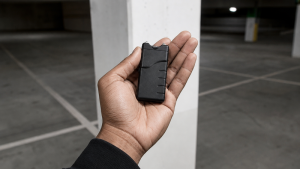
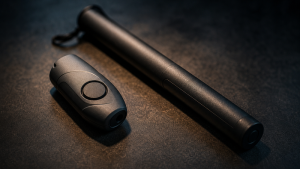
Yes — stun batons are effective against large attackers, and in several measurable ways they outperform compact stun guns specifically because of size and reach. A quality stun baton delivers the same disruptive electrical charge as smaller units while keeping a threat at arm’s length, reducing the margin of error when a larger, stronger person closes the distance. That combination of reach, output, and deterrence value makes the stun baton a serious tool for serious self-defense situations.
Now look — I want to be precise here, because this question deserves a real answer, not a sales pitch. Body size doesn’t make someone immune to electrical current. What it does change is the tactical picture. A large attacker may have more mass, more reach, and more physical force behind them. That’s exactly why the tool you carry matters. Not every stun device is built to the same standard, and if you’re going to make a decision about what to carry, you should make it with your eyes open.
How does a stun baton actually stop someone larger than you?
The electrical current delivered by a stun device disrupts the body’s neuromuscular system — regardless of the person’s size. When high-voltage, low-amperage current contacts the body, it causes rapid involuntary muscle contractions and overrides the attacker’s ability to coordinate movement. That effect is not proportional to body mass the way a physical punch would be. Larger muscles can actually absorb more of the disruption, which is why contact duration and contact placement both matter — but the mechanism itself works on the human body as a system.
Here’s the thing: where most people get confused is conflating voltage with stopping power. Voltage alone doesn’t tell the whole story. Amperage, contact duration, the quality of the electrodes, and the circuit design all affect real-world performance. A stun baton from a reputable manufacturer — something like the Stun Gun Baton Rechargeable With Flashlight — is engineered to maximize output efficiency, not just print a big number on the packaging. That engineering difference is exactly what separates a tool you can count on from one that sounds impressive and underdelivers when it matters.
The baton’s length — typically 12 to 18 inches — also means you’re making contact before a larger attacker can close to grabbing range. That’s not a small thing. Against a physically dominant attacker, every inch of standoff distance works in your favor.
Does the size of a stun baton actually matter in a real confrontation?
It matters more than most people realize. The extended reach of a baton-style stun device changes the geometry of a confrontation. A compact unit requires you to be within arm’s reach — essentially grappling distance — before you can make contact. That’s a dangerous position against someone larger than you. A stun baton lets you engage a threat before they’ve closed that gap, which gives you a meaningful tactical advantage.
Beyond reach, the physical presence of a baton is a deterrent in itself. I’m not suggesting you wave it around as a threat — that’s not how responsible people handle self-defense tools. But the visual signal of a proper stun baton held with confidence changes the dynamic of a situation. Most confrontations that escalate to violence do so because the aggressor believes they have a decisive physical advantage. Remove that belief — with both presence and a credible tool — and you’ve already improved your odds before any contact is made.
The baton format also allows for a secondary function: if the electrical component fails or is drained, the physical construction of a heavy-duty baton still provides a measure of impact deterrence. It’s a backup that a pocket stun gun simply doesn’t have.
What voltage or output should you look for in a stun baton designed for serious self-defense?
I’m going to tell you right now — chasing the highest printed voltage number is not the right approach. You’ll see marketing claims in the millions of volts that are largely meaningless without context. What you want to evaluate is the combination of delivered current quality, contact electrode design, and build construction. These factors together determine whether a device performs under real-world conditions — sweat on your hand, an uneven contact surface, adrenaline affecting your grip.
A well-built stun baton should have solid, widely spaced electrode contacts that maximize surface area and energy transfer. It should have a reliable activation mechanism — one you can operate under stress without fumbling. And it should be built from materials that hold up. Flimsy housing fails at the worst possible time. This is not the category where you want to optimize for cheap.
Rechargeable units are worth the small premium for anyone who intends to carry consistently. A device that runs on depleted batteries is a liability. If you want to understand more about how stun devices actually feel and what their effects look like in practice, I’d encourage you to read what a stun gun actually feels like — it’s worth understanding the tool before you decide to carry it.
How should you use a stun baton correctly when facing a larger threat?
First — and I say this every time — owning a stun baton is not the same as being prepared to use one. The people who get the most value from any self-defense tool are the ones who have thought through the scenario in advance, practiced activation, and know where to aim. That preparation is part of carrying with confidence, not just carrying with equipment.
Target placement makes a real difference in effectiveness. The most effective contact points are large muscle groups with high nerve density: the upper torso, neck, upper thigh, and hip area. These areas provide the best combination of current transfer and neuromuscular disruption. Bony areas like the forearm or hand are less effective. Against a large attacker, the torso and hip region give you the largest target area with the highest impact.
Hold the baton with a firm grip and maintain activation for a minimum of two to three seconds on contact. A glancing half-second contact is not going to stop a determined, larger person. Two to three seconds of sustained contact in a high-density nerve area will. Practice the grip. Practice the activation. Know which end is business and make that a reflex, not a thought process under pressure.
Those considering options that balance size and capability might also look at a compact stun gun built for concealed carry if a full baton isn’t practical for their daily environment — though for pure effectiveness against a larger threat, the baton format is the stronger choice.
Are there situations where a stun baton is the wrong tool for the job?
Yes, and I’d rather be straight with you about it than let you walk away with a false sense of security. A stun baton is a contact weapon. That means it doesn’t work unless you close distance and make physical contact with the threat. If an attacker is armed with a firearm and has range on you, a stun baton doesn’t change that math. Know the limitations of every tool you carry.
The baton format also requires more intentional carry planning. It’s not a pocket device. It needs a dedicated carry position — bag, vehicle, bedside. For someone who wants something they can keep on their person throughout the day without thinking about it, a compact stun gun or rechargeable stun gun with disable pin may serve them better in daily carry contexts. The baton is a premium tool — and like any premium tool, it performs best when deployed in the right context by someone prepared to use it.
If you’re comparing options across tool types — stun guns, pepper spray, personal alarms — our breakdown of stopping power across non-lethal self-defense tools gives you an honest side-by-side look at real-world performance.
What makes a stun baton worth the investment compared to cheaper alternatives?
The honest answer is that your life doesn’t have a budget. That said, I’m not telling you to spend money you don’t have — I’m telling you to spend it where it counts. A premium stun baton from a manufacturer with a real track record — brands like Streetwise, Stun Master, or Police — reflects engineering standards that cheaper alternatives simply don’t meet. Tighter tolerances in the electrical circuit, better electrode contact design, more durable housing, more reliable safety mechanisms.
When you need a self-defense tool to perform, you need it to perform on the first activation, under stress, with a less-than-perfect grip, maybe in the dark. That’s not the moment to find out your bargain unit has a flimsy activation switch or weak output. The discerning buyer understands that a self-defense tool is not a convenience item — it’s a piece of personal safety equipment. Treat it accordingly.
Frequently Asked Questions About Stun Batons and Large Attackers
Can a stun baton actually stop a very large person?
Yes. Electrical current disrupts the human neuromuscular system regardless of body mass. Body size affects physical force, not the body’s response to electrical disruption. Sustained contact of two to three seconds on a high-nerve-density area — like the torso or upper thigh — is effective on large individuals. Placement, contact duration, and device quality matter more than the attacker’s size.
How far does a stun baton keep an attacker away from you?
Most stun batons range from 12 to 18 inches in length, which keeps an attacker at roughly arm’s length before contact is made. This is a meaningful tactical advantage — it delays the moment when a larger person can grab or strike you, giving you a window to deploy the device before the confrontation reaches close-quarters range.
Is a stun baton better than a compact stun gun for self-defense?
For situations where you expect to face a physically larger or stronger threat, yes — the extended reach and secondary deterrence value of a stun baton make it the superior option. For everyday concealed carry, a compact stun gun may be more practical. The best tool is the one you’ll consistently carry and can deploy correctly under stress.
Do stun batons require contact with skin to work?
No. Stun batons can work through light clothing. Thick, heavy materials like leather jackets or heavy winter coats can reduce effectiveness, so targeting exposed areas or thinner clothing improves performance. This is worth factoring into your deployment plan if you live in a climate where heavy outerwear is common in cooler months.
What is the best place to target on a large attacker with a stun baton?
The most effective contact points are large muscle groups with high nerve density: the upper torso, neck, hip, and upper thigh. These areas provide strong neuromuscular disruption. Bony areas — forearms, hands — are less effective because they have lower muscle mass. Targeting the torso gives you the largest surface area with the highest impact potential.
How long should I hold a stun baton against an attacker?
Aim for a minimum of two to three seconds of sustained contact. A brief half-second touch will cause pain and startle reaction but may not be sufficient to stop a determined larger attacker. Two to three seconds disrupts muscle control significantly. Practice activating your baton and maintaining a firm grip so that contact duration becomes instinctive under stress.
Are stun batons legal to carry in most states?
Stun devices are legal for civilian use in most U.S. states, but laws vary — some states have restrictions on carry location, voltage, or permit requirements. A small number of states prohibit them entirely. Always verify the current regulations in your state and any state you travel through before carrying. I’m not a lawyer, and self-defense laws change — check with a local legal resource for specifics.
Should I buy a rechargeable stun baton or one that uses batteries?
Rechargeable is the stronger choice for anyone who carries consistently. A stun baton with a depleted battery is a liability, not a tool. Rechargeable units remove the variable of battery condition and ensure you’re always carrying at full output. Plug it in on a regular schedule — treat it the same way you’d treat your phone. A dead device in a real situation is worse than no device at all.
Here’s the bottom line: a quality stun baton is one of the most capable non-lethal tools available to someone who faces a real-world threat from a larger or physically dominant attacker. It offers reach, output, and deterrence that compact units simply cannot match. But the tool is only as good as the person carrying it — know your device, know your target points, and carry it consistently. That’s what separates someone who’s truly prepared from someone who just bought something and called it a day.
Take the time to choose something built to a real standard. Browse the stun gun options at Brainstorm Security Shop and find the one that fits your carry situation. May you and your loved ones stay protected.