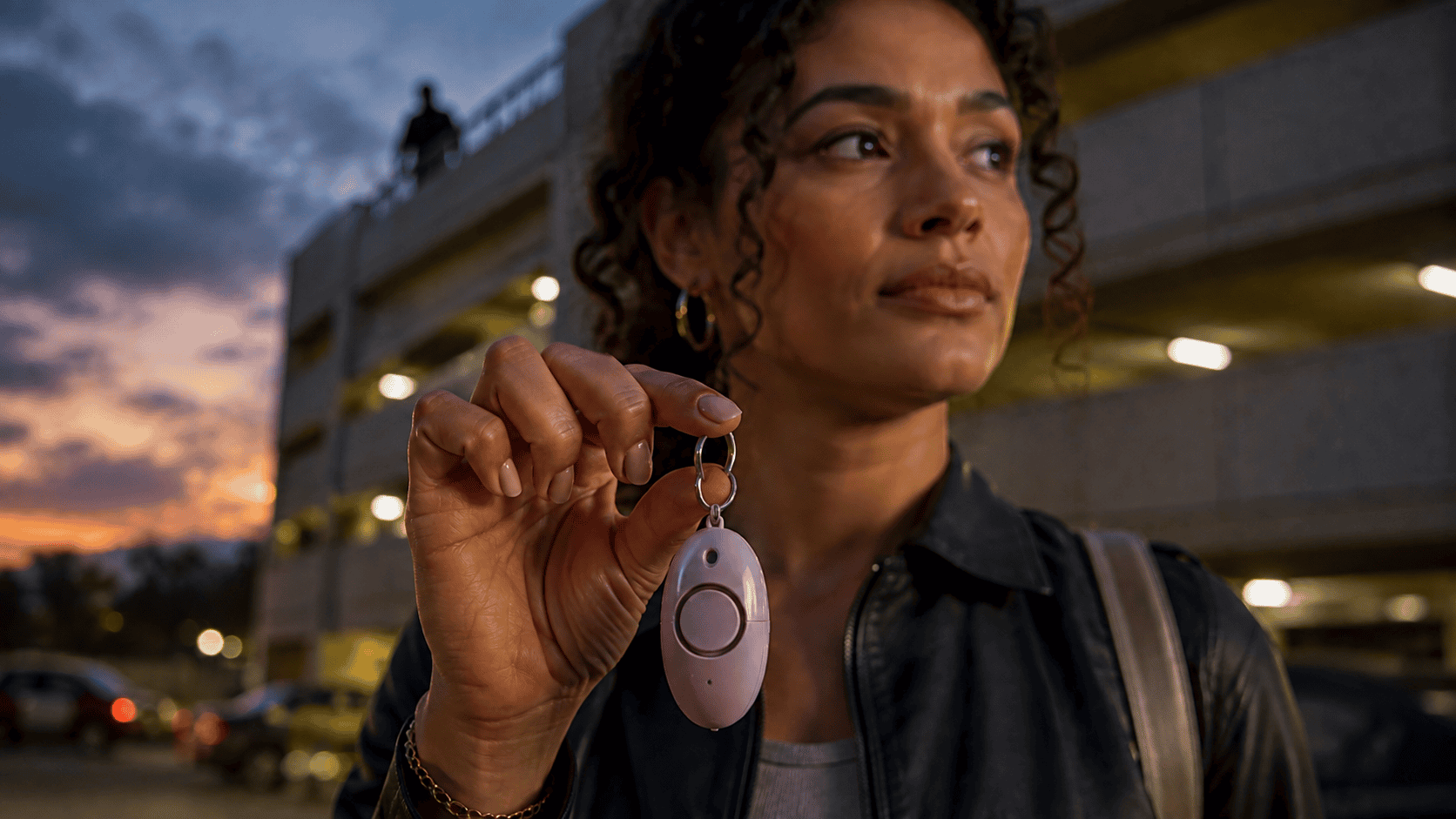
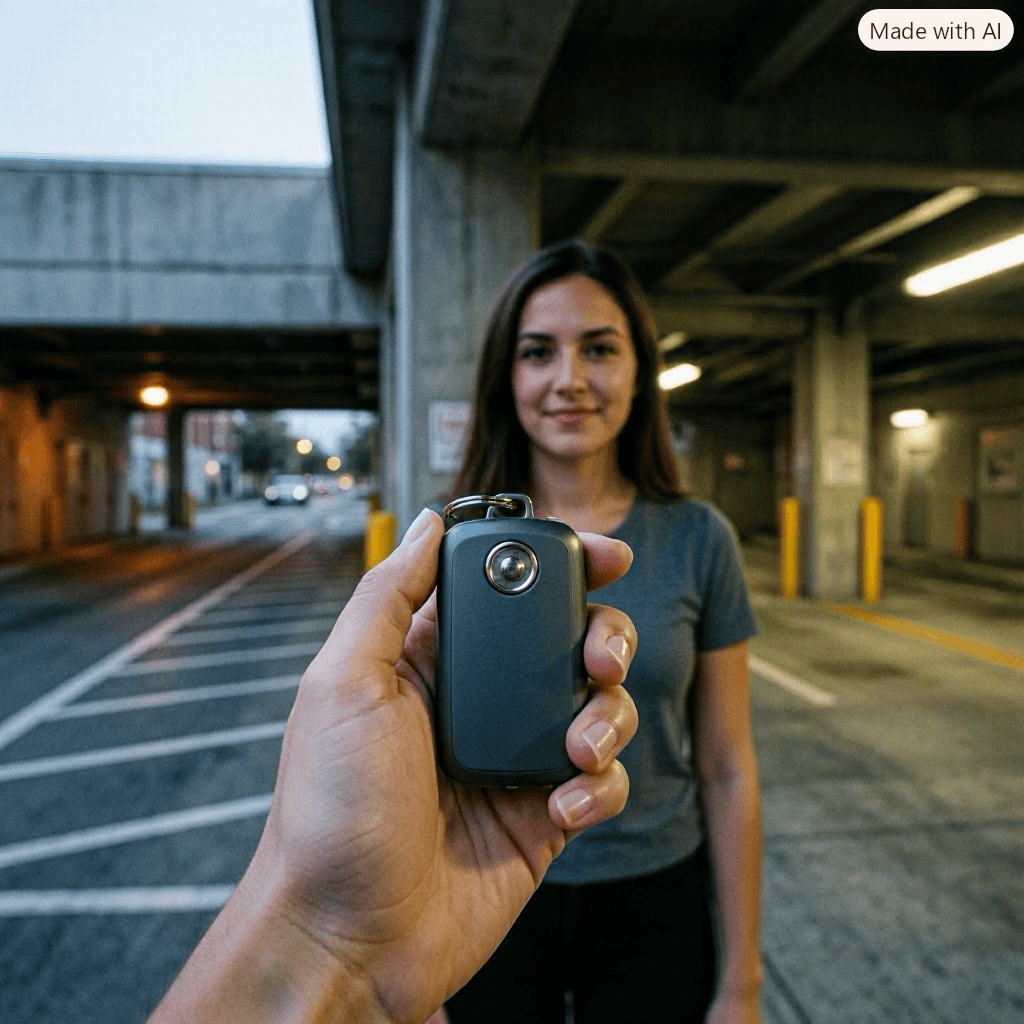
A personal safety alarm works by emitting an extremely loud siren — typically between 120 and 140 decibels — when you activate it, either by pulling a pin, pressing a button, or triggering a built-in motion sensor. That blast of sound does two things at once: it startles and disorients an attacker, and it draws immediate attention from anyone nearby. It’s one of the simplest, most reliable self-defense tools you can carry, and it requires zero training to use under pressure.
What actually happens inside a personal safety alarm when you activate it?
Here’s the thing — the mechanics are straightforward, and that’s exactly what makes these devices so dependable. Inside the small housing is a piezoelectric buzzer or a small speaker connected to a battery and a simple electronic circuit. When the circuit is completed — by pressing a button or removing a pin — it sends a continuous electrical signal to that speaker, which vibrates rapidly and produces that ear-piercing tone.
The pitch and volume are engineered specifically to cut through ambient noise. At 120 to 140 decibels, you’re looking at sound levels comparable to a jet engine at close range or a live rock concert right next to the speaker stack. That kind of sound causes immediate discomfort, makes it nearly impossible for an attacker to think clearly, and carries up to a quarter mile in open space. It’s not subtle, and that’s entirely the point.
Some models add a secondary feature: a strobe light. The rapid flashing is disorienting in low-light conditions and makes the person holding the alarm easier to locate by anyone responding from a distance. If you’re choosing a personal alarm, a built-in strobe is a feature worth having — especially for nighttime use.
How do you activate a personal safety alarm correctly?
Activation speed is everything in a real threat situation, which is why you need to know your specific alarm’s mechanism cold — before you ever need it. Most personal alarms fall into one of three activation types:
Pull-pin alarms: A pin or cord is attached to the alarm unit. You pull the pin — the circuit completes — the alarm sounds. As long as the pin is detached, the alarm continues. To stop it, you reinsert the pin. This design is excellent because it keeps sounding even if the alarm is dropped or knocked away.
Push-button alarms: You press and hold a button to activate. Simple and intuitive, though some designs require a sustained press to keep the alarm going, which can be a limitation if you drop the device.
Keychain clip alarms: These attach to a bag or keyring and activate when separated from the clip or keyring. They’re designed for convenience and constant accessibility.
Now look — whichever type you carry, practice activating it before you actually need it. Muscle memory matters. If you’re fumbling around in a dark parking garage at 10 p.m. trying to remember which end the pin is on, that’s a problem you could have solved in thirty seconds at home.
Where should you carry a personal safety alarm for fastest access?
The alarm you can’t reach in two seconds is the alarm that fails you. Fastest access points, in order of reliability:
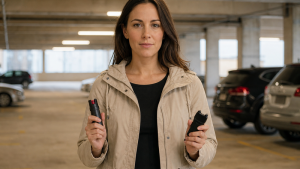
In your hand — If you’re walking to your car at night, through an unfamiliar area, or anywhere your gut is telling you to pay attention, the alarm should already be in your hand with your thumb on the activation point.
Clipped to the outside of a bag or purse — A keychain alarm clipped to the exterior strap is far more accessible than one buried at the bottom of your bag. Outside the bag, always.
On a lanyard around your neck — Particularly good for joggers, walkers, and anyone who doesn’t carry a bag. It stays accessible at all times without requiring a pocket or holster.
Attached to a keychain — Works well if you habitually have your keys in hand when entering or leaving buildings. Many people already grip their keys as a habit at night — this just adds a tool to that habit.
I’m gonna tell you right now — carrying a personal alarm in the bottom of a purse or in a jacket pocket buried under your phone and wallet is almost as bad as not carrying one. The whole value of this tool is speed. Carry it where you can get to it without thinking.
How effective is a personal safety alarm against real threats?
A personal safety alarm is highly effective as a deterrent and attention-getter, but you need to understand exactly what it does and doesn’t do. Here’s an honest breakdown:
What it does well:
Startles and disorients attackers — sudden, extreme sound triggers an involuntary startle response in virtually everyone
Draws attention from bystanders, neighbors, passing vehicles, and anyone within earshot
Signals your location clearly to anyone responding — first responders, security, or concerned bystanders
Eliminates the attacker’s key advantage: anonymity and silence
Works regardless of your physical size, strength, or fitness level
Cannot be turned against you the way a physical weapon potentially can
What it does not do:
It does not physically stop an attacker — it disrupts and deters, it does not incapacitate
It is less effective in loud environments or locations where a screaming siren won’t stand out
It relies on there being people nearby who will respond — in a truly isolated location, the effectiveness drops
Here’s the thing — for most people, in most situations, those limitations are completely acceptable because the threat profile most people actually face involves opportunistic attackers who want an easy target, not a loud, attention-drawing confrontation. A 130-decibel alarm turns you into exactly the wrong kind of target.
Who should carry a personal safety alarm?
The honest answer is: almost everyone. But let me get specific, because certain people should consider a personal alarm an absolute non-negotiable:
College students — Campus environments, late nights, walking alone from libraries and parking lots. A personal alarm on a keychain or lanyard is one of the smartest things a student can carry.
Women walking alone — Whether it’s to the car after a late shift, through a parking garage, or down a quiet street after dark. Non-negotiable.
Seniors — Personal alarms double as medical alert devices for falls or emergencies, and they require zero physical strength to activate.
Joggers and walkers — Earbuds reduce situational awareness significantly. A personal alarm clipped to clothing or worn on a lanyard compensates for some of that.
Children and teenagers — Appropriate for kids old enough to understand how to use it. No age restriction, no training requirement, no legal issues in any state.
Anyone who cannot or chooses not to carry a firearm or other weapon — You don’t have to carry a gun, but carry something. A personal alarm is the absolute floor for personal safety.
Can a personal safety alarm be used alongside other self-defense tools?
Yes — and in many cases, it should be. A personal alarm works exceptionally well as a first-layer alert tool in a layered self-defense strategy. Think of it this way:
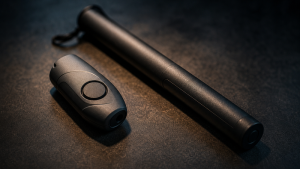
Layer one is awareness — you’re paying attention to your surroundings before anything happens. Layer two is deterrence — an alarm, confident body language, avoiding isolated areas. Layer three is active defense — pepper spray, a stun gun, a knife, or a firearm if you’re trained and licensed to carry. A personal alarm fits squarely into layers one and two, and it can buy you critical seconds to access a layer-three tool if things escalate.
I carry a firearm. I also carry pepper spray. And I still think a personal alarm has a place in your everyday carry — particularly for family members who aren’t at the same level of preparedness, or in situations where deploying a firearm or spray isn’t warranted but attracting attention absolutely is.
What should you look for when choosing a personal safety alarm?
Not all personal alarms are built equal. Before you buy, run through this checklist:
Decibel rating of at least 120 dB — Anything under 120 dB isn’t going to cut through real-world ambient noise effectively. Look for 130 dB or higher.
Battery type and life — Some run on replaceable batteries, others are rechargeable via USB. Know which type you have and check the battery regularly — at minimum every three months.
Activation mechanism — Pull-pin designs are generally more reliable under stress. Make sure the mechanism isn’t so easy to activate accidentally, but not so stiff it takes two hands to trigger.
Build quality and weather resistance — If you’re a jogger or you carry in a bag that sees rain, you need something that won’t die when it gets wet.
Strobe light feature — Valuable addition for nighttime use and disorientation. Not required, but worth prioritizing.
Size and carry options — It needs to fit your actual lifestyle. A device you won’t carry because it’s inconvenient is worthless.
Ease of stopping the alarm — You should be able to stop it easily once the threat has passed or you’ve reached safety. A stuck alarm in a public space creates its own problems.
Frequently Asked Questions About Personal Safety Alarms
Most personal safety alarms operate between 120 and 140 decibels. For reference, a normal conversation is about 60 dB, a lawnmower runs around 90 dB, and a car horn at close range hits around 110 dB. A 130 dB personal alarm is physically uncomfortable to be near and can cause temporary hearing disorientation — that’s exactly what you want when someone is trying to grab you.
Are personal safety alarms legal to carry everywhere?
Yes — personal safety alarms are legal to carry in all 50 states, on airplanes, in schools, and in most restricted areas where other self-defense tools are prohibited. They contain no chemicals, no electrical charge, and no blade. They’re one of the few truly universal self-defense options that anyone can carry anywhere without restriction. Always check local laws if you’re traveling internationally, as rules vary by country.
How far away can a personal safety alarm be heard?
A 120 to 130 dB alarm can be heard from up to a quarter mile away in open outdoor conditions. In urban environments with ambient noise, effective range is typically one to several city blocks. Indoors, the sound amplifies and carries through walls, hallways, and floors — which is actually an advantage in apartment buildings, parking garages, and office structures where help is close but not visible.
Do personal safety alarms need to be registered or licensed?
No registration or license is required to purchase or carry a personal safety alarm in the United States. There are no age restrictions, no background checks, and no permit requirements. You can buy one and carry it the same day without any paperwork whatsoever. This makes personal alarms one of the most accessible self-defense tools available, suitable for anyone from a middle schooler to a senior citizen.
How often should I test or replace my personal safety alarm?
Test your personal alarm at least once every three months by activating it briefly — just a second or two — to confirm the battery is strong and the mechanism is working properly. Replace batteries or recharge proactively; don’t wait until the sound is noticeably weaker. If your alarm uses a non-rechargeable battery and it’s been more than a year, replace the battery regardless of how it sounds. A weak alarm in a real emergency is not acceptable.
Can a personal safety alarm be accidentally activated?
It depends on the design. Pull-pin alarms are resistant to accidental activation because the pin must be physically removed — they’re unlikely to go off in a bag or pocket. Push-button designs with a recessed button are also fairly accident-resistant. The biggest risk is carrying a keychain alarm where the activation point gets caught on something inside a bag. Use alarms with protective covers or recessed buttons if accidental activation in a bag is a concern for you.
Should a personal safety alarm replace other self-defense tools?
No — a personal alarm should complement your self-defense toolkit, not replace it. It is an outstanding first-response and deterrent tool, but it does not physically stop a determined attacker. For comprehensive personal safety, consider pairing a personal alarm with pepper spray, a stun gun, or other tools appropriate to your comfort level, training, and local laws. Think of the alarm as your loudest voice — pair it with something that gives you physical options too.
What is the best way to practice using a personal safety alarm?
Practice activation under simulated stress at least once before you depend on it. Hold the alarm in your hand and practice deploying it with one hand — the same hand you’d use if your other hand was occupied or grabbed. Time yourself. If it takes more than two seconds from grip to activation, adjust your carry position or switch to a more intuitive activation design. Run through this drill every few months so the motion stays automatic.
The Bottom Line on Personal Safety Alarms
A personal safety alarm is one of the most reliable, accessible, and universally legal self-defense tools that exists. The mechanism is simple — a loud, disorienting siren that startles attackers and draws immediate attention — but the impact in a real threat situation can be profound. At 120 to 140 decibels, it removes an attacker’s most valuable asset: the assumption that they can operate without anyone noticing.
Whether you’re a parent sending a teenager off to college, a woman walking to her car after a late shift, a senior who wants something fast and foolproof, or simply someone who believes in being prepared — a personal alarm belongs in your everyday carry. It’s not a replacement for awareness, training, or other self-defense tools. It’s a force multiplier. It buys you seconds, and seconds are what survival decisions are made of.
Carry it where you can reach it in under two seconds. Know your activation mechanism cold. Test it regularly. And don’t treat it as a backup plan — treat it as a front-line tool in a smart, layered approach to your personal safety.
Stay safe out there. May you and your loved ones stay protected.
With over 25 years in the Self Defense Industry, Jose Diaz has provided lots of advise to those seeking to protect themselves against danger. Jose is a hard working individual who has use his skills to address the many faults of self protection in our society. As a father, Grandfather and a Great grandfather he wants to keep his family safe. This is why he has created his business, "Brainstorm Security Shop". He wants to provide people with a choice to defend themselves in case of a personal attack. His self-defense gadgets, like stun guns, pepper sprays, knifes, personal alarms and others will provide protection against any attacker. Please take a look at his products since very well can save your life in case of a personal attack. May you and your loved ones be safe and enjoy a long and prosperous life.