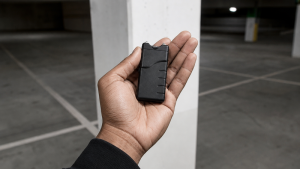
Hidden cameras today can be as small as a pinhole — literally smaller than the period at the end of this sentence. The lens diameter on the smallest commercially available units measures under 3mm, and complete camera modules including optics and sensor can be housed in an enclosure no larger than a standard coat button, a screw head, or even a USB wall charger that looks completely unremarkable sitting in any outlet in your home.
Now look — that answer probably raises more questions than it settles. Because once you understand just how small these things actually get, your next thought is usually one of two things: either “how do I get one to protect my home,” or “how would I ever know if someone had one pointed at me?” Both are fair questions. And both deserve a real answer.
What determines how small a hidden camera can actually get?
The limiting factor in miniaturizing a camera used to be the lens. Glass optics of any quality required physical size to gather enough light and focus an image. What changed everything — and I mean completely changed the game — is the CMOS sensor. Modern CMOS image sensors used in security cameras are manufactured at the same scale as semiconductor chips. The sensor itself, the piece of technology that actually captures the image, can be smaller than your fingernail and still capture 1080p high-definition footage.
Strip away everything that isn’t strictly necessary — the housing, the screen, the battery compartment — and what you’re left with is a lens no bigger than a pin and a sensor the size of a pea. That is a functional camera. The rest of it is packaging.
What this means practically is that the housing of a hidden camera is designed around concealment, not around the camera itself. The camera fits inside the object. Not the other way around. A wall clock, an air purifier, a smoke detector, a pen sitting on a desk — any of these can contain a fully operational camera with Wi-Fi connectivity, motion detection, and cloud storage. The electronics are that small. The object around them is chosen because it belongs in the room without anyone thinking twice about it.
How are hidden cameras concealed inside everyday objects?
Here’s the thing most people don’t think about: the best hidden cameras don’t look like cameras at all. They look like the object they’re built into. And that object is usually something you’d walk past a hundred times without a second look.
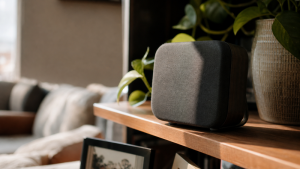
The most common concealment housings you’ll find in home security use include wall clocks, electrical outlet adapters, USB chargers, smoke detectors, motion sensor housings, picture frames, books, and desktop items like pens or calculators. Each of these is chosen for one reason — it has a permanent, unquestioned place in a room. Nobody picks up your smoke detector to look at it more closely. Nobody unplugs your wall charger to inspect the face of it.
The pinhole lens — which is the actual camera element — is drilled or molded into the object at a location that provides a clean line of sight across the room. In a clock, it’s often positioned near the 12 or between numerals. In a USB adapter, it’s on the face of the unit. The hole is typically 1–3mm in diameter. In most lighting conditions, unless you’re actively looking for it with a lens detector, you won’t see it.
For anyone who wants a camera that genuinely disappears into a room, browsing a curated selection of indoor hidden cameras for home is worth your time — you’ll see exactly how far this concealment technology has come.
Does a smaller hidden camera mean lower video quality?
This is where the technology gets genuinely interesting — and where most people’s assumptions are wrong.
Twenty years ago, yes. Miniature cameras were grainy, low-resolution, and practically useless for identifying anyone. That’s no longer the situation. Modern hidden cameras operating at the smallest form factors commonly capture 1080p full HD video, and some units offer 2K or 4K resolution. The sensor miniaturization I mentioned earlier didn’t sacrifice resolution — in many cases it improved it, because manufacturing precision has gotten that much tighter.
What does suffer at extreme miniaturization is low-light performance. A larger lens gathers more light. Physics hasn’t changed. A 3mm pinhole lens in a dim hallway at night is going to produce a noisier image than a full-size outdoor security camera. The better units compensate with infrared night vision capability — even at small scale, IR LEDs can be embedded around the lens to illuminate a space in near darkness without visible light.
I’m gonna tell you right now — if you’re choosing a hidden camera for a space that gets dark at night, night vision capability isn’t optional. It’s the difference between footage that identifies someone and footage that shows you a dark blur.
How do hidden cameras this small transmit and store footage?
Here’s where the mystery gets a little deeper. You’d think that a camera small enough to fit inside a pen cap would need a cable running somewhere to store footage. It doesn’t.
Most modern covert cameras transmit over Wi-Fi and store footage either on a micro SD card embedded in the unit or directly to cloud storage. The Wi-Fi module and the SD card slot are part of the same miniaturized package. A device the size of a matchbox can run on battery power, connect to your home network, detect motion, send you a push notification, and save timestamped footage — all without a single wire going anywhere.
Battery life is the honest limitation here. Continuous recording on a battery-powered unit this small will typically run anywhere from two to six hours depending on the unit. Motion-activated recording extends that dramatically because the camera only records when something triggers it. Some units are designed to be plugged in — disguised as chargers or outlet adapters — and those run indefinitely.
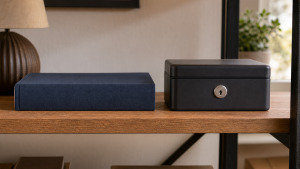
If you’re serious about protecting a space, understanding how a hidden compartment safe for home complements a camera setup is worth thinking through. Footage documents what happened. A well-placed diversion safe protects what matters most before anything happens.
What are the legal rules for using small hidden cameras in your home?
Now look — I want to be straight with you here, because this is where people make mistakes.
Hidden cameras used for home security are legal in most U.S. jurisdictions when placed in areas of your home where there is no reasonable expectation of privacy by guests. That means common areas — living rooms, entryways, kitchens, front porches — are generally acceptable. Bedrooms and bathrooms are a different matter entirely. Recording someone in a space where they have a reasonable expectation of privacy, without their knowledge or consent, crosses a legal and ethical line in virtually every state.
Audio recording adds another layer of complexity. Many states require all parties to consent to being recorded in a conversation. A camera that captures video only is treated differently than one that captures audio. If your unit records sound, familiarize yourself with your state’s consent laws before deploying it.
I always tell people — the goal of a home security camera is to protect your property and your family. When you use it that way, in spaces designed for security monitoring, you’re on solid ground. If you’re not sure about the specifics in your state, check with a local attorney. I can tell you about the cameras. The law in your jurisdiction is their lane.
For a deeper look at the legal landscape around surveillance technology, our post on whether spy hidden cameras are legal in Puerto Rico is a useful read — it walks through the kinds of legal distinctions that apply broadly across different jurisdictions.
How do you detect a hidden camera you didn’t place yourself?
This question is the shadow side of everything above — and it’s one worth taking seriously.
If cameras can be this small, and this well-concealed, the reasonable question is how you’d find one you didn’t know about. There are a few methods that actually work.
The first is a radio frequency (RF) detector. Most Wi-Fi-connected cameras transmit on recognizable frequencies. An RF detector sweeps a room and flags active wireless signals. It’s not foolproof — a camera recording to a local SD card with Wi-Fi turned off won’t emit anything to detect — but it catches the majority of consumer-grade spy cameras.
The second is a lens detector. Camera lenses reflect light in a specific way. A lens detector emits a focused beam and when you scan a room, a camera lens will reflect back with a characteristic glint that the human eye, looking through the detector’s viewfinder, recognizes as distinct from other reflective surfaces. This works even on cameras that aren’t transmitting anything.
The third method is simply looking carefully. Understanding where cameras are typically concealed — facing the room from a shelf or mounted object, positioned at entry points — helps you know where to focus your inspection. Smoke detectors, clocks, and USB chargers in unusual locations are worth a closer look, especially in short-term rentals.
Frequently Asked Questions About Hidden Camera Size and Technology
What is the smallest hidden camera you can legally buy?
Commercially available hidden cameras with lenses as small as 1.5–3mm are legal to purchase in the United States for personal security use. The smallest complete camera modules — lens, sensor, and basic electronics — can fit in an enclosure the size of a coat button. Legal use depends on where and how you deploy them, not on the size of the device itself.
Can a hidden camera work without Wi-Fi?
Yes. Many hidden cameras record locally to a built-in micro SD card without requiring any network connection. These are sometimes preferred for situations where Wi-Fi availability is limited or where you want to minimize the chance of the camera appearing on a network scan. The trade-off is that you must physically retrieve and review the footage rather than accessing it remotely.
How long will a small hidden camera record on battery?
Battery life on compact hidden cameras typically ranges from two to six hours on continuous recording, depending on the unit’s power draw and battery capacity. Motion-activated recording can extend this to several days of standby time because the camera only writes footage when triggered. Cameras disguised as plugged-in devices like wall chargers run continuously without battery limitations.
Do small hidden cameras have night vision?
Many do. Infrared night vision capability is available even in highly miniaturized units. IR LEDs surrounding the lens emit light invisible to the human eye but detectable by the camera sensor, allowing the camera to capture footage in near-complete darkness. Always verify night vision specs before purchasing if your intended space gets dark — not every compact unit includes this feature.
Can you hide a camera in a room and have someone else monitor it remotely?
Yes, if the camera has Wi-Fi connectivity and a companion app or cloud platform. Most modern smart hidden cameras allow remote live viewing and motion alert notifications from anywhere with an internet connection. Access is controlled by login credentials, so the footage is private to whoever sets up the account.
Is it legal to use a hidden camera to watch a babysitter or caregiver?
In most U.S. states, recording video in common areas of your own home is legal without notifying anyone present, including employees or caregivers. Audio recording laws vary and may require disclosure. Cameras should never be placed in spaces where caregivers have a reasonable expectation of privacy. If you are specifically looking at options for monitoring elder care situations, our guide on choosing the right hidden camera for elderly care covers this in detail.
How do I find a hidden camera in a hotel room or rental property?
Use an RF detector to sweep for active wireless signals, and a lens detector to identify camera optics reflecting light in the room. Pay close attention to smoke detectors, wall clocks, USB chargers you didn’t bring, and any objects positioned facing sleeping or dressing areas. Also scan for small holes in walls or objects that seem slightly out of place. If you find something suspicious, document it and contact local law enforcement.
What’s the difference between a hidden camera and a dummy camera?
A hidden camera records actual footage and is designed to be completely invisible to anyone in the space. A dummy camera looks like a security camera but contains no recording technology — it’s a deterrent designed to make people believe they’re being watched. Both have legitimate uses depending on your situation and budget. If a visible deterrent fits your needs, browsing affordable home security dummy cameras is a practical starting point.
—
There’s something quietly powerful about a piece of technology this small doing a job this important. A camera no bigger than a coat button, sitting inside an object you’d never look at twice, watching over the space where your family sleeps, your valuables are stored, your front door closes at night. That’s not gimmick territory. That’s serious security done with a light touch.
If you’re ready to take a look at what’s actually available, start with our selection of indoor hidden cameras for home — there are options in there that will genuinely surprise you, both in how small they get and how capable they are. Take your time. Know what you’re looking for. And as always — may you and your loved ones stay protected.