

How does a magnetic door alarm actually work?
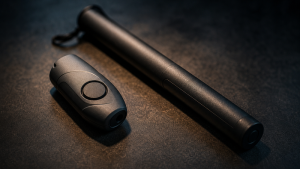
I’m gonna tell you right now — this isn’t complicated technology, and that’s the point. A magnetic door alarm runs on a closed magnetic circuit between two pieces. One piece holds the alarm unit and sits on the frame. The other piece is just a magnet, mounted directly across from it on the door or window. As long as those two pieces stay lined up and close together, the circuit stays closed and the alarm stays silent.
The second that door opens even an inch, the magnet pulls away, the circuit breaks, and the alarm goes off. No delay. No “waiting to confirm motion.” No app that needs a signal from three rooms away. This is a mechanical trigger doing exactly one job, and it does it every single time. That’s the kind of reliability I want in my own house, and it’s the kind I sell.
Compare that to a motion sensor that has to interpret movement, or a camera system that has to process footage before it decides something happened. A wireless door alarm built on this magnetic contact design skips all of that. Contact breaks, alarm sounds. Period.
Why is the two-piece design more reliable than other alarm types?
Because it doesn’t ask permission. A lot of “smart” security gadgets today are built to think before they act — analyze the image, check against a database, confirm the pattern. That’s fine for some jobs. It’s the wrong approach when three seconds decide whether someone gets out of your house safely or not.
The magnetic two-piece system has no thinking to do. It’s binary. Connected or not connected. On or off. When you’re dealing with a sleepwalking family member, a toddler who’s figured out how to reach a doorknob, or someone trying to force entry, you don’t want a system that’s calculating odds. You want a system that reacts the instant physics changes.
This is exactly why I point people toward this design for door and window alarms for sleepwalkers and door and window alarms for dementia patients — situations where a half-second delay isn’t acceptable. When someone you love could be out the door before a motion sensor even finishes processing, you need contact-break technology, not guesswork.
Where should I install the two pieces for maximum reliability?
Alignment is everything — I’m not going to sugarcoat that. The magnet piece and the sensor piece have to sit close enough together, and directly enough across from each other, for the magnetic field to hold that circuit closed. Most units give you somewhere around a half-inch to an inch of tolerance. Outside that range, you’re asking for false alarms or, worse, no alarm at all.
Here’s how I set these up, every time:
- Mount the sensor piece on the door frame, at the same height as the door edge it faces.
- Mount the magnet piece directly across from it on the door itself — flush, level, no gap wider than the manufacturer specifies.
- Test it with the door closed first. Confirm silence. Then open it and confirm the alarm fires immediately.
- Check the mount again after a week. Doors settle, frames shift, screws loosen. A misaligned unit is a useless unit.
Most units from brands like MultiGuard and Safety Technology come with adhesive backing or screw mounts — use screws wherever you can. Adhesive fails in heat, humidity, and time. A screwed-in mount doesn’t budge, and this isn’t a device where “good enough” mounting is good enough.
What decibel level should I expect from a magnetic door alarm?
You want loud — genuinely loud, not a polite chime. Most magnetic door alarms worth owning sit somewhere between 100 and 130 decibels. That’s the range that stops someone in their tracks and alerts an entire household, not just the person standing next to the door.
This isn’t a device meant to politely notify you. It’s meant to command attention immediately — from you, from anyone nearby, and frankly, from whoever just triggered it. A loud alarm creates panic and urgency for an intruder and gives you the advantage of surprise. That’s the whole strategy behind sound-based deterrents, and it’s the same logic behind personal alarms loud enough to matter in a parking lot. Volume is not a luxury feature here — it’s the function.
If you’re comparing units, don’t settle for anything under 100dB for a door or window application. That number is non-negotiable if the goal is real disruption, not background noise.
Do magnetic door alarms require wiring or professional installation?
No — and that’s exactly why this design has stayed the standard for so long. These units run on batteries, mount with screws or adhesive, and pair magnetically. There’s no electrician, no drilling through walls, no monitoring contract, no monthly fee. You install it yourself in about five minutes per door.
This matters most for people who don’t own the walls they’re protecting. If you’re renting an apartment, you can’t run wire through a frame or install a hardwired system — but you can absolutely mount a magnetic alarm and take it with you when you move. That’s why I steer renters directly toward door and window alarms for renters and apartments — full protection, zero property damage, zero landlord conversation required.
Same logic applies to families managing door and window alarms for kids and toddlers. You need something you control completely — no subscription, no app dependency, no company holding your data. Just a magnet, a sensor, and a decision that gets made the instant that door opens.
Can magnetic door alarms actually deter a break-in, or just alert me after the fact?
Both — and don’t let anyone tell you otherwise. The moment that alarm fires at 100+ decibels, two things happen simultaneously. You get alerted, and the person on the other side of that door gets hit with a level of noise and attention they did not sign up for. Most people breaking into a home or apartment are counting on quiet. Take that away from them and you’ve already changed the entire situation in your favor.
I’ve said this before and I’ll say it again: an alarm doesn’t need to stop someone permanently to be effective. It needs to stop them right now, in that moment, long enough for you to react or for them to bail. That’s the real evidence behind why door alarms actually deter burglars — it’s not magic, it’s disruption at the exact moment disruption matters most.
Frequently Asked Questions About Magnetic Door Alarms
What’s the difference between a magnetic door alarm and a motion-sensor alarm?
A magnetic door alarm triggers on physical contact break between two aligned pieces — instant, mechanical, no interpretation required. A motion sensor has to detect movement patterns first, which introduces processing time and potential for false negatives. For doors and windows specifically, contact-break technology is faster and more dependable.
Do I need batteries in both pieces of a magnetic door alarm?
No. Only the sensor piece — the one mounted on the frame — contains the alarm circuitry and battery. The second piece is typically just a magnet with no electronics at all. That means less maintenance, fewer batteries to track, and one less point of failure.
How far apart can the two pieces be before the alarm stops working correctly?
Most units require the two pieces to sit within a half-inch to one inch of each other to maintain the magnetic field. Check your specific unit’s spec sheet, but as a rule, tighter alignment means more reliable performance. Anything wider than the stated tolerance risks false alarms or total failure to trigger.
Will a magnetic door alarm work on windows too?
Yes. The same two-piece contact-break design works on double-hung windows, sliding windows, and sliding glass doors — anywhere you have two surfaces that separate when opened. Mounting placement matters more on windows since the sash moves vertically or horizontally depending on the style.
Can I install a magnetic door alarm without damaging my apartment walls?
Yes. Most units come with adhesive mounting options specifically so renters can install and remove them without leaving marks or drilling into frames. This is exactly why magnetic door alarms are a go-to option for apartment living where permanent modifications aren’t allowed.
How loud does a magnetic door alarm need to be to actually work?
Aim for 100 decibels minimum, with many effective units reaching 120-130 decibels. That volume range is loud enough to startle an intruder, wake a sleeping household, and carry through walls to alert neighbors. Anything quieter risks being background noise instead of a real deterrent.
Do magnetic door alarms connect to my phone or require Wi-Fi?
Most standalone magnetic door alarms do not require Wi-Fi or an app — they operate independently on battery power and sound a local alarm. This is a feature, not a limitation. No internet outage, no app crash, and no subscription fee can take this system offline.
How often should I test a magnetic door alarm once it’s installed?
Test it weekly for the first month to confirm alignment holds as the door settles, then monthly after that. Doors shift with weather and humidity, and screws can loosen over time — a quick open-close test takes five seconds and confirms the system is still doing its job.
Conclusion
Here’s the thing — security doesn’t need to be complicated to be effective. It needs to work every single time, without exception, without a delay, without asking you to trust an algorithm. A magnetic two-piece door alarm does one job and does it with total authority: the second that contact breaks, the alarm fires. No hesitation, no interpretation, no excuses.
I’ve built this business around tools that perform when it counts, not gadgets that look impressive on a shelf. If you’re ready to put a system in place that answers to physics instead of guesswork, take a look at the wireless door alarm options built on exactly this design. Stay safe out there.